LatAm Pre-Open — Wednesday, September 9, 2026
Today’s Focus
Latin American markets open Wednesday caught between two forces: oil prices pressing toward US$98 a barrel, and US bond yields near 4.80% keeping global money cautious.
That combination flatters exporters—Petrobras, Ecopetrol, Pemex-linked names—but punishes rate-sensitive stocks and any market relying on cheap dollar funding.
US futures are soft, with Dow futures down about 0.6%, and Tokyo slipped again overnight, so the regional open should be selective rather than broad-based.
The clearest test arrives before noon: Mexico’s inflation and producer price data, followed later by US producer prices and jobless claims, which will set the tone for the dollar and yields into the afternoon.
What matters today. Oil above US$97 and a 4.80% US 10-year yield split Latin American flows between commodity winners and carry-trade losers.
| Instrument | Level | Session |
|---|---|---|
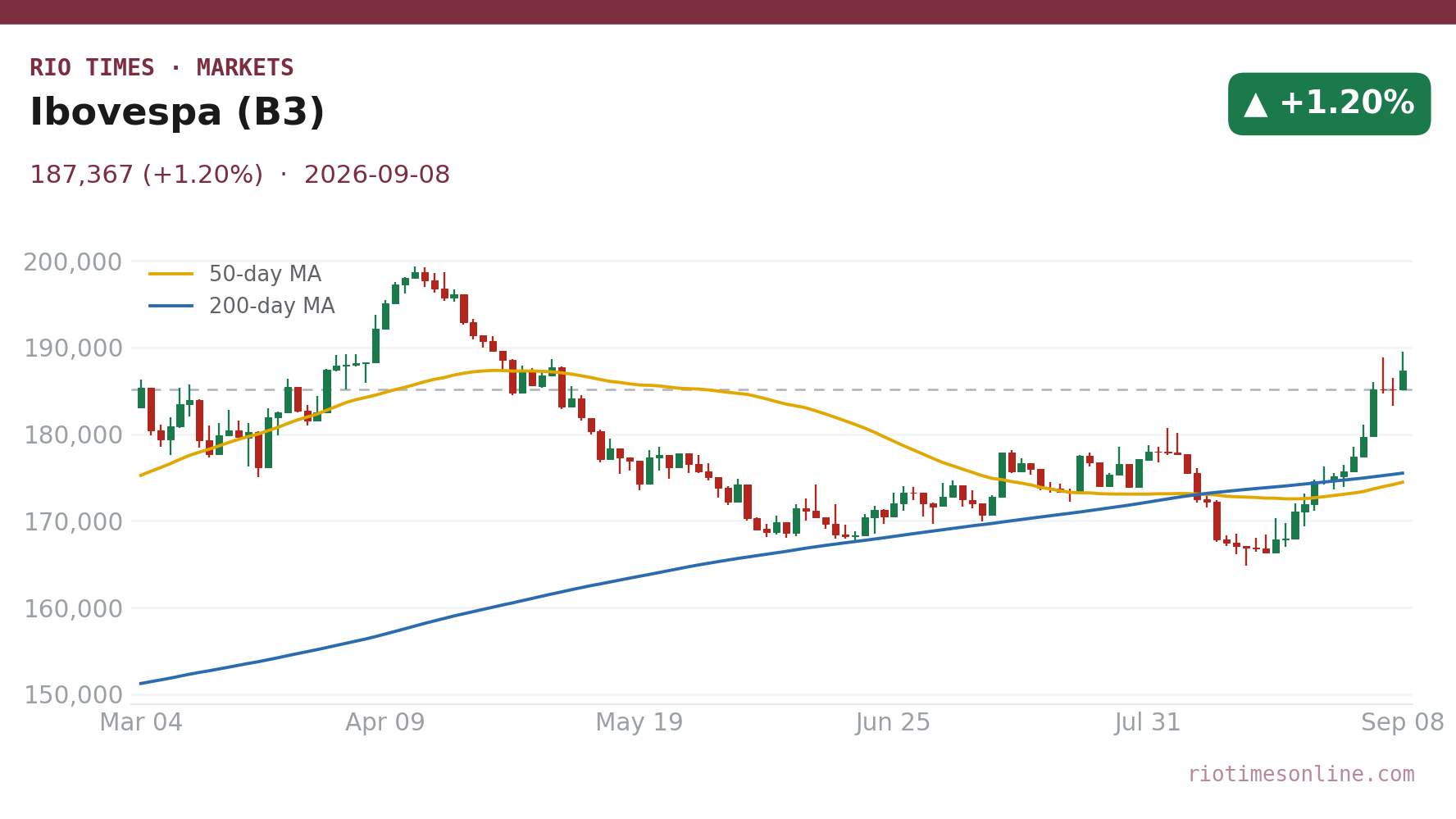
| Ibovespa (Brazil) | 187,367 | +1.20% |
| S&P 500 (US) | 7,674 | -0.58% |
| USD/BRL | 5.0856 | -0.79% |
| USD/MXN | 16.9165 | +0.04% |
| USD/CLP | 925.28 | -0.99% |
| USD/COP | 3,126 | -0.07% |
| USD/ARS | 1,512 | +0.00% |
Source: market close, 8 September 2026.
01 The overnight tape in one read
Global markets drifted lower overnight as higher oil prices and firm US bond yields kept investors on edge. Tokyo’s Nikkei closed down about 0.2% at roughly 65,100, after a 1.7% fall on Tuesday.
European cash markets have not opened yet, and the Stoxx 600 finished Tuesday essentially flat at 649.60. US futures point to a soft start—Dow futures off about 0.6% and S&P 500 futures down about 0.2%.
The oil market is the main story. Brent crude settled near US$97.92 after briefly testing US$99.46, extending a rally from around US$72 in early July as Middle East tensions constrain supply.
Meanwhile the US 10-year Treasury yield sits near 4.80%, its highest since autumn 2023, keeping global borrowing costs elevated and reducing the appeal of emerging-market carry trades.
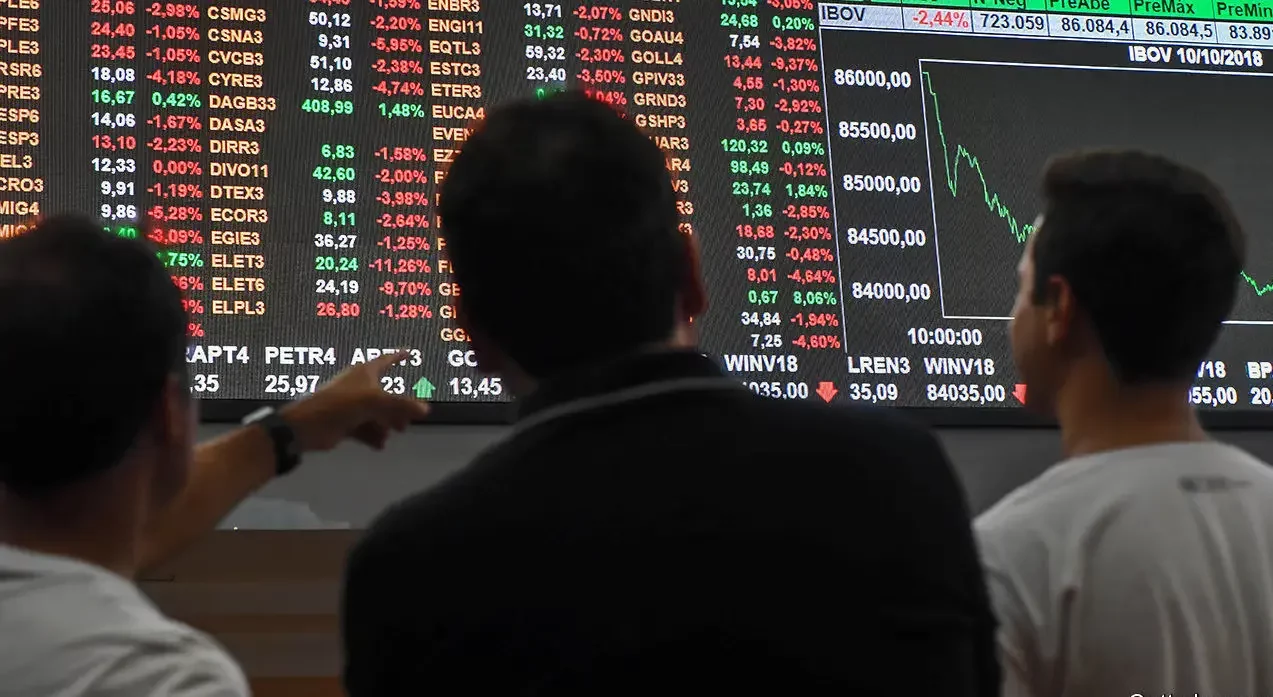
The evidence points to a selective, rather than directional, open. The verified board shows Brazil’s Ibovespa rose 1.20% in the prior session while the S&P 500 fell 0.58%—a decoupling that already reflects oil-linked flows returning to Latin America.
Mexico’s inflation report and the US producer price data are the swing variables; a hotter Mexican core reading could hurt the peso and Mexbol, while a soft US PPI might revive rate-cut hopes and lift regional equities.
02 The board before the open
| Instrument | Level | Change | Read |
|---|---|---|---|
| USD/BRL | 5.0856 | −0.79% | Real firmed as commodities bid |
| USD/MXN | 16.9165 | +0.04% | Peso steady before CPI |
| USD/CLP | 925.28 | −0.99% | Chilean peso led gains |
| Gold | $4,356/oz | −1.12% | Safe-haven bid faded |
| US 10Y | 4.794% | +0.10% | Yields stayed sticky |
The currency board shows a mixed but mostly positive picture for Latin America, with the real and Chilean peso firming against a slightly softer dollar. The dollar index slipped 0.41%, giving some room to commodity-linked currencies.
Gold’s 1.64% decline despite geopolitical tension suggests investors are treating oil, not bullion, as the hedge of choice—a nuance that matters for Colombia and Peru, where gold miners are prominent. Rio Times · Live Market Intelligence
Live Market IntelligenceLatin America — Cross-Market Board
Latin America — Cross-Market Board
Instrument Last Change YoY Prev. High Low Volume
IBOV
205,082.56
+0.47%
+21.85%
204,120.12
168,310
167,142
—
IPSA
10,746.36
-0.31%
—
10,780.31
11,210
10,984
1,513,213,483
IPC MEX
69,879.62
-0.01%
+12.17%
69,889.73
66,121
65,405
108,886,187
MERVAL
3,017,221
—
+30.51%
3,022,485
3,042,365
2,991,150
—
COLCAP
2,540.10
+0.46%
—
9.04
9.05
9.02
4,133
BVL PERÚ
57,021.19
+0.13%
—
—
—
—
—
USD/BRL
5.16
+0.01%
-5.13%
5.16
5.18
5.14
—
EUR/BRL
5.95
+1.01%
-5.83%
5.89
5.98
5.94
—
USD/MXN
17.06
-0.24%
-8.58%
17.10
17.08
17.01
—
USD/CLP
913.98
+0.04%
-5.67%
913.65
915.11
906.68
—
USD/COP
3,140
+0.03%
-22.04%
3,139
3,141
3,105
—
USD/PEN
3.36
-0.66%
-4.82%
3.38
3.38
3.35
—
USD/ARS
1,493
+0.10%
+12.96%
1,491
1,494
1,480
—
USD/UYU
40.27
+1.24%
+1.80%
39.77
40.27
40.23
—
USD/PYG
5,939
+1.68%
-19.54%
5,841
5,939
5,925
—
USD/BOB
11.64
-0.76%
+72.04%
11.73
11.72
11.64
—
USD/DOP
58.34
+1.25%
-3.44%
57.62
58.34
58.04
—
USD/CRC
445.92
+0.89%
-9.71%
441.97
448.50
445.92
—
03 What the data shows — turnover flows point to Brazil’s commodity heart
| Stock | Move | Turnover | Note |
|---|---|---|---|
| PETR4 | +— | R$1650m | Petrobras preferred; oil’s rise is fuel |
| VALE3 | +— | R$1411m | Iron ore miner; China demand in focus |
| SBSP3 | +— | R$1401m | São Paulo utility; rate-sensitive |
| AXIA3 | +— | R$1039m | Axial retail; domestic consumption play |
| BPAC11 | +— | R$1013m | BTG Pactual units; financial sector |
| ITUB4 | +— | R$1010m | Itaú preferred; Brazil’s largest private bank |
The turnover leaderboard tells today’s story before a single trade prints. Petrobras preferred stock, at R$1.65 billion in turnover, and Vale, at R$1.41 billion, dominate—exactly the names an oil-and-metals tape rewards.
But the presence of São Paulo’s water utility Sabesp and BTG Pactual units at over R$1 billion each shows domestic money is still rotating, not fleeing. That internal rotation, rather than outright risk-off, is the signature of this session.
04 Brazil and the currencies
The real’s 0.79% strengthening to just above 5.08 per dollar is the region’s clearest expression of the oil trade. Brazil exports crude, and Petrobras—controlled by the state—is the market’s most direct vehicle for that beta.
The Selic, Brazil’s benchmark interest rate, remains the anchor for local asset prices. With US yields near 4.80%, the carry on offer from Brazilian government bonds stays attractive but less than it was, capping how far the real can rally.
Foreign flows into Brazilian equities have been selective. Tuesday’s 1.20% Ibovespa gain against a 1.20% S&P 500 fall suggests global funds are overweighting Brazil precisely because its commodity exposure hedges against energy-driven inflation.
05 The regional setup
| Index | Country | Change |
|---|---|---|
| Ibovespa | Brazil | +1.20% |
| Mexbol | Mexico | +0.44% |
| Merval | Argentina | +1.36% |
| COLCAP | Colombia | +0.15% |
| BVL Perú | Peru | +1.05% |
The regional equity board shows broad gains in the prior session, led by Argentina’s Merval at 1.36% and Brazil’s Ibovespa at 1.20%. Colombia’s COLCAP lagged at just 0.15%, reflecting its sensitivity to oil import costs despite being an exporter—Bogotá’s market is weighted toward utilities and banks.
With the exception of Chile’s IPSA, which was unavailable in the verified figures, every major Latin American index closed higher on Tuesday. That broad advance against a falling S&P 500 is the strongest evidence that commodity prices, not global risk appetite, are driving regional flows.
06 The technical picture
The Ibovespa sits at 187,367, roughly 5.7% below its 52-week high of 198,657, with the 52-week range spanning 140,680 to that peak. That leaves room for momentum to continue without hitting overbought extremes.
Mexico’s Mexbol is further from its ceiling—about 9.2% below its 52-week high—while the real at 5.0856 per dollar is nearly 1% stronger than its weakest level of the past year.
Technically, the regional trade is a momentum continuation: commodity-linked indices closer to their highs, rate-sensitive bourses further from theirs. The risk is that a hotter-than-expected US producer price reading lifts yields further and reverses the currency gains that have supported this rotation.
07 What to watch
- Mexico CPI: September inflation and core inflation reports could shift Bank of Mexico rate expectations and move the peso.
- US PPI: Producer price data due before the US open will test the bond market’s tolerance for higher inflation.
- Oil direction: Brent’s hold above US$97 or a break toward US$100 changes the scale of commodity-led buying in Latin America.
- Jobless claims: US initial claims are expected at 205,000; a sharp rise could revive fears of a labour-market slowdown.
Frequently Asked Questions
Why is oil so important for Latin American markets today?
Oil near US$98 a barrel directly boosts revenue for exporters like Brazil’s Petrobras and Colombia’s Ecopetrol, while raising import costs for others. It also supports currencies like the real and Chilean peso.
What does the US 10-year yield near 4.80% mean for the region?
Higher US yields make dollar-denominated assets more attractive, reducing the appeal of emerging-market bonds and stocks. It also puts a ceiling on how much local currencies can strengthen.
Which Latin American exchange is most exposed to today’s news?
Mexico’s Mexbol is the most sensitive to the inflation data released this morning, while Brazil’s Ibovespa is the most direct play on oil through Petrobras and Vale.
Why did Latin American stocks rise on Tuesday while US markets fell?
The region’s commodity-heavy indices benefit when oil and metals prices climb, offsetting the drag from higher US yields. This decoupling is a classic late-cycle pattern.
Market data: RT
This article was produced by The Rio Times’ automated newsroom system. How we use AI · Report an error · Editorial responsibility: Matthias Camenzind, Editor-in-Chief
LatAm Markets: Live Signals → — real-time movers, turnover leaders and FX across Latin America.