In the last ten years, Brazil has experienced the largest wave of emigration in its history -survey
RIO DE JANEIRO, BRAZIL – A Survey applied by the Brazilian Foreign Relations Secretariat unveiled this Monday that the number of Brazilians living abroad went from 1,898,762 in 2012, to 4,215,800 at present, which represents an increase of 122% in that period of time.
The information provided by the consulates of the country in 2020 adds that this is the largest migratory flow in history, and it is estimated that around 2% of the inhabitants of Brazil live in a foreign nation.
This number pales when Mexico, for example, is used as a comparison. There, 11% live outside their home country.
For its part, a similar study practiced by the Datafolha Institute in 2018 showed that 70 million Brazilians over 16 years of age had intentions of living or moving abroad, a figure that constituted the opinion of 56 percent of adults and people with higher education levels.

Researchers maintain that the existing economic situation is one of the causes of the growth in this phenomenon, since the current Gross Domestic Product (GDP) in Brazil is identical to that of 12 years ago, evidencing more than a decade of stagnation; to which is added that inflation could reach ten percentage points by 2021.
Historian Renata Geraissati Castro de Almeida, an immigration researcher at the State University of Campinas (Unicamp) and New York University, states that migratory movements are caused by religious motivations, political persecution, wars, or economic issues.
The economic crises Brazil has gone through in recent years have made many people decide to emigrate in search of better working conditions, whether they are highly qualified, professionals or even low-skilled”.
Added to this is the fact that the economic and political instability of the country in the last decade, derived from the rise in violence and unemployment rates, has behaved as a trigger and caused the decision of many Brazilians to leave in search of better job opportunities and quality of life in other countries, even more so during the administration of the current president, Jair Bolsonaro.
North America and especially the United States (US) is the main destination of Brazilian migrants with 46% of those admitted in this concept, followed by Europe with 31% and Latin America with 14%.
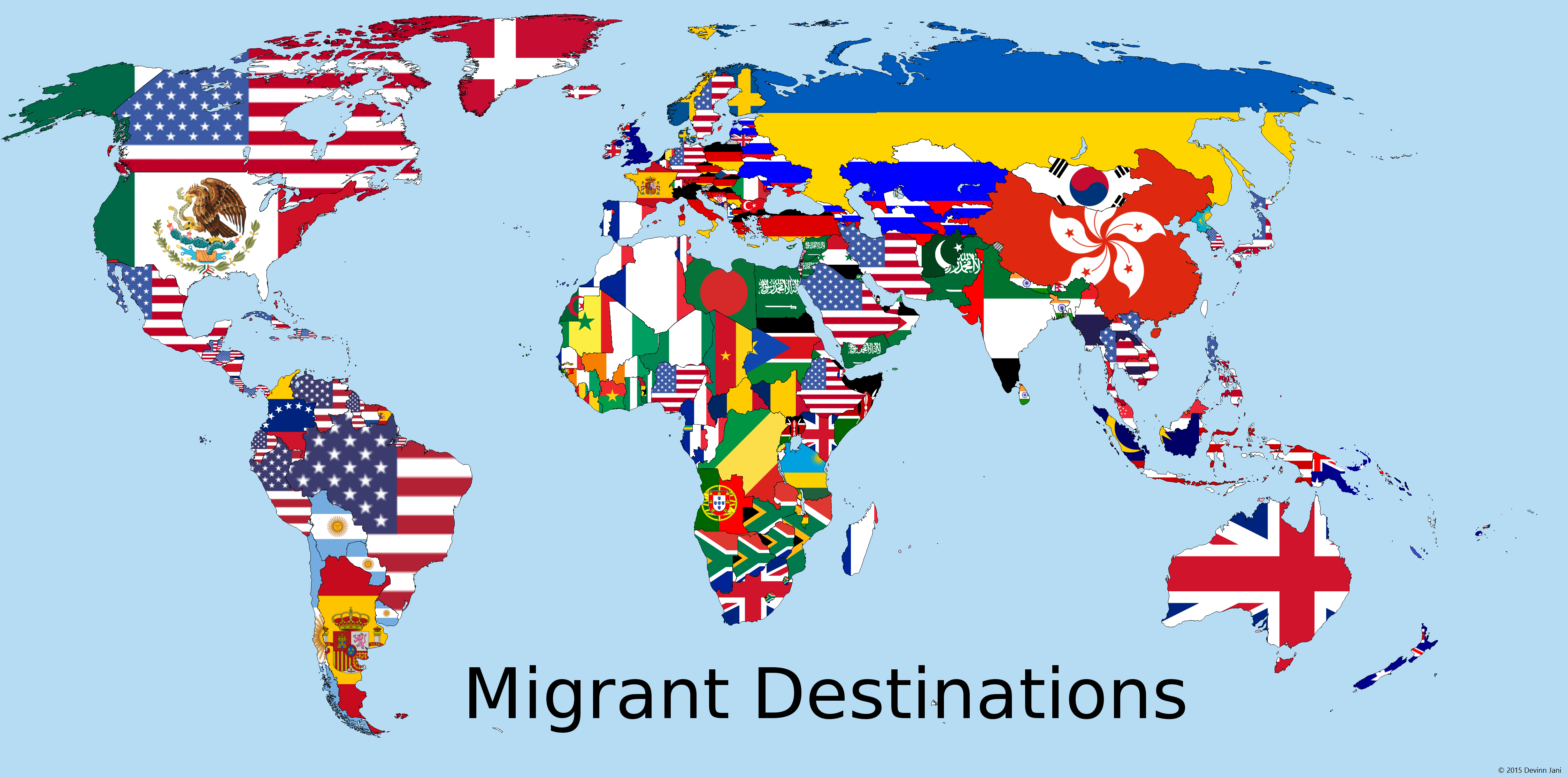
Father Jairo Guidini, Executive Director of the International Network for Migration (SIMN), pointed out that the U.S. governments continue to implement questionable policies.
“It was a disappointment, the state policy continues to close the border and expel migrants. The U.S. policy in recent years is the same, even if the government changes and the new president is more humane and rational. The role of the border police is very demanding,” he sentenced.
MEXICO WITH MUCH HIGHER EMIGRATION
Mexico’s emigration situation is a unique one, with more than 98% of all Mexican migrants living in the U.S.A, the country with which Mexico shares a border that runs 1,933 miles in length.
The Mexican emigration rate increased substantially since the 1960s and, with more than 11% of Mexicans living abroad, Mexico is the country with the second-largest number of emigrants in the world.
Besides the U.S.A, Mexican emigrant populations have also settled in other English-dominant countries, such as Canada and the United Kingdom, as well as certain Latin American countries to their south.
There are also reports of significant numbers of Mexican laborers migrating to Ukraine and Saudi Arabia to work in the oil and construction industries there.
Countries By Number Of Emigrants
Rank County Number of Emigrants (Millions)
1 India 16.6
2 Mexico 13
3 Russia 10.6
4 China 10
5 Bangladesh 7.5
6 Syria 6.9
7 Pakistan 6
8 Ukraine 5.9
9 Philippines 5.7
10 United Kingdom 4.9
More: Brazil news in English, every day from The Rio Times.
This article was produced by The Rio Times’ automated newsroom system. How we use AI · Report an error · Editorial responsibility: Matthias Camenzind, Editor-in-Chief