Hunger During the Pandemic: Brazil Could See Looting in Supermarkets and Pharmacies
RIO DE JANEIRO, BRAZIL – The outskirts of Brasília, the capital of Brazil, is experiencing a state of extreme poverty. Unemployment, hunger, and lack of money may drive the population to loot in supermarkets.
This is the opinion of unemployed housemaid Jacinta Pereira Soares, 65. She lives in the satellite city of São Sebastião, 19 kilometers from the Alvorada Palace, where the President of the Republic, Jair Bolsonaro, lives.
“Robberies are now often happening. Lootings (in supermarkets) have not yet occurred, but depending on the situation, the hunger, they will. Because even fathers can’t bear to see their children crying with hunger when they have nothing to give them,” says Jacinta.
São Paulo’s designer stores block windows
One of the indications that the situation is on the verge of collapse was also reported by the magazine “Pequenas Empresas Grandes Negócios” (Small Companies Big Business), mentioning several designer stores in São Paulo capital. Many brands have boarded up their windows, fearing invasions. Brands such as Vivara, Eva, Reserva, Anacapri, Calvin Klein, and Rosa Chá chose security and also covered their windows.
Other traders chose to place more armed security guards. Lieutenant Colonel Emerson Massera of the São Paulo State Police told the magazine that strategies are being devised to contain potential lootings by crowds.
“The State Police has drawn up a policing plan for the city according to the three stages of the pandemic’s evolution. The initial stage involves contagion: the second is transmission; and the third is chaos in the health system, which can lead to lockdown”.
It is in this third stage that lootings could occur. “Particularly in supermarkets, pharmacies, gas stations, ATMs,” says the lieutenant colonel.
Services declined
Jacinta Soares, now an old woman, has been working heavy labor in the capital Brasília since she was young. She recalls that she even worked in building work. As a stonemason, she helped build the planned city. “I worked in several buildings, including the construction of the national headquarters of the Federal Police,” she recalls.
Currently, Jacinta works as a housemaid in the home of federal civil servants. However, with the pandemic of the novel Coronavirus, services have dwindled. “My week used to be fully booked with cleaning jobs. When the Corona came, everyone fired me because I was in the risk group, because I was already 65 years old. So nobody wants me to work,” he says.
The hunger
With trade in most cities closed due to the novel Coronavirus pandemic, unemployment is knocking on the door and reaching kitchen shelves. “We will not be able to stand starvation. Today we don’t have any money, because we are all unemployed,” says Jacinta.

According to her, traders have taken advantage of the pandemic and raised the prices of basic foodstuffs. The kilo of beans that was sold on average for R$4.00 doubled in price in most supermarkets.
The population faces the dilemma of whether to curfew in quarantine or go out to work. On the one hand, there is unemployment and on the other, hunger: “We don’t have help, there’s nowhere to go, there’s nothing else we can do. I believe that half the population will die of hunger, not of disease,” says Jacinta, a mother of five women and a male child who is transplanted.
Jair Bolsonaro’s government recently launched a R$600 (US$102.48) grant for the vulnerable population. However, a considerable part of the needy has not been able to access the amount. As is the case of Jacinta’s family. “We are living here by God’s mercy. We have no resources. We are all unemployed. My daughter, my grandchildren. This help the government granted hasn’t reached my daughters. It didn’t reach them. They say it’s still under consideration.”
The bureaucratic issue leads to solidarity, and the most impoverished even share rice grains. “We are living as we can. When one has food, they share it with the other. If one goes to the market and buys a packet of rice, they keep half and bring the other half for me to eat with the others”, says Jacinta.
“These days, I haven’t had ten cents to go to the bakery to buy a loaf of bread,” Jacinta said.
Dengue
Filled with garbage in the streets and vacant lots, São Sebastião is an ideal place for the breeding of the dengue mosquito. “We are forgotten by everyone here. We have no government; we have no administrator, we have no President, we have no one here, in this place. We only have God.”
According to Agência Brasília, the district government’s media outlet, a task force to eradicate mosquito outbreaks was conducted in late April. “These regions have shown an increasing incidence of dengue cases, that’s why they were chosen for the initiative,” said Eduardo Hage, the Undersecretary of Health Surveillance. “A mega operation, with 33 vehicles from the Environmental Surveillance, 376 health agents and the support of the Fire Department,” said Hage.
The operation included the work of 250 military firefighters, who operated with 13 vehicles. However, the Times report recorded in photographs on May 15th that the location is still littered with garbage.
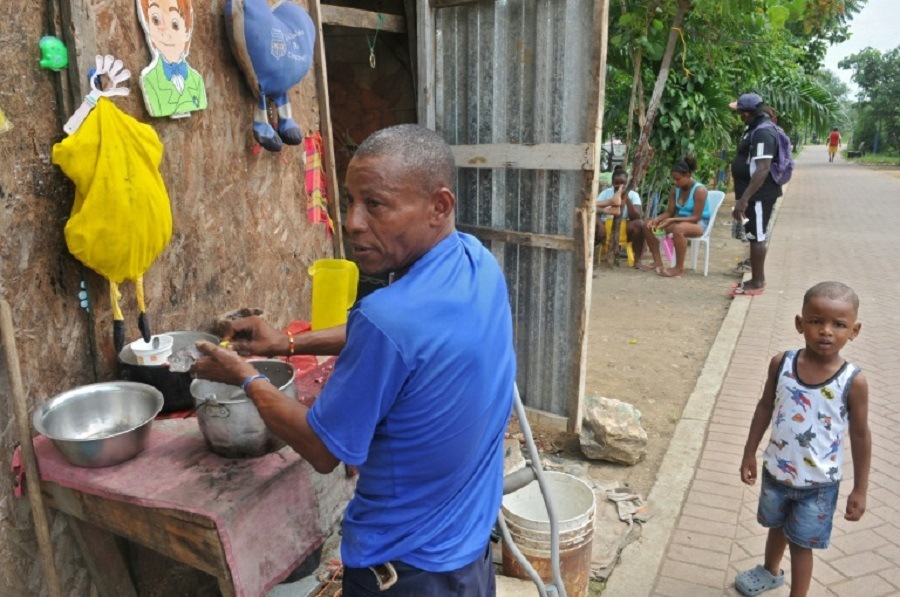
“We have 74 cases of the Coronavirus epidemic here in São Sebastião, but it is dengue that is taking over. They are taking care of Covid’s people and forgetting about the people with dengue. There are already three neighbors of mine with dengue fever,” said Jacinta.
The place is littered with garbage, dirt, dust, and neglect. “We’re completely neglected. There’s only trash and dirt for us”.
More: Brazil news in English, every day from The Rio Times.
Editorial responsibility: Matthias Camenzind, Editor-in-Chief · Editorial standards · Report an error