Human Rights Goals Not Implemented in Brazil, NGOs Tell UN
SÃO PAULO, BRAZIL – Brazil has been able to implement only one of the 163 recommendations made by foreign governments regarding its human rights policies at the United Nations, according to a report by twenty-one non-governmental organizations which make up the UPR (Universal Periodic Review) Brazil Coalition.
The document will be presented this Thursday (September 19th) at the United Nations Human Rights Council in Geneva, Switzerland.

The Coalition, backed by the United Nations, evaluates the implementation of the recommendations received by other nations regarding Brazil’s human rights policies, including areas such as police violence, health, environment and education.
In 2017, governments around the world made 246 suggestions to Brazil to improve its human rights policies. The government of Michel Temer accepted 200 of those suggestions, promising to implement them.
Of these, the Brazil Coalition evaluated 163 of them and concluded that in 142 cases the government simply ignored them, twenty of them were partially met and only one was fully adopted.
According to the report, Brazil’s ‘recent history points to a series of institutional setbacks, whether in terms of democratic participation, sustainable development or human rights.
“The scenario we are experiencing has revealed in the country an evident increase in gender violence, discrimination, inequalities and hate speech,” says the analysis.
“We are also witnessing the growing lack of transparency about official data regarding social, economic and environmental policies, and also the dismantling of social participation policies, through the extinction or precariousness of councils and spaces for participation, in particular the National Council for Human Rights, the CONSEA (Food Security Council) and the National Commission on Sustainable Development Goals,” concludes the report.
For Camila Asano, coordinator of the human rights group, Conectas, the country’s commitment must be to a real and effective implementation of its internationally agreed agreements in the UPR. But Asano tells The Rio Times that is not what is happening in Brazil.
“What we see in this new administration is intense attacks on civil society, as well as a disrespect for processes and institutional limits, such as the abusive use of decrees by the President and ministerial ordinances that modify the law and weaken mechanisms to combat violations of human rights in the country,” says Asano.

“There is a real dismantling of public policies on education, health, and public safety, just to name a few areas,” notes Asano.
According to the Conectas coordinator, there has been an offensive by the federal government against the new Migration Law, which should welcome and protect migrants and refugees. The government has also been reducing the role of civil society in the political and social scenario, by issuing more than twenty decrees aimed at criminalizing social movements, prohibiting demonstrations and monitoring organizations that can aid in the construction of public policies.
“Brazil received two recommendations on the subject, which refer to respect for human rights under anti-terrorism legislation and the non-framing of human rights defenders within the scope of such legislation. These recommendations are being completely disrespected by the state,” says Asano.
In regards to social well-being the report says that over the past three years since the last analysis was issued, poverty has registered a new increase, as has infant and maternal mortality, which analysts say “‘are clear signs of socio-economic backlash”.
Environmental recommendations have also been ignored, according to the report. “The Ministry of the Environment and its Minister have been acting frontally against the environment, aligned with agribusiness and industries with major environmental impacts,” they said.
“In this administration, environmental councils were extinguished and the execution of agreements and terms of state partnerships with NGOs was suspended,” accuse the entities in charge of producing the analysis.
According to the document, the Bolsonaro administration has brought back the ideas of almost a century ago that believes that economic development in the Amazon region is intrinsically associated with deforestation, the exploitation of finite natural resources, and the disappropriation of indigenous lands that have already been ratified by law as reservations.
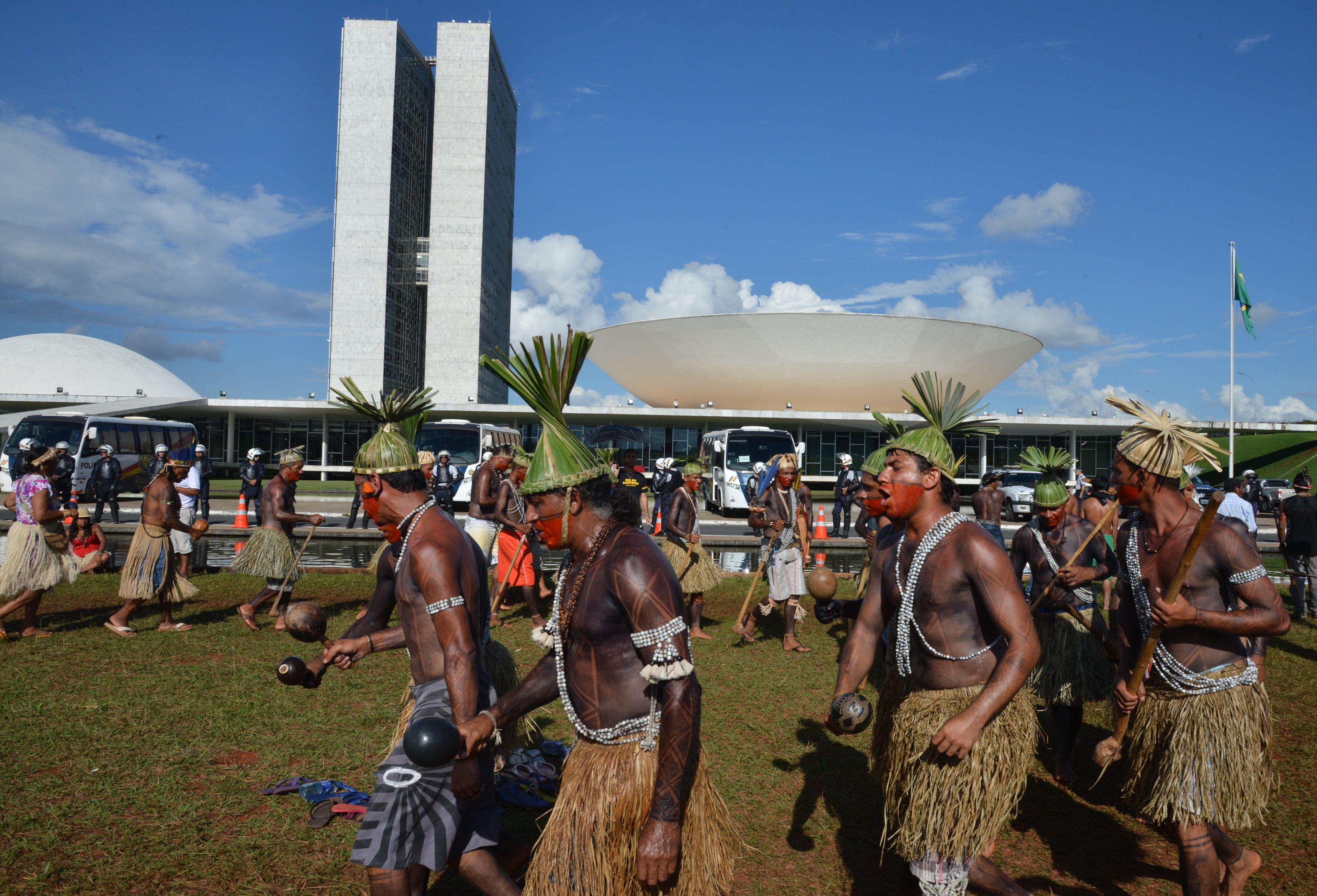
“The narrative about destroying nature to build economic growth through monoculture tramples on acquired rights and contemporary common sense, particularly in the face of a global climate emergency,” says the report.
In late August, the Brazilian government released a preliminary version of its actions in relation to human rights policies. According to Asano the report released by the Bolsonaro Administration is a fantasy.
“This version released by the Brazilian State seems to be detached from the reality of human rights currently observed in the country. In this document, omission is the rule. Much of the public policy presented is no longer in effect because it has been paralyzed, depleted by decree, or because it has no budget, preventing its full functioning,” concludes Asano.
More: Brazil news in English, every day from The Rio Times.
Editorial responsibility: Matthias Camenzind, Editor-in-Chief · Editorial standards · Report an error