How a tragedy turned an Argentine resort into a ghost town and tourist attraction
By Lucila Runnacles
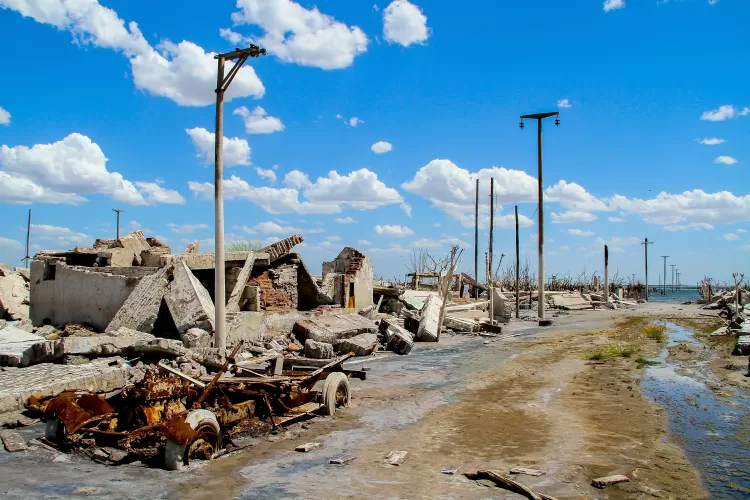
Ladders that lead nowhere, old cars that have been scrapped, fences that no longer restrict anything, and tree trunks still standing – this is what Villa Epecuén looks like today.
This small seaside resort, 520 kilometers from Buenos Aires, used to be one of the most visited destinations in Argentina.
At the time, 1,200 people lived there, but in 1985 a tragic accident flooded Epecuén.
The town was flooded due to heavy rains and poor hydraulic planning.
A barrage gave way, and the waters of Lake Epecuén washed everything away.
Within two weeks, the city was covered by seven meters of water and disappeared from the map.
Fortunately, no one was killed by the flood.
The inhabitants had only a few days to take what they needed and leave their homes in a hurry.
Many returned to the nearby town of Carhué and had to wait 20 years to return to the small town to see what was left of their possessions when the waters receded.
Today it is just rubble, but Epecuén is still an exciting place. Many tourists, especially Argentines, visit the ghost town.
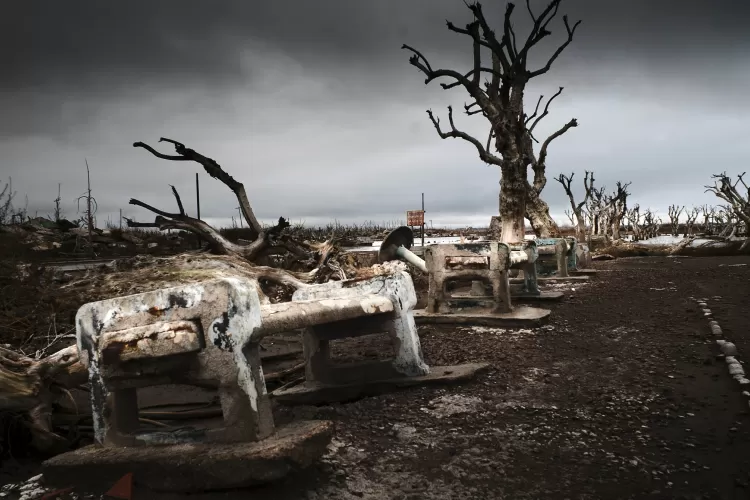
Walking through this white landscape, you almost feel like you are on a movie set: deserted streets and abandonment.
An almost apocalyptic scene.
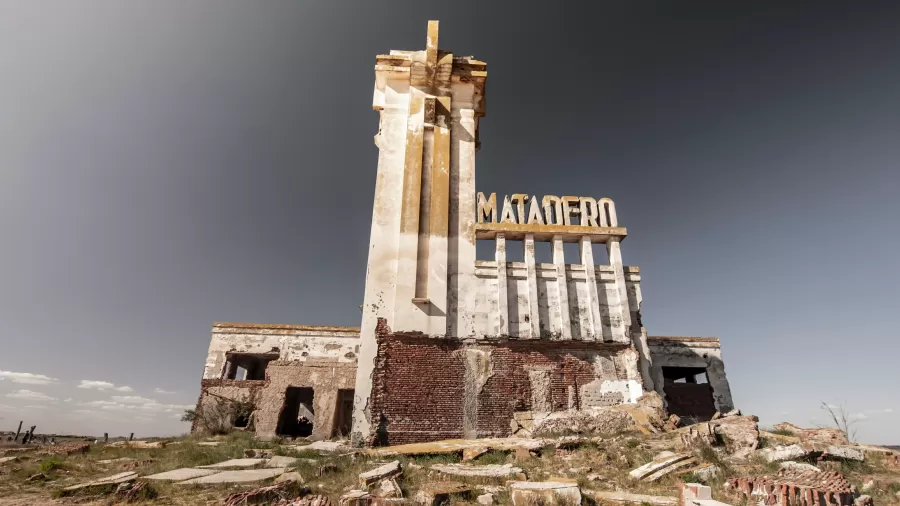
One of the most famous buildings in these ruins is the Matadero, a former slaughterhouse whose facade is still preserved, although inside, it is in ruins.
The letters on the top of the building, designed by the famous Argentine architect Francisco Salamone, an avant-garde architect of his time, can still be seen.
Before the flood, Epecuén was known for its seaside resorts.
Many Argentines visited this place to bathe in the sulfurous and salty waters, known for their healing properties.
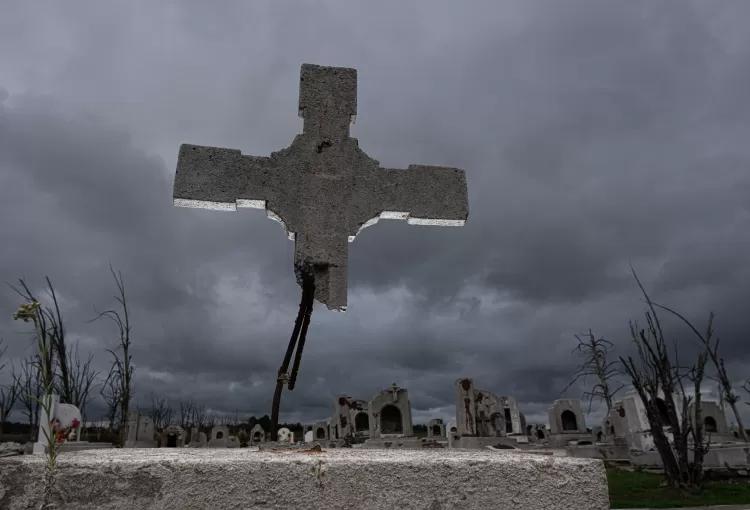
You can also see plaques and photos telling the town’s past.
Benches and cement tables that may have belonged to a square, facades that still resist, posts that once held electric wires, a rusty sink in the bathroom, and streets that show us a path that leads nowhere.
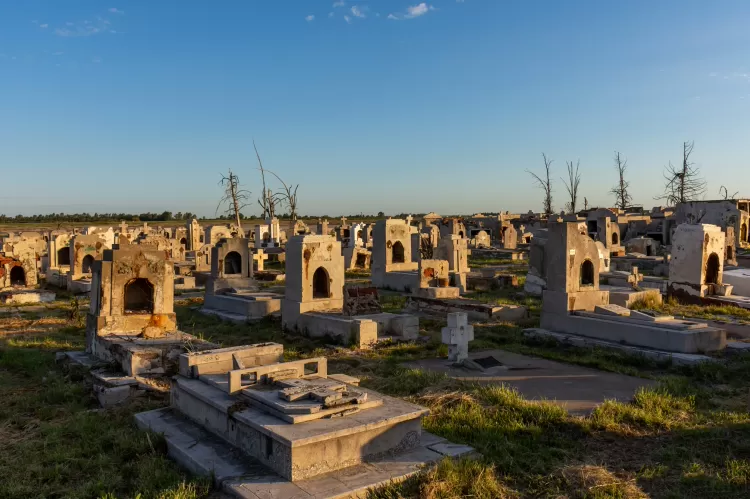
Imagining what life was like there when the seaside resort enjoyed its heyday until the mid-1980s is almost an unavoidable exercise.
The nearest town is Carhué, which is 8 km away.
The small town benefited from the sad end of Epecuén, as it is now visited by tourists who visit the ruins and relax in the thermal waters.
Experts say that the water of Carhué has a salt concentration four times higher than the sea.
They claim that the water of this Argentine lake contains almost as much salt as the water of the famous Dead Sea in the Middle East.
For this reason, the small town has heated swimming pools, spas, and hotels that offer baths that relieve the symptoms of rheumatism and skin infections and help against stress.
Carhué is also home to the Museo Regional de Adolfo Alsina, an exciting place to understand the history of Epecuén better.
In addition, the city has a famous thermal park and a curious Guinness record.
Carhué has managed to gather the most significant number of people swimming simultaneously without equipment.
In January 2017, precisely 1941 people broke this record in the waters of Lake Epecuén.
If you want to visit this unique place, the best time to visit Epecuén is in summer, because winter is freezing.
However, the hotels in Carhué are open all year round.
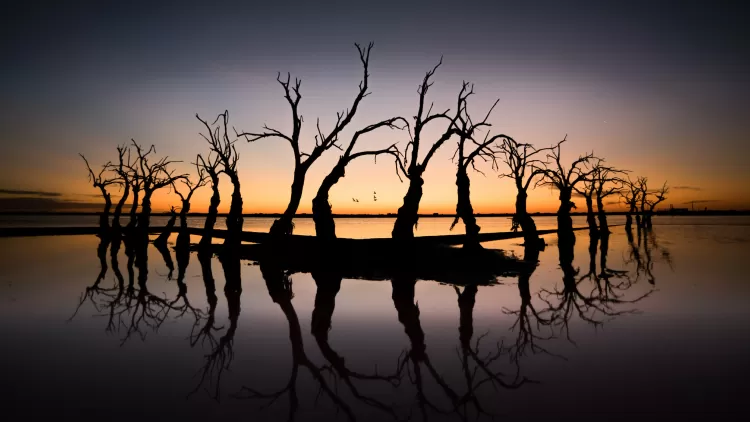
Connoisseurs say that the best time to visit this ghost town is at the end of the day.
The sun sets on the lake, and the natural spectacle reminds us that it is possible to find beauty even in adversity.
Editorial responsibility: Matthias Camenzind, Editor-in-Chief · Editorial standards · Report an error
Read More from The Rio Times