How a shipwreck almost led Brazil to war with England
By Jorge de Souza
Even today, the rare visitors to the Albardão lighthouse, the most isolated in Brazil, in a particularly erratic area of 241 kilometers of the Cassino beach, considered the longest in the world, between the city of Rio Grande and the border of Brazil and Uruguay, can see, at low tide, a piece of the side of a ship buried on the shore.
It is the remains of the Prince of Wales, an English four-masted merchant ship that ran aground and sank there 161 years ago.
But it was not only debris that remained of that great ship.
Its sinking also left a historical legacy: the worst diplomatic crisis ever occurred in the relations between Brazil and England.
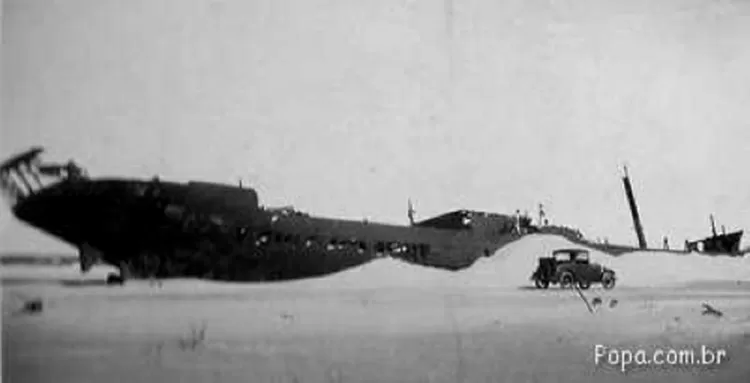
And that, for very little, did not lead the two countries to War, a little more than a century and a half ago.
ABOMINABLE HABIT
It all began when the Prince of Wales sailed from Glasgow, Scotland, bound for Buenos Aires, carrying a few passengers and a varied cargo, ranging from pottery to sacks of coal.
After calling at some Brazilian ports, the large cargo ship fell victim to the unfortunate combination of strong winds, intense currents, and the lack of references to the extensive coastline of Rio Grande do Sul and ran aground on a stretch of that long beach, known at the time as Albardão (the same name that would later baptize the lighthouse built there) in the early hours of June 7, 1861.
Some say that the disaster only happened because of an abominable habit of some shipwreck hunters of the time: lighting torches on the beach as if they were lighthouse signs to confuse night sailing.
But this was never proven.
A DISASTER WITH TWO VERSIONS
Soon after the boat ran aground, the wind became even worse, and the hull of the Prince of Wales began to buckle.
Some crew members managed to get to the beach by using ropes stretched to the sand, and from there, they walked to the village of Rio Grande, almost 100 kilometers away, to ask for help.
However, other occupants of the sailboat (it was never known whether or not there were fatal victims in the accident) remained on board, hoping that the boat would not disintegrate completely.
The round trip to Rio Grande took days.
And it was during this period that the events that eventually triggered a diplomatic – and almost armed – crisis between Brazil (then still an Empire, under the command of Dom Pedro II) and England took place.
But, until today, what happened has two versions: the English and the Brazilian.
“CRIMINAL GAUCHO BARBARIANS”
In the English version, upon returning to the site of the wreck, in the company of police from Rio Grande and the English consul in the city, the Prince of Wales crew found much of the cargo looted and ten occupants of the boat (including two passengers, a woman, and a girl) dead, some already buried in the sand on the beach – which, for them, became a flagrant case of piracy committed by Brazilians.
According to the English consul’s deductions, those people had been killed to avoid denouncing the authors of the looting, who were “barbaric criminals from Rio Grande do Sul”.
But there was another version of what had happened on that beach.
THREE SUSPECTS ESCAPED
In the version of some local residents, the victim’s bodies had been found on the beach, and they had only buried them in charity.
When officially interrogated, however, none of them wanted to comment on the fact.
Afterward, three people suspected of looting the cargo of the boat fled across the border to Uruguay, leading the British to accuse the Brazilian police of negligence.
This was the beginning of a conflict that would also become political.
THEY WANTED COMPENSATION
Later examinations of the victims’ bodies indicated that they had died by drowning, not by violent acts.
But this did not convince the British, who reported the fact, in their own way, to the English ambassador in Rio de Janeiro, William Dougal Christie – who, in turn, made an official protest to Emperor Dom Pedro II, demanding not only an apology from Brazil but also compensation for the looting of the sailboat and the death of those people.
It was the beginning of a dispute that would last more than four years and would have unusual developments in the history of Brazil.
BRAZIL REFUSED
In fact, the animosity between the British and Brazilians had been going on long before that, because of the illegal trade in slave labor, which was still widely practiced here.
Several slave ships on their way to Brazil had been blockaded by the British, generating strong tensions on both sides.
In this scenario, the sinking of the Prince of Wales was just the last straw in the already strained relations between the two countries.
But it ended up taking on unimaginable proportions after the Brazilian monarch refused to accept the impositions of the English ambassador – whose name would eventually baptize the case, which went down in history as the “Christie Affair”.
INTIMIDATION AT THE INQUIRY
During the inquiry that investigated the case, ambassador Christie even asked the English Navy to send a warship to the port of Rio Grande, to intimidate the Brazilians and put pressure on the Rio Grande authorities.
And so it was done.
In March 1862, the English gunboat Sheldrake anchored in front of the city for a few days, as a veiled form of threat.
ANOTHER INCIDENT AT THE SAME TIME
To make relations between the two countries even worse, three months after the Prince of Wales episode, three drunken English sailors got into a fight with Brazilian police officers in the port of Rio de Janeiro and were arrested, after causing the death of one of them.
Immediately, the English ambassador took action again, demanding the release of his countrymen, since, by the rules of his country, the British courts were the only courts fit to judge English citizens.
But Dom Pedro II ignored the diplomat’s foolish and offensive argument and responded by saying that, to guarantee its sovereignty, Brazil would even be ready for a war against England, if necessary.
The tension between the two countries only increased.
BROKEN RELATIONS
But Ambassador Christie quickly counterattacked.
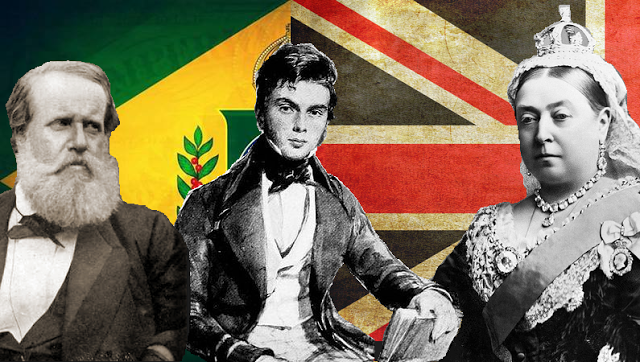
In December of that year, British battleships also arrived in the port of Rio de Janeiro.
There, they blocked the exit from Guanabara Bay and imprisoned five Brazilian ships, demanding payment of compensation for the sinking of the Prince of Wales – in addition to that so-called official retraction from the Brazilian Emperor.
For seven days, the then headquarters of the Empire of Brazil was besieged by English ships, which caused indignation among Brazilians and led Dom Pedro II to reverse the roles.
He was now the one demanding a formal apology from England for the violation of Brazilian territory, in addition to compensation for the time the ships were held up in the port of Rio de Janeiro.
But the English did neither.
Dom Pedro II then decided to break diplomatic relations with Great Britain in May 1863.
DOM PEDRO II WENT BACK ON HIS WORDS
However, soon after, as Brazil was too dependent on trade relations with England, the Brazilian Emperor accepted that the crisis between the two countries be mediated by a neutral monarch, King Leopold I of Belgium, who had to judge the case of the sinking of the Prince of Wales.
Months later, however, fearing that the verdict would be even worse for Brazil, Dom Pedro II went back on his word and decided to pay compensation for the looted cargo from the ship stranded on the coast of Rio Grande do Sul, thus putting an end to the diplomatic crisis.
THEY DID NOT RETURN THE MONEY
Dom Pedro II’s argument to justify the payment of the indemnity was that the worsening relations between the two countries were due to the “English disrespect to Brazilian sovereignty,” not financial issues.
However, soon after, the Belgian king would end up agreeing with Brazil in the episode of the blockade of the port of Rio de Janeiro.
It was then Dom Pedro II’s turn to demand that the British return the money, which was never done.
Neither this nor a retraction from the English government.
FINALLY, THE ENGLISH EXCUSE
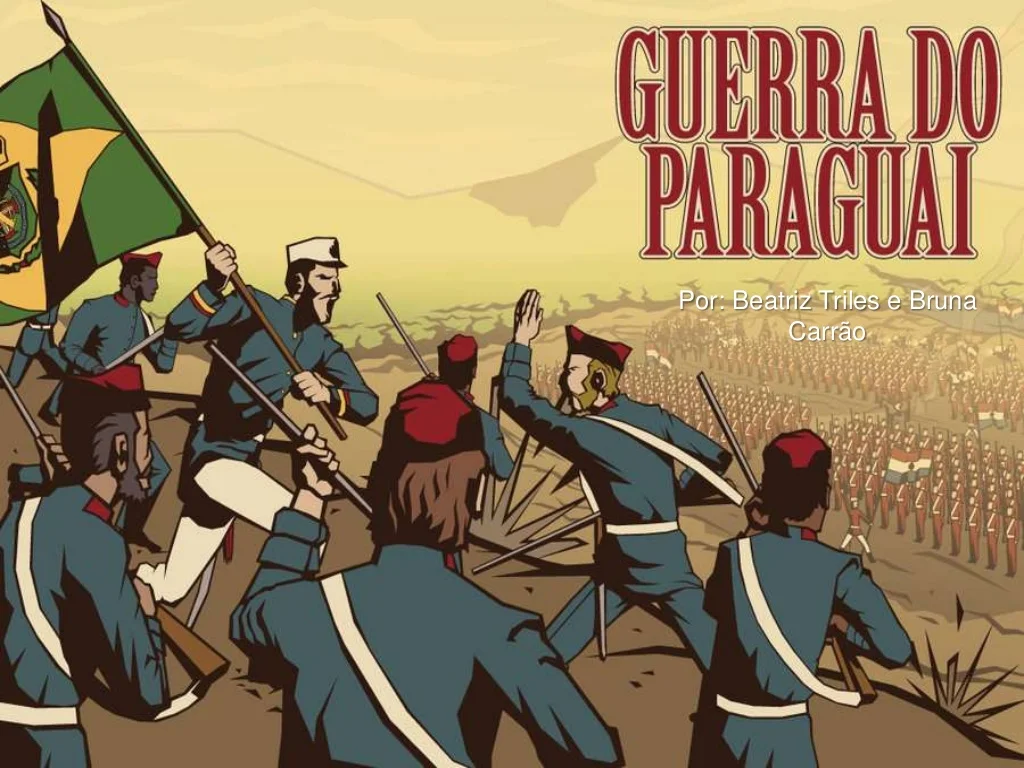
The crisis between the two countries only ended two years later, in 1865, because of the Paraguayan War, when England, which was also politically involved in the conflict, finally agreed to apologize to the Brazilian Emperor.
Even so, he never gave up his version of the case of the Prince of Wales, whose narrow shipwreck didn’t lead Brazil to War against the biggest world power of the time.
A fact that, until today, more than 160 years later, still feeds the conversations of the lonely lighthouse keeper of the Albardão, in one of the most isolated regions of the Brazilian coast, the stage of so many other shipwrecks that led to the construction of the lighthouse itself, sometime later.
A DOZEN LIGHTHOUSES ON A SINGLE COAST
The Prince of Wales episode wasn’t the only reason for the unusual and dangerous Rio Grande do Sul coast to gain the succession of lighthouses it has today – no less than twelve along a little more than 600 kilometers.
Because of its isolation, surrounded by a sea of sand dunes on all sides, the Albardão lighthouse is the most legendary.
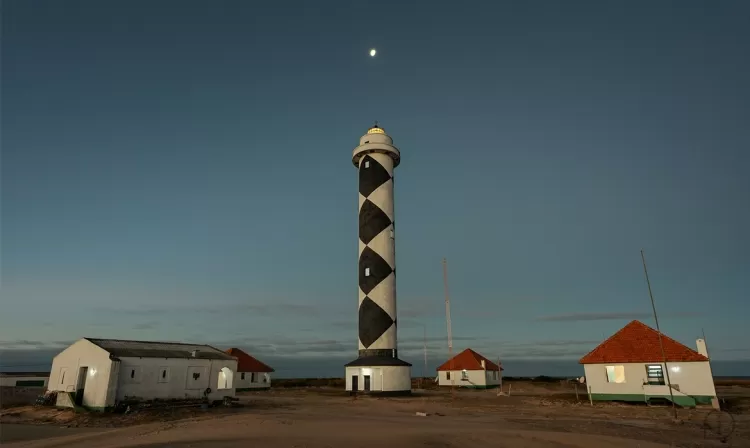
Almost all the lighthouses on the coast of Rio Grande do Sul were the result of an accumulation of shipwrecks in the region, which forced the maritime authorities to better signalize the coast of Rio Grande do Sul, one of the most difficult stretches of navigation on the Brazilian coast – a feature that, however, has been conveniently used in the past by ill-intentioned people.
THE SCAM THAT WORKED
One of the most famous cases of the genre was the grounding (on purpose, but under the excuse of the difficulty of navigation in the region) of the Spanish passenger ship Sarita, a few years after the Prince of Wales episode and practically in the same region, which, although it was clearly a scam, had an unexpected and happy ending for all parties.
With information from UOL
Editorial responsibility: Matthias Camenzind, Editor-in-Chief · Editorial standards · Report an error
Read More from The Rio Times