Guineans, Senegalese and Portuguese are the largest foreign communities in Cape Verde – study
The immigrant or foreign population in Cape Verde is 2.2% of the total population and Guineans, Senegalese and Portuguese are the largest foreign communities residing in the archipelago, according to a study presented today.
According to preliminary data from the first survey on the foreign and immigrant population in Cape Verde, it is estimated that there are 10,869 immigrants or foreigners in the country, representing 2.2% of the total population.
Most foreigners are in the cities of Praia and Santa Catarina de Santiago, on the islands of Sal, Boa Vista and São Vicente, according to the same study.
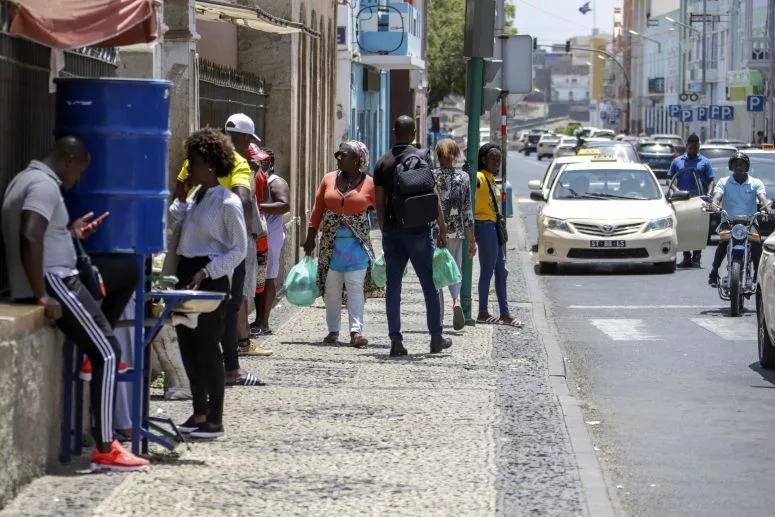
Most foreigners and immigrants residing in Cape Verde (60.5%) have the nationality of a country in the Economic Community of West African States (ECOWAS), with emphasis on Guineans, Senegalese, Nigerians, Guineans from Guinea-Conakry and Gambians.
Next, 17.6% of foreigners are Europeans, mostly Portuguese and Italians, while 8.6% are Americans, 8% are from other African countries, such as São Tomé and Príncipe and Angola, and 4.9% are Asians, mostly Chinese.
According to the director of the High Authority for Migrations, Carmen Furtado, the study also shows that the weight that immigration has on households in Cape Verde is around 5%, which means that out of every 100 households, five are affected by emigration, or have an emigrant or foreigner in their composition.
A large number of respondents expressed the desire to have Cape Verdean nationality, and a large number want to stay in Cape Verde for the next five years, “which from the point of view of public policies shows a willingness to integrate”, stressed the director , for whom the vast majority of immigrants feel very well integrated in the archipelago.
However, there is still a feeling of discrimination, which is still above 30%. “Five or six years ago we had done a study and this aspect had already been pointed out”, she said.
The first survey on the foreign and immigrant population in Cape Verde was carried out in partnership between the High Authority for Immigration (AAI) and the National Institute of Statistics (INE) and data was collected in August.
Based on the 2021 general population census, the data were presented one day after the celebration of International Migration Day.
The Minister of Family, Inclusion and Social Development, Fernando Elísio Freire, attended the presentation, who said that the objective of the study is to know the immigrant population in Cape Verde, for a “full integration” in the archipelago.
“That’s why we opened a period of extraordinary regularization, to solve the documentation problem, we are opening, in the main points of reception and reception of the immigrant community – Praia, São Vicente, Sal, Boa Vista and Santa Catarina de Santiago – with translation stations”, pointed out the minister.
He also said that the entire policy of access to health, education, training and the job market has been aimed at all Cape Verdeans, but also at all those who live in Cape Verde.
“This demonstrates that the Government is working to fulfill that objective, it treats citizens who chose Cape Verde to live in the same way that we treat a Cape Verdean, which is a clear sign that Cape Verde is a democratic and inclusive country”, stressed the minister.
With information from Sapo
More: Angola news in English, every day from The Rio Times.
This article was produced by The Rio Times’ automated newsroom system. How we use AI · Report an error · Editorial responsibility: Matthias Camenzind, Editor-in-Chief