Guatemala Says All 34 Roadblocks Are Cleared
GUATEMALA · PROTEST
Key Facts
- —The clearance The government says all 34 roadblocks nationwide have been cleared.
- —When 12 and 13 September 2026.
- —The cause Protests over fuel prices.
- —The court The clearance followed a Constitutional Court order.
- —The dispute The government contests the six-hour compliance window the court gave it.
- —What is unverified The Rio Times could not confirm the reported ten-day duration of the protests.
Thirty-four roadblocks came down after a court order. The government says it complied. It also says the deadline was unreasonable.
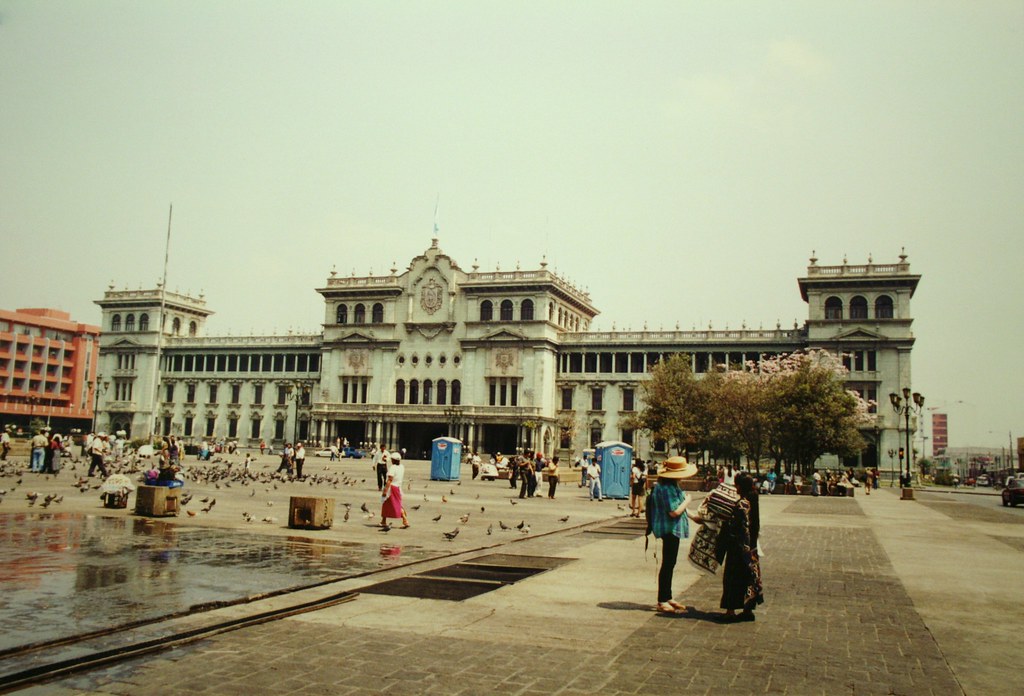
Guatemala’s government reported over the weekend that circulation had been restored at all 34 points blocked by fuel-price protesters, following an order from the Constitutional Court.
What Was Blocked
Thirty-four roadblocks were in place across the country, set up by protesters over fuel prices.
The government said on 12 and 13 September that circulation had been restored at all of them, and that it was reinforcing surveillance against new demonstrations.
The Rio Times has not been able to confirm the reported duration of roughly ten days and does not state it.
The Court’s Role
The clearance followed an order from Guatemala’s Constitutional Court, the Corte de Constitucionalidad.
The government says it complied while disputing the six-hour window the court gave it to do so.
That objection is not trivial. Clearing thirty-four separate blockades across a country the size of Guatemala inside six hours is an operational demand that assumes forces already in position at every point.
Roadblocks are the standard instrument of Guatemalan protest precisely because the country’s commerce runs on a small number of highways. The Pacific corridor and the routes to the Atlantic ports are what a blockade actually interrupts.
Why Fuel
Fuel prices are a recurring trigger across Latin America this month. Brent crossed US$100 a barrel on 9 September and has stayed there.
Governments in the region have responded differently. Brazil is spending around R$7 billion (about US$1.37 billion) a month holding its pump price down. Bolivia is preparing to remove its fuel subsidy in 2027 under an IMF programme. Peru, which subsidises nothing, now has the highest diesel price in Latin America at US$7.40 a gallon.
Guatemala sits in the middle of that spectrum, and the protests are the visible cost of whichever position a government takes.
The Political Setting in Guatemala
President Bernardo Arévalo’s government has spent its term in a sustained institutional conflict with the attorney-general’s office, which attempted to block his inauguration and has pursued cases against his party since.
That conflict shapes how any protest is read. A government under permanent legal siege has limited room to absorb a nationwide blockade, and limited credibility when it responds with force.
The Constitutional Court, which issued the clearance order, has been the institution that repeatedly ruled in favour of the democratic transition during that period. An order from it carries weight that an executive instruction would not.
What Happens Next
Guatemala’s export economy is concentrated in coffee, sugar, bananas and cardamom, and almost all of it moves by road to Puerto Quetzal on the Pacific or to Puerto Barrios and Santo Tomás de Castilla on the Atlantic. A blockade on the CA-9 or CA-2 highways does not slow that traffic, it stops it.
Perishable cargo is the part that does not recover. A container of produce held for two days at a roadblock is not late, it is written off, and the loss falls on the producer rather than on the state the protest is aimed at.
That is also why roadblocks work as leverage. They impose a cost the government has to answer for within days, which is a far shorter horizon than any negotiation over fuel pricing would run on.
What Happens Next
Clearing blockades ends the disruption without addressing what produced it. Fuel prices have not fallen and the international price that sets them is not under Guatemalan control.
The government’s stated response is reinforced surveillance against new demonstrations, which is a policing answer to an economic problem.
Whether the blockades return is a question about the oil price as much as about Guatemalan politics.
More: Latin America news in English, every day from The Rio Times.
Frequently Asked Questions
How many roadblocks were cleared?
All 34 nationwide, according to the government, on 12 and 13 September 2026.
What caused them?
Protests over fuel prices.
What was the court’s role?
The Constitutional Court ordered the clearance. The government says it complied while disputing the six-hour window it was given.
How long did the protests last?
Roughly ten days has been reported. The Rio Times could not confirm that figure.
Why are fuel prices the trigger?
Brent crossed US$100 a barrel on 9 September and has stayed above it, pressuring pump prices across the region.
Sources: Infobae, Prensa Latina, Prensa Libre, ICN Diario, Notimerica.
This article was produced by The Rio Times’ automated newsroom system. How we use AI · Report an error
Read More from The Rio Times