Grupo Argos Launches US$123 Million Buyback and Turns Odinsa Into an Asset Manager
Grupo Argos has launched a programme it calls ACE 1.0, pairing COP$500 billion (about US$123 million) of share buybacks with a restructuring that turns its infrastructure arm Odinsa into the holding’s sole asset manager.
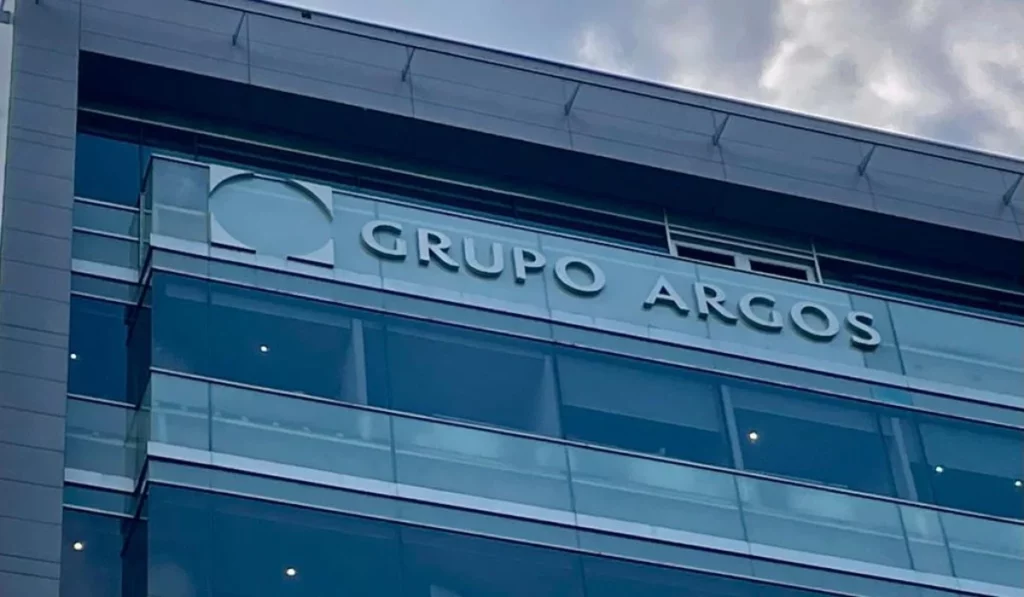
Grupo Argos Moves to Close Its Valuation Gap
A Programme Aimed at a Valuation Gap
Grupo Argos has launched ACE 1.0, which it calls the Argos Convergence Effort, a programme designed to close the gap between the company’s share price and what management considers its fundamental value. The plan combines share repurchases with a structural reorganisation of the group’s infrastructure business. Both elements are aimed at the same target: making the market price converge with the value of the underlying assets.
The first component is a buyback of COP$500,000 million — that is COP$500 billion, or about US$123 million — to be executed over the next six to twelve months. The second is the conversion of Odinsa, the group’s infrastructure arm, into Argos Asset Management, which would become the sole asset manager of the holding company. The reorganisation changes how the group holds and manages toll roads, airports and water platforms.
Management has attached quantified targets to the plan. It expects EBITDA to rise from COP$3.2 trillion (about US$790 million) to COP$5.6 trillion (about US$1.38 billion) within 24 to 36 months, an increase it describes as 70%. It has also pledged to double the dividend per share within 36 months.
The Buyback: Size, Timing and Authorisation
The COP$500 billion (about US$123 million) repurchase draws on an authorisation granted by the shareholders’ assembly in March 2026, so the mandate is already in place. Execution is planned over the next six to twelve months rather than in a single block. Programmes spread over such a period are typically carried out gradually in the market, which limits the price impact of any one session.
A repurchase reduces the number of shares outstanding, mechanically lifting earnings and dividends per remaining share if profits hold steady. It also signals that management regards the current price as below intrinsic value, since the company is choosing its own shares over other uses of cash. The strength of that signal depends on whether investors accept the underlying valuation argument.
A Larger Second Tranche Held in Reserve
Management said up to COP$1.5 trillion (about US$370 million) more could be deployed for the same purpose. That amount is three times the initial programme and would represent a substantially larger commitment of capital to repurchases. It is not, however, an approved figure at this stage.
Two conditions were attached: a new authorisation from shareholders and progress in monetising some stabilised assets. The second point links buyback capacity to asset sales, meaning proceeds from mature holdings would fund repurchases rather than new borrowing. Investors will therefore watch disposals as closely as the repurchases themselves, because one is presented as the source of the other.
Odinsa Becomes Argos Asset Management
Under the plan, Odinsa evolves into Argos Asset Management and becomes the sole asset manager of the holding company. Grupo Argos will directly own the stakes that Odinsa currently holds in toll roads, airports and water platforms. Ownership therefore moves up to the parent, while the management function is consolidated in the renamed entity.
The distinction between owning assets and managing them is central to the design. An asset manager earns fees for operating and developing assets on behalf of owners, a business with different capital requirements and a different risk profile from balance-sheet ownership. Separating the two functions makes each easier for the market to assess on its own terms.
What Direct Ownership Changes
Holding infrastructure stakes directly removes a layer between the parent and the underlying cash flows. In a stacked structure, dividends travel from the operating asset to an intermediate company and only then to the holding company, with governance and sometimes tax friction at each step. Collapsing a layer can simplify capital allocation and disclosure.
It also changes the unit of analysis for investors. Direct ownership makes it easier to attribute value to individual platforms rather than to a subsidiary that bundles them together, which matters when the stated objective is to close a valuation gap. Whether that clarity translates into a higher share price depends on execution rather than on structure alone.
The EBITDA and Dividend Targets
The headline financial target is a rise in EBITDA from COP$3.2 trillion (about US$790 million) to COP$5.6 trillion (about US$1.38 billion) over 24 to 36 months. The company frames that as an increase of about 70%. Targets of such magnitude usually rest on a combination of organic growth, portfolio changes and the consolidation of previously indirect holdings.
The dividend commitment is separate but related: management has pledged to double the dividend per share within 36 months. Because buybacks reduce the share count, part of any per-share improvement can come from fewer shares rather than from higher total distributions. The two policies are therefore linked in their arithmetic as well as in their intent.
Both targets are forward-looking statements rather than results, and neither carries a guarantee. The test will be the interim reporting through which progress becomes visible: the trajectory of EBITDA, the pace of repurchases and the dividend actually declared. Investors typically discount plans of this kind until execution is demonstrated.
How Holding-Company Discounts Work
Listed holding companies in Latin America frequently trade below the sum of their parts. The discount reflects several factors: minority investors cannot control the underlying assets, dividends may be taxed or trapped at intermediate levels, cross-holdings obscure ownership, and diversified structures are harder to analyse than single-business companies. Thinner trading liquidity in some markets adds to the effect.
The standard remedies are the ones on display here. Companies simplify structures, sell assets to establish market values, return capital through buybacks and dividends, and improve disclosure so that each business can be valued separately. None of these reliably eliminates a discount, but together they can narrow it when management follows through consistently over several reporting periods.
What Investors Should Watch
The nearest-term indicator is the pace of the COP$500 billion (about US$123 million) repurchase and whether it is completed within the stated six to twelve months. Attention then turns to the monetisation of stabilised assets, since management has tied the potential second tranche to that progress and to a fresh shareholder authorisation. The programme is explicitly time-bound, which makes adherence to its own schedule an early test of credibility.
The structural leg carries its own checkpoints: the formal establishment of Argos Asset Management, the transfer of the toll road, airport and water stakes to direct ownership, and any resulting change in reported segments. Alongside those, the EBITDA trajectory toward COP$5.6 trillion (about US$1.38 billion) and the first steps toward a doubled dividend will show whether ACE 1.0 is converting intent into results. The distance between the share price and management’s stated view of value remains the single measure against which the entire programme was defined.
More: Colombia news in English, every day from The Rio Times.
Frequently Asked Questions
What is ACE 1.0?
ACE 1.0 stands for the Argos Convergence Effort, a programme Grupo Argos launched to close the gap between its share price and what it considers its fundamental value. It combines share repurchases with a restructuring of the group’s infrastructure business. The first stage involves buying back COP$500 billion (about US$123 million) of shares over six to twelve months. Management has also set EBITDA and dividend targets alongside it.
How large could the buyback become?
The initial programme is COP$500 billion (about US$123 million), using an authorisation granted by the shareholders’ assembly in March 2026. Management said up to COP$1.5 trillion (about US$370 million) more could be deployed for the same purpose. That larger amount would require a new shareholder authorisation and progress in monetising some stabilised assets. It is therefore a possibility rather than a commitment.
What happens to Odinsa?
Odinsa, the group’s infrastructure arm, will evolve into Argos Asset Management and become the sole asset manager of the holding company. Grupo Argos will directly own the stakes Odinsa currently holds in toll roads, airports and water platforms. The change separates ownership of the assets from the business of managing them. The operating platforms themselves remain within the same group.
What financial results is the company targeting?
Grupo Argos expects EBITDA to rise from COP$3.2 trillion (about US$790 million) to COP$5.6 trillion (about US$1.38 billion) within 24 to 36 months, an increase it describes as 70%. It has also pledged to double the dividend per share within 36 months. These are management targets rather than results, and they depend on execution of both the buyback and the restructuring. Progress will become visible through the company’s periodic reporting.
Sources
Sources: Grupo Argos, Valora Analítik, El Tiempo.
This article was produced by The Rio Times’ automated newsroom system. How we use AI · Report an error
Read More from The Rio Times