Grains Slip: Soy, Corn, Wheat Ease as Harvest Meets China Demand
Key Facts
- Soybeans held firmest the Teucrium Soybean Fund closed at US$27.92, down 0.25% on Thursday, September 24, as Chinese purchases cushioned harvest pressure.
- Corn eased lower the Teucrium Corn Fund settled at US$19.68, down 0.40%, with traders disappointed by export business while US supplies arrived.
- Wheat led losses the Teucrium Wheat Fund ended at US$25.57, down 0.43%, the steepest decline among the three grain trackers.
- China remains pivotal state traders had booked about 13 million tons of US soybeans by mid-September, including one reported tranche of 875,300 tons.
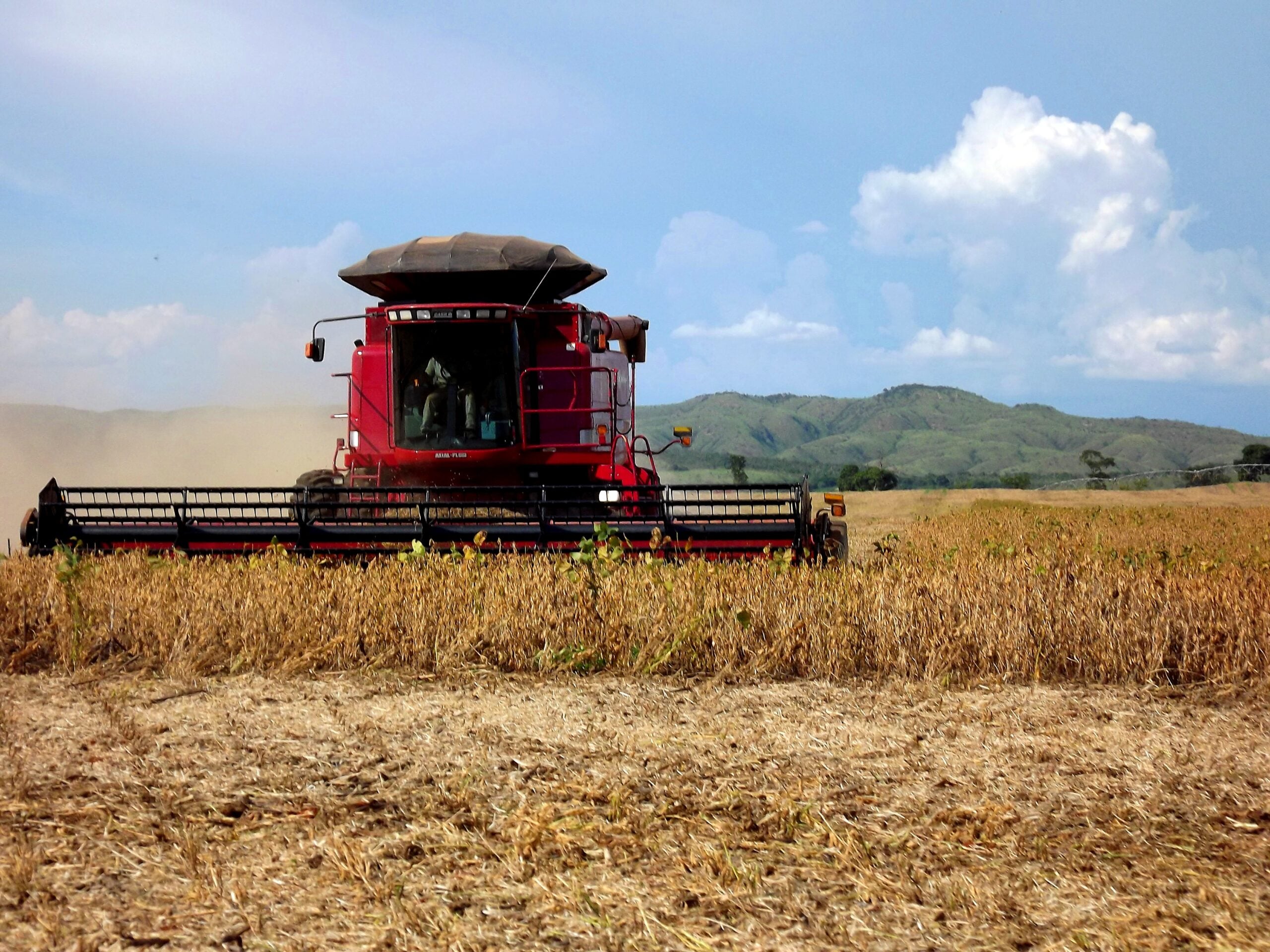
- Harvest adds supply corn was 13% harvested and soybeans 12% harvested in the week ended September 20, both ahead of their five-year averages.
- Currency link matters grain exports are priced in US dollars, so a weaker Brazilian real or Argentine peso raises local-currency returns for exporters.
Today’s Focus
Grain trackers slipped on Thursday, September 24, with wheat falling hardest as global supplies competed for buyers. Soybeans lost the least because Chinese state purchasers kept buying US cargoes even as the American harvest added physical supply.
Corn was caught between disappointing export business and the arrival of new-crop bushels, leaving the tracker down 0.40%. Wheat faced continued technical selling and abundant world stocks, falling 0.43%.
For Brazil and Argentina, the engine of world soybean and corn exports, the session mattered through the currency channel. A weaker real or peso makes dollar-priced grain sales more valuable in local terms, which can speed farmer selling.
What matters today. Whether China keeps booking US soybeans fast enough to absorb the harvest wave now hitting the market.
01 The session in one read
Grain trackers drifted lower on Thursday, September 24, with wheat the weakest link and soybeans the relative strong spot. The moves were small but consistent: supply arriving from US fields met demand that was selective rather than broad.
China was the anchor for soybeans, with state traders known to have booked roughly 13 million tons of US soybeans by mid-September. That steady buying kept soybean losses to a quarter of one percent, even as combines moved through American fields ahead of the normal pace.
The market is in a tug-of-war between China’s steady soybean buying and the mechanical pressure of a fast US harvest. Soybeans are holding up best because demand is real and traceable, while corn and wheat lack an equivalent buyer stepping in. The variable to watch next week is the pace of Chinese purchase announcements against the rising US harvest completion rate.
02 The board
The Teucrium Soybean Fund, which tracks soybean futures, closed at US$27.92 on Thursday, down 0.25%. The Teucrium Corn Fund settled at US$19.68, a 0.40% decline, while the Teucrium Wheat Fund ended at US$25.57, down 0.43%.
The pattern on the board showed a clear ranking: soybeans held up best, corn occupied the middle, and wheat bore the brunt of the selling. A trader reading the three trackers side by side would see a market rewarding the commodity with an active buyer and punishing the one most exposed to global competition.
| Asset | Level | Change |
|---|---|---|
| Soybeans (SOYB) | US$27.92 | -0.25% |
| Corn (CORN) | US$19.68 | -0.40% |
| Wheat (WEAT) | US$25.57 | -0.43% |
Source: RT close, 2026-09-24. Where a commodity has no spot feed, an exchange-traded tracker or leading producer is shown as a labelled proxy.
Live Market IntelligenceThe live market board
Rio Times · Live Market Intelligence
Latin America — Cross-Market Board
| Instrument | Last | Change | YoY | Prev. | High | Low | Volume |
|---|---|---|---|---|---|---|---|
| IBOV | 183,965.91 | -0.99% | +21.85% | 185,814.09 | 168,310 | 167,142 | — |
| IPSA | 11,300.53 | -1.30% | — | 11,449.63 | 11,210 | 10,984 | 1,513,213,483 |
| IPC MEX | 64,264.16 | -0.02% | +12.17% | 64,276.72 | 66,121 | 65,405 | 108,886,187 |
| MERVAL | 2,939,964 | -1.00% | +30.51% | 3,022,485 | 3,042,365 | 2,991,150 | — |
| COLCAP | 2,609.40 | -0.12% | — | 9.04 | 9.05 | 9.02 | 4,133 |
| BVL PERÚ | 59,677.00 | +0.43% | — | — | — | — | — |
| USD/BRL | 5.16 | +0.01% | -5.13% | 5.16 | 5.18 | 5.14 | — |
| EUR/BRL | 5.95 | +1.01% | -5.83% | 5.89 | 5.98 | 5.94 | — |
| USD/MXN | 17.06 | -0.24% | -8.58% | 17.10 | 17.08 | 17.01 | — |
| USD/CLP | 913.98 | +0.04% | -5.67% | 913.65 | 915.11 | 906.68 | — |
| USD/COP | 3,140 | +0.03% | -22.04% | 3,139 | 3,141 | 3,105 | — |
| USD/PEN | 3.36 | -0.66% | -4.82% | 3.38 | 3.38 | 3.35 | — |
| USD/ARS | 1,493 | +0.10% | +12.96% | 1,491 | 1,494 | 1,480 | — |
| USD/UYU | 40.27 | +1.24% | +1.80% | 39.77 | 40.27 | 40.23 | — |
| USD/PYG | 5,939 | +1.68% | -19.54% | 5,841 | 5,939 | 5,925 | — |
| USD/BOB | 11.64 | -0.76% | +72.04% | 11.73 | 11.72 | 11.64 | — |
| USD/DOP | 58.34 | +1.25% | -3.44% | 57.62 | 58.34 | 58.04 | — |
| USD/CRC | 445.92 | +0.89% | -9.71% | 441.97 | 448.50 | 445.92 | — |
03 What moved it
The US harvest is adding physical supply at a rate that outpaces the five-year average. Corn was 13% harvested and soybeans 12% harvested in the week ended September 20, which means fresh bushels are arriving just as export demand for corn disappoints.
Wheat faced its own problem: technical selling and abundant global supplies. Without a China equivalent stepping in for wheat, the tracker slipped the most of the three, while corn eased as traders waited for evidence of further Chinese purchases that did not materialise in size.
04 The Latin American read
Brazil and Argentina are the world’s export engine for soybeans and corn, and both watch the dollar-priced grain trade through a currency lens. A weaker Brazilian real raises the local-currency value of every ton sold abroad, which can encourage farmers to release stored grain faster.
Brazil is expected to produce another record soybean crop, though slower planting growth, high financing and fertiliser costs, and El Niño-related yield risks complicate that outlook. Brazil’s stronger domestic ethanol demand is also reducing the share of its corn crop available for export, while Argentina’s soybean harvest was 99.1% complete by early July, leaving its export role focused on processed products and remaining shipments.
05 The names to watch
The three trackers themselves are the most direct way for foreign investors to follow the grain complex: the Teucrium Soybean Fund, the Teucrium Corn Fund, and the Teucrium Wheat Fund. Their daily moves on Thursday reflected a market sorting through harvest pressure and selective Chinese demand.
Beyond the trackers, the watchlist includes Chinese state trading houses, whose booking pace determines whether soybeans can decouple from the broader grain slide. US processors are also scrambling for supplies amid harvest delays, which could tighten nearby soybean availability even as the headline harvest runs ahead of normal.
06 The outlook
The next sessions will test whether Chinese soybean buying can absorb the accelerating US harvest without further price slippage. Corn needs a fresh round of export business to break out of its drift lower, and wheat needs something to stem the technical selling that has made it the weakest of the three.
For Latin American producers, the currency path matters as much as Chicago futures. If the real or peso weakens further against the dollar, faster farmer selling in Brazil and Argentina could add supply to the global market and reinforce the harvest pressure already coming from the United States.
07 What to watch
- Chinese soybean bookings: the pace of new purchase announcements will show whether demand can absorb the fast US harvest
- US harvest progress: corn and soybean completion rates ahead of five-year averages are adding physical supply to the market
- Brazilian real and Argentine peso: currency weakness would raise local returns for exporters and could speed farmer selling
- Wheat technical selling: continued chart-driven selling could deepen wheat’s underperformance against corn and soybeans
Frequently Asked Questions
Why did soybeans fall less than corn and wheat?
Chinese state traders had booked about 13 million tons of US soybeans by mid-September, giving soybeans a buyer that corn and wheat lacked.
What is the Teucrium Soybean Fund?
It is an exchange-traded fund that tracks soybean futures and closed at US$27.92 on Thursday, down 0.25%.
How does the currency affect Brazilian and Argentine grain exports?
Grain is priced in dollars, so a weaker real or peso increases local-currency revenue for exporters and can encourage faster selling.
What is the state of the US harvest?
Corn was 13% harvested and soybeans 12% harvested in the week ended September 20, both ahead of their five-year averages.
Market data: RT
This article was produced by The Rio Times’ automated newsroom system. How we use AI · Report an error
LatAm Markets: Live Signals → — real-time movers, turnover leaders and FX across Latin America.
Read More from The Rio Times