Global Supply Chains Shift Amid US-China Chip Conflict
The US and China have intensified their competition over semiconductor dominance.
Countries led by the US and the European Union have invested approximately $81 billion in semiconductor development to challenge China’s industrial policy.
Globally, governments have earmarked $380 billion for semiconductor initiatives, aiming to dominate AI development.
The US and China will hold their first talks on AI risks, coinciding with Washington’s announcement of new tariffs on electric vehicles and semiconductors from China.
This marks a critical point in the tech rivalry. The US considers this a significant escalation in technological competition with China.
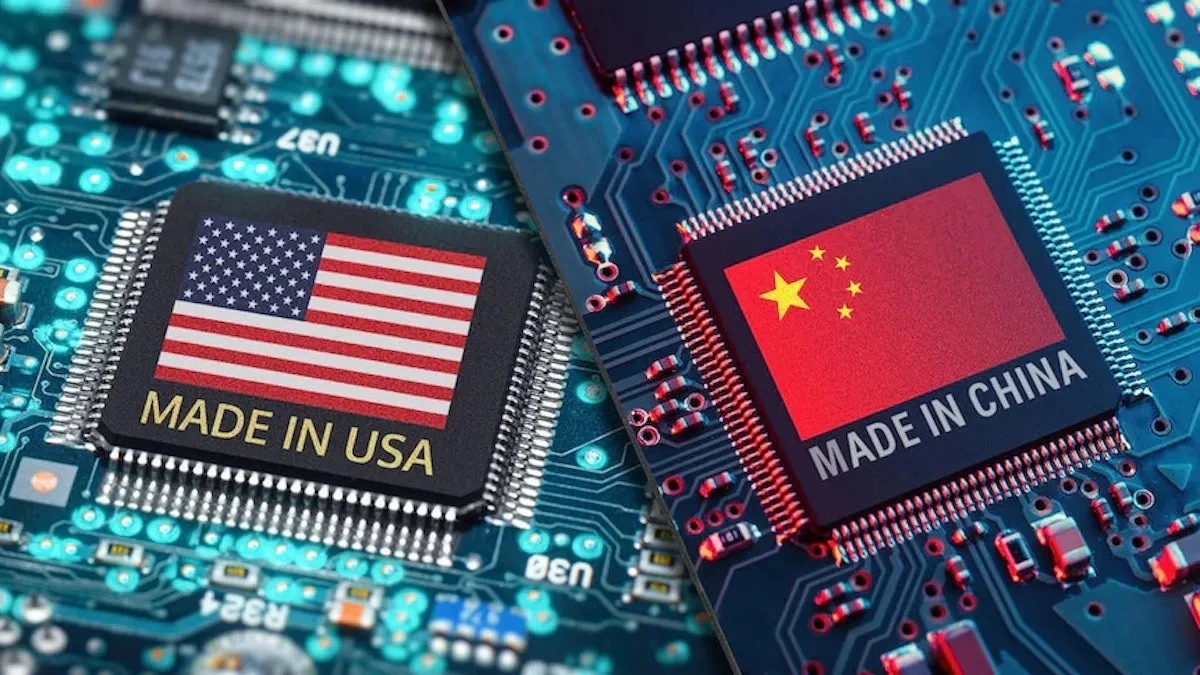
China plans to invest $150 billion in semiconductor development by 2030, emphasizing AI and advanced technologies.
Chinese tech giants like Alibaba and Baidu have invested billions in AI research, establishing labs in both China and Silicon Valley.
Meanwhile, the US has strengthened its position by encouraging semiconductor manufacturing domestically.
Collaborations with allies like Japan and the Netherlands aim to restrict China’s access to advanced semiconductor manufacturing equipment.
The semiconductor battle has caused significant shifts in global supply chains.
Major companies like Dell, Apple, and HP have started relocating their supply chains out of China to countries like Vietnam and Malaysia.
This move aims to mitigate the risks associated with US-China trade tensions. This broader strategy seeks to reduce dependency on China and diversify manufacturing bases.
The US-China Semiconductor Race
The intensified competition over semiconductor technology underscores the geopolitical struggle for technological supremacy.
Both nations aim to secure leadership in critical technologies that will shape the future economy, such as AI and 5G.
The outcome of this competition will likely influence global technological standards and economic power balances for decades to come.
The US-China chip competition is not just a battle over semiconductors but a race for technological and economic dominance.
The strategic investments and realignments in global supply chains reflect the high stakes involved.
The coming years will reveal the long-term impacts of these developments on global technology and economic landscapes.
In short, this competition will shape the future of technology, influencing global standards and economic power dynamics.
This article was produced by The Rio Times’ automated newsroom system. How we use AI · Report an error
Read More from The Rio Times