Global FDI Dips to $1.3 Trillion Amid Economic Shifts in 2023
In 2023, global finance subtly shifted, decreasing foreign direct investment (FDI) by 2%, ending at $1.3 trillion.
This UNCTAD report reveals the complex interplay of economic forces, forecasting future dynamics.
South America presented a contrast in FDI. Argentina, Chile, and Guyana saw investment surges, signaling growth.
Conversely, the overall FDI in the region dropped to $143 billion, a 2% fall, led by Brazil and Peru’s declines.
Nonetheless, Brazil remained the top recipient, emphasizing its pivotal economic role.
Developed economies contrasted sharply with this. Their FDI grew by 8.9%, reaching $464 billion.
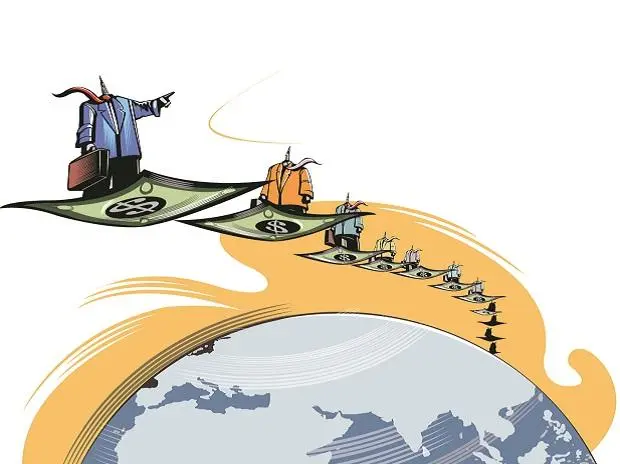
This increase resulted mainly from multinationals adjusting to new global tax regulations and ongoing market volatility.
These changes show how international capital responds to economic shifts.
Europe’s investment flow narrative centered on recovery. FDI rebounded with a $16 billion positive influx in 2023 after a previous decline.
Meanwhile, the United States saw a 6% decrease in foreign investments, totaling $311 billion, reflecting unique economic challenges and investor attitudes.
Developing nations, particularly in Asia, encountered harsher conditions. The region’s FDI fell by 7%, amounting to $867 billion.
Notably, Asia witnessed an 8% decrease, with significant reductions in China and India, underscoring widespread economic adjustments.
Despite mixed signs, UNCTAD’s 2024 outlook remains cautiously optimistic. The report highlights robust multinational profits, easing financial conditions, and new green projects as potential growth drivers.
These factors could mitigate investment pressures and encourage modest expansion.
This evolving global FDI landscape serves as a crucial barometer for economic confidence and market health.
As nations and corporations adapt, investment flow variations provide a key perspective on strategic shifts and new opportunities.
Each fluctuation in FDI percentage points reflects broader economic sentiments, influencing future financial strategies.
More: Brazil news in English, every day from The Rio Times.
This article was produced by The Rio Times’ automated newsroom system. How we use AI · Report an error
Read More from The Rio Times