Germany’s Brewing Storm: Merz’s Fall, the AfD’s Ascent, and the Shadow of EU Suppression
(Analysis) Germany teeters on the brink of a political tempest. Its once-firm foundation fractures beneath shattered trust and a swelling populist tide.
Friedrich Merz, poised to become chancellor, has yet to assume power. Yet he is already a lightning rod for scorn—a leader whose promised grace has soured into disillusionment.
Across the nation, the Alternative für Deutschland (AfD), a conservative and populist force, surges unchecked. It polls at 24% against Merz’s stumbling CDU-CSU bloc at 26%.
As the AfD nears dominance, a haunting question emerges. Could Berlin, pressed by a European Union hostile to dissent, resort to legal tactics to silence this voice, as seen in other member states?
The stakes reach beyond Germany. They probe the fragile unity of a continent. Merz’s descent is a tale of vows forsaken.
Elected in February with a modest 28% mandate, he pledged to preserve Germany’s debt brake and enforce strict migration rules.
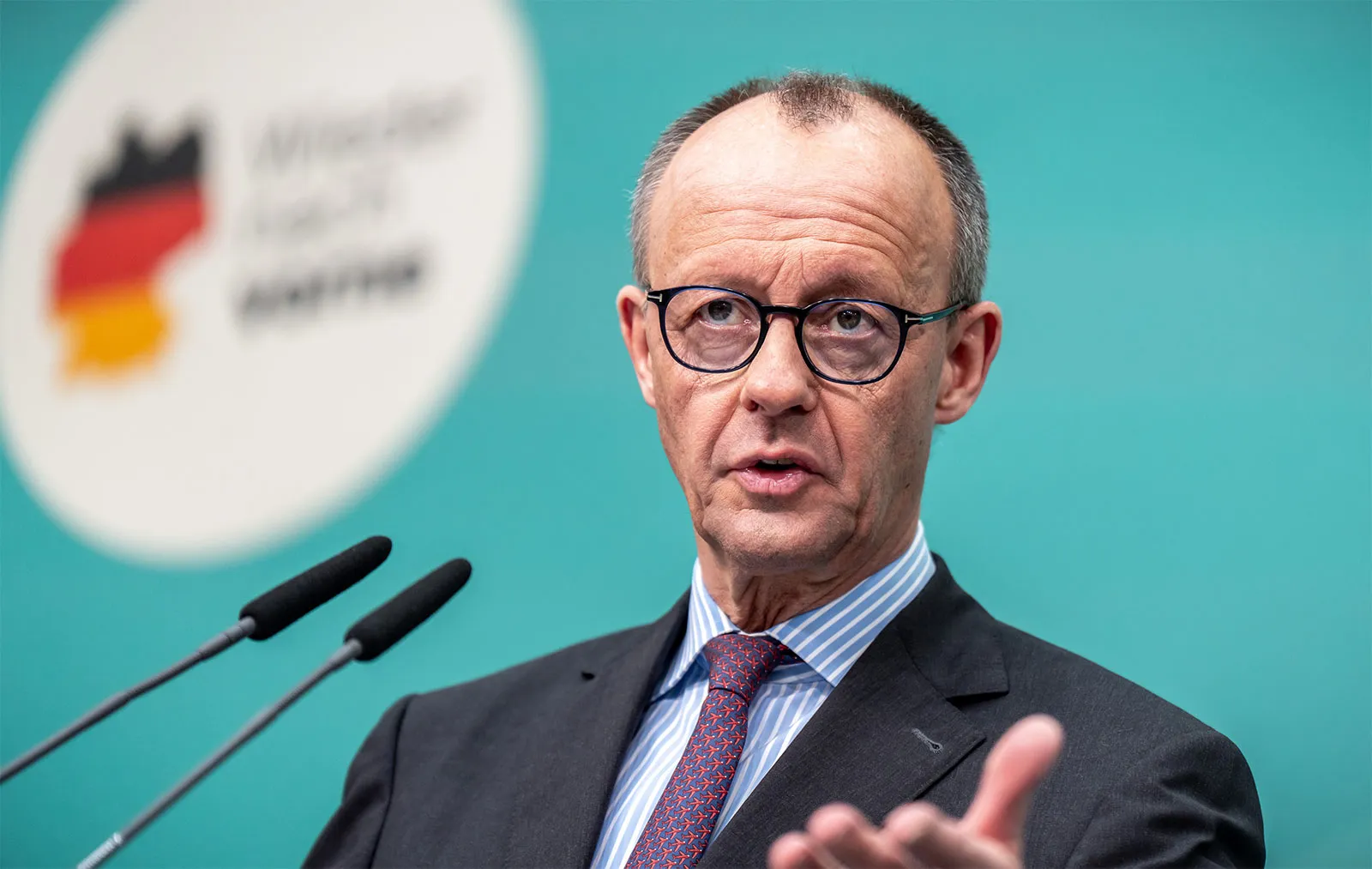
Merz’s Missteps and the AfD’s Ascent
Yet within weeks, he discarded both. A trillion-euro borrowing plan for infrastructure and defense was forced through a recalled pre-election parliament—a move critics called manipulative.
His promise to bar asylum at land borders falters amid legal doubts and coalition resistance. To a nation wary of conflict, his push for militarization—war with Russia in five years—echoes a dreaded past.
“They produced so much crap, you can’t trust them anymore,” one eastern voter told DW’s Matthew Moore in Bernau. The refrain reverberates from Saxony to Brandenburg.
Still, some CDU loyalists cling to Merz. They’re drawn to his vision of renewed German strength, though their voices fade amid dissent.
This erosion of faith has nourished the AfD’s rise. Once sidelined, it now commands nearly a quarter of the electorate, up three points since the election.
In the east, where economic scars and migrant tensions fester, voters embrace its conservative-libertarian creed. “Things are a mess in Germany,” one said, blaming 2015’s open borders.
The AfD’s rejection of lenient immigration and Merz’s bellicosity strikes a chord. A populace weary of “Project Ukraine” finds resonance in its stance.
Under Alice Weidel’s steely leadership, the party has shed its reserve. Its supporters no longer murmur but proclaim their allegiance—a shift reweaving Germany’s political fabric.
Yet this ascent courts peril. The AfD’s path—potentially hitting 25-30%—threatens the established order.
Merz’s coalition, fraying with dissent from Saxony’s CDU and SPD calls for Russian gas, hangs by a thread. If the AfD eclipses the CDU-CSU by mid-2025, a crisis looms.
Here emerges the shadow of the EU. It’s accused of stifling voices that defy its vision of integration.
Germany on a Razor’s Edge
In recent months, populist leaders across member states have faced barriers. Candidacies in Romania and France annulled under questionable pretexts and judicial pressures deemed political by allies mark the pattern.
With vast financial leverage—billions in recovery and climate funds—the EU coaxes nations into alignment. It targets those, like Weidel, who spurn its centralized ethos.
Weidel’s anti-EU stance marks her as a contender in this struggle. Her call for a sovereign Germany collides with Brussels’ aims, inviting retaliation.
Could Germany’s elite, swayed by EU influence, curb the AfD? Constitutional provisions to ban parties threatening democracy, though rarely used, remain available.
Voices on X speculate grimly: “What will they do with Alice Weidel when the AfD hits 30%?” Analysts warn Merz might yield to such a strategy to preserve his hold.
Yet Germany’s scale and democratic lineage set it apart. A clumsy crackdown could sanctify the AfD and rally its youthful, anti-militarization base.
The gravity of this moment lies in its historical echoes. Germans, twice bloodied by wars with Russia, shrink from Merz’s war cries.
Their unease sharpens with his BlackRock-tinged pivot toward financialization over industry. The AfD, despite controversies, amplifies this disquiet, voicing the unheard.
Should Brussels and Berlin choose suppression, they wager more than domestic peace. They risk tarnishing the EU’s claim as a democratic bastion.
For now, Germany balances on a razor’s edge. It faces submission to an old regime or surrender to a new one.
Its course is a portent for a continent wrestling with its identity. Merz’s fall may be imminent, the AfD’s rise unrelenting.
But the specter of legal warfare hovers. It’s a stark measure of how far Europe will stretch to protect its unity—and at what cost
Read More from The Rio Times