French Guiana Air Fares: France Studies 14 Proposals to Cut Ticket Prices
Economy · French Guiana
Key Facts
- —What happened Martinique lawmaker Jiovanny William handed France’s overseas minister 14 proposals on 24 September 2026 to lower overseas air fares.
- —How wide the gap is Consumer prices in French Guiana stood 13.7% above mainland France in 2022, the national statistics agency Insee found.
- —The real story The first target is tax: the solidarity levy France charges on air tickets, known there as the Chirac tax.
- —The catch Brussels has not cleared the cheaper ticket tax for overseas routes, France’s airline federation said in June 2026.
- —What comes next The minister says the ideas could reach the budget bill, whose debate in parliament opens in mid-October.
Fourteen proposals on French Guiana air fares, and on every other route to France’s overseas regions, are now with the government. It says it will study each one.
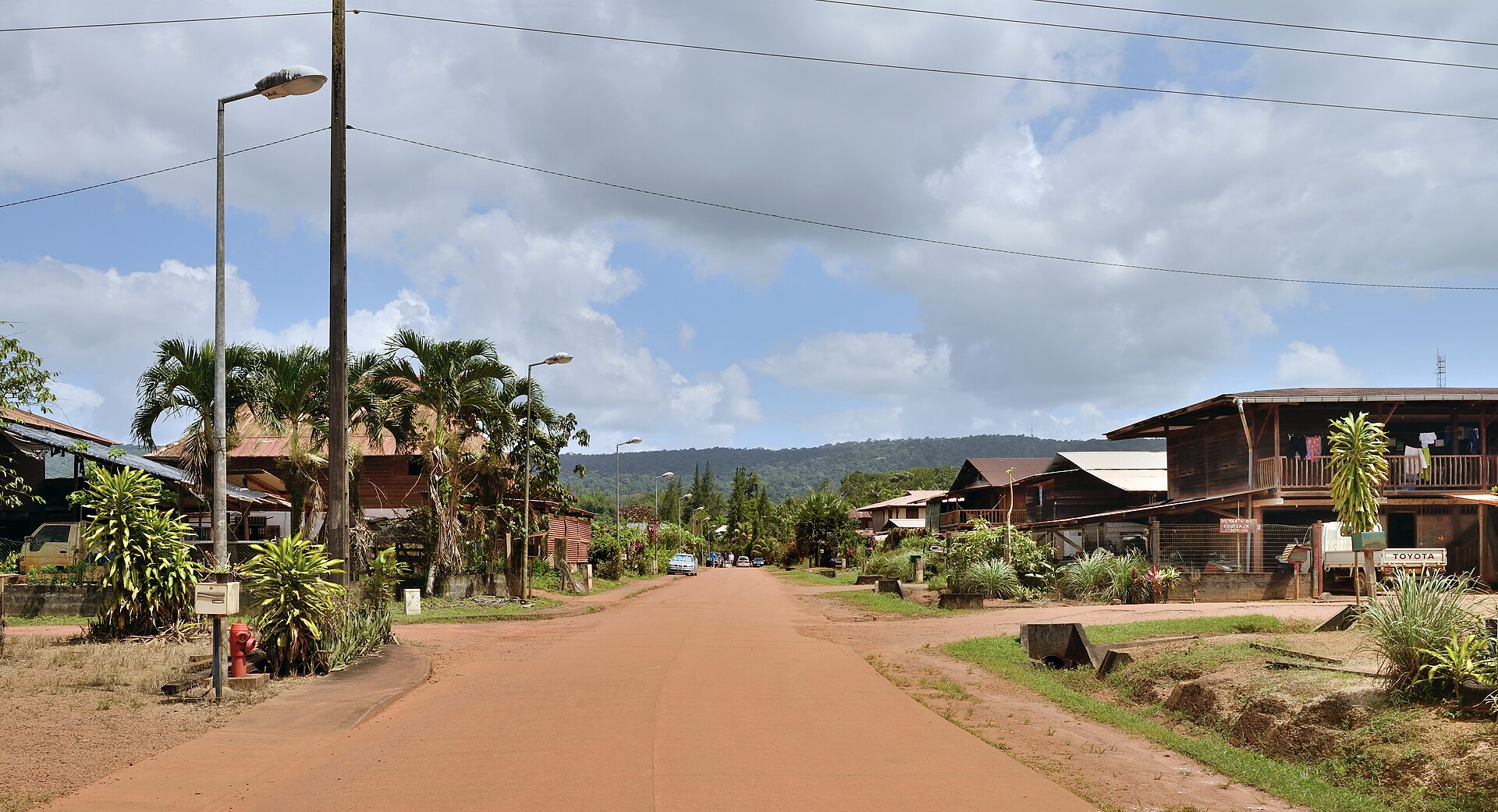
French Guiana air fares now have a government report behind them. On Thursday 24 September 2026 a French member of parliament handed over fourteen ways to make flights cheaper.
The report went to Naïma Moutchou, France’s minister for the overseas regions. It covers all of the country’s overseas regions, with French Guiana among them.
Its author is Jiovanny William, a member of the National Assembly for Martinique. A prime minister’s decree handed him the job on Tuesday 3 March 2026.
Why a French argument matters in South America
French Guiana sits on the northern shoulder of South America, between Brazil and Suriname. It is not a colony and not a territory.
It is a French department and one of the European Union’s nine outermost regions. Six of those nine are French, the others Spanish and Portuguese.
French law, European rules and the euro all apply in French Guiana. The other five French ones are Guadeloupe, Martinique, Mayotte, Réunion and Saint-Martin.
The report deals with the routes linking those regions to mainland France. For French Guiana that means flying across the Atlantic, not across South America.
The statistics agency Insee counted 293,996 residents there in 2023. Density was 3.5 people per square kilometre, on Insee’s figures for the same year.
The numbers behind the anger
Unemployment in French Guiana ran at 20.4% in the second quarter of 2026, on Insee’s provisional estimate. Mainland France stood at 8.1% in the same quarter.
The rate was 17.0% a year earlier, so the direction is upward rather than flat. Insee uses the international definition, the same one applied in mainland France.
Prices sit above mainland levels as well. In 2022, consumer prices in French Guiana were 13.7% higher than in mainland France, Insee reported in July 2023.
That gap had widened by 2.1 points since the previous survey in 2015. Food explains most of it, Insee found.
What the three terms actually mean
France-Guyane, the daily that reported the handover, says the state has promised to examine all fourteen proposals. They are aimed at three things: taxation, territorial continuity and pricing practices.
Taxation here means the levies loaded onto a ticket, not local sales taxes. Territorial continuity is the French phrase for subsidised travel between the overseas regions and the mainland.
Pricing practices means the way airlines set fares, moving them up and down with demand. Mr William attacks that system, which he calls a use of opaque price-setting algorithms.
He told France-Guyane in an interview published on Tuesday 22 September 2026 that overseas residents are a captive population. Outremers360 quoted him making the same point at the handover.
Those three areas are the frame in which French Guiana air fares will be argued this autumn. None of the three is about the price of food in the shops.

The tax the government may move first
The solidarity tax on air tickets, which the French call the Chirac tax, is the deputy’s first priority. Ms Moutchou said she was optimistic about a change within weeks.
The rate rose to 7.40 euros (about US$8.40) a ticket on 1 March 2025. On Monday 1 June 2026 it fell back to 2.63 euros (about US$2.99) on twenty-six named routes.
Euro figures here use the European Central Bank reference rate for 29 September 2026, 1.1355 US dollars to the euro.
Those twenty-six routes lie inside Europe, twelve of them between Corsica and the French mainland. Overseas links were left out of the cut.
Fnam, the French aviation industry federation, said in June 2026 that Brussels had not approved the lower rate for overseas routes. Transport minister Philippe Tabarot said at the time that he was still arguing the case there.
What each side is saying
Ms Moutchou called the high cost of living in the overseas regions an old, structural scourge. Outremers360 reported her remarks at the handover.
“We cannot reduce the geographic distance, but we can try to reduce the economic distance,” she said in French. She was speaking beside Mr William at the overseas ministry in Paris.
She said every scenario remained open, including the budget bill whose debate opens in mid-October. She did not say which of the fourteen the government would take up.
Mr William struck a more urgent note. He said the traffic is not holiday traffic, but family visits, students and medical journeys.
He expects hard bargaining with the airlines and says they need overseas passengers as much as those passengers need them. He also wants more flights between the overseas regions themselves.
The memory that shapes the argument
French Guiana has been through a round of promises before. A mass social conflict paralysed the territory in the spring of 2017.
It ended with an accord signed on Friday 21 April 2017. That deal carried about 1 billion euros (about US$1.14 billion) of emergency state investment.
The money was meant to refill the territory’s coffers and begin a structural catch-up. Protest leaders also wanted a further 2.1 billion euros (about US$2.38 billion) for public facilities.
In April 2018 the overseas minister of the day, Annick Girardin, said 80% of the emergency measures had been carried out. She put the measures promised by the president at 89%.
The collective that led the movement disputed the pace from early on. Davy Rimane, then one of its representatives, said in September 2017 that nothing was moving at all.
What to watch from here
The territory is also home to a piece of European infrastructure. Europe’s Spaceport at Kourou employs about 1,700 people and hosts 42 companies, the European Space Agency says.
The first Ariane rocket flew from there in 1979, and the site has logged more than 240 launches since 1990.
France-Guyane says the report puts the cumulative rise in the cost of air travel since 2019 at about 45%. Neither the minister nor the deputy named a target fare at the handover.
The next markers are procedural. A session on ticket prices is planned inside the consultations on France’s cost-of-living bill, and the budget debate opens in mid-October.
More: French Guiana coverage, every day from The Rio Times.
Frequently Asked Questions
Who wrote the report and who asked for it?
Jiovanny William, a member of the French National Assembly for Martinique, wrote it. A prime minister’s decree gave him the mission on Tuesday 3 March 2026, when Sébastien Lecornu held that office. He ran six public consultations, five in Martinique and a final one on Tuesday 7 July 2026 for overseas residents living around Paris. He handed the finished report to Naïma Moutchou, the minister for overseas France, on Thursday 24 September 2026.
What is territorial continuity in French practice?
It is the principle that people in the overseas regions should be able to reach mainland France without the distance pricing them out. In practice it means public support for travel between those regions and the mainland. Corsica has its own version of the idea, and Outremers360 reported in July 2026 that Mr William was about to travel there to study it. The report treats territorial continuity as one of its three areas, beside taxation and airline pricing practices.
Is French Guiana part of France and of the European Union?
Yes. It is a French department on the South American mainland, between Brazil and Suriname, and the European Commission lists it as one of the European Union’s nine outermost regions. French law and European rules apply, and the currency is the euro. It is also home to Europe’s Spaceport at Kourou, which the European Space Agency says employs about 1,700 people and hosts 42 companies on site.
What would actually change for someone flying there?
Nothing yet for French Guiana air fares. The government has promised to examine the fourteen proposals, and the minister has said all options remain open, including the budget bill whose debate opens in mid-October. The clearest single lever is the solidarity tax charged on each ticket, which fell to 2.63 euros (about US$2.99) on twenty-six European routes in June 2026 but not on overseas ones. France’s airline federation said the European Commission had not approved that lower rate for overseas links.
Sources: France-Guyane on the state’s promise to examine the 14 proposals, France-Guyane on the handover of 24 September 2026, Outremers360 on the report and the minister’s next steps, Outremers360 and RCI Martinique on the decree that created the mission, AFP via Outremers360 on the reduced ticket tax and the European Commission, AFP via Outremers360 on the Insee price comparison of 2022, Insee on local unemployment rates in the second quarter of 2026, Insee on the population and density of French Guiana, European Commission on the outermost regions of the European Union, European Space Agency on Europe’s Spaceport, Outremers360 on the 2017 accord and the protest leaders’ reply, Outremers360 on the 2018 ministerial stocktake, European Central Bank euro reference rates
This article was produced by The Rio Times’ automated newsroom system. How we use AI · Report an error
Read More from The Rio Times