Noboa Faces Assembly on Year of Record Homicides, U.S. Pact
Ecuador · Politics
Key Facts
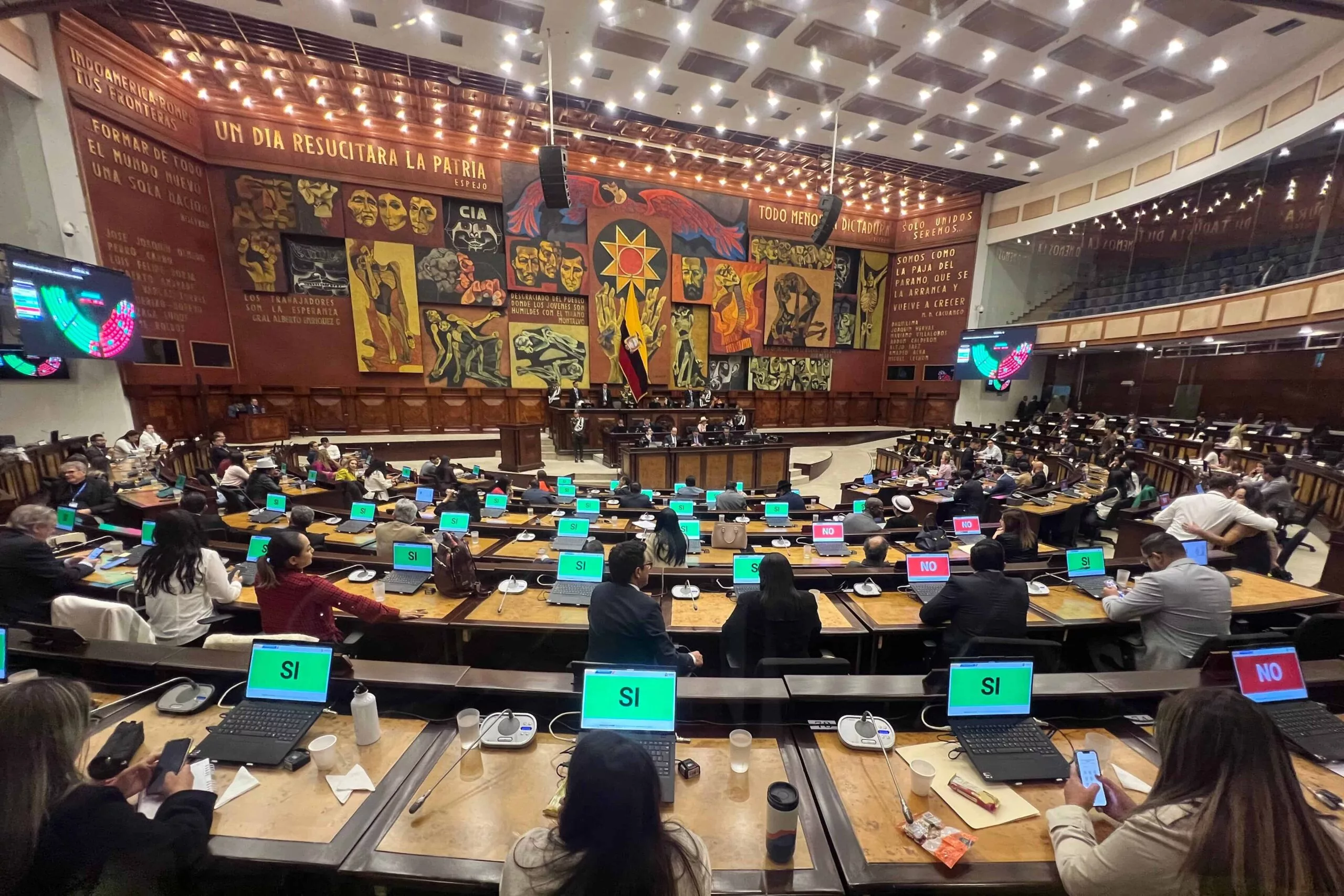
—The Noboa address:. President Daniel Noboa delivers his mandatory Informe a la Nacion on Sunday May 24 before the Asamblea Nacional in Quito, one year after reelection.
—A record-violent year:. Ecuador closed 2025 as its most violent year on record with 9,281 violent deaths; early 2026 shows a downward trend.
—US security cooperation:. Noboa deepened military and intelligence cooperation with the US, including a February 20 reform allowing foreign military presence on Ecuadorian soil.
—Opposition boycott:. The Correa-aligned Revolucion Ciudadana bloc signaled it may boycott the ceremony, calling attendance a legitimization of rights violations.
—Assembly control:. The Asamblea remains controlled by Noboa’s Accion Democratica Nacional, the majority behind the year’s security reforms.
—Ceremony logistics:. About 1,500 guests are expected; the address should run 15 to 30 minutes, carried on national radio and television.
The Ecuador Noboa address tests whether the security gains of early 2026 can sustain political momentum against opposition boycott pressure and the cumulative weight of 2025’s record violence on public perception.
What will Ecuador Noboa cover in his address?
The Rio Times, the Latin American financial news outlet, reports that President Daniel Noboa Azín delivers the constitutionally mandated Informe a la Nación, the annual presidential address to the Asamblea Nacional, on Sunday May 24 at 10:00 local time in the Nela Martínez plenary of the Palacio Legislativo in Quito. The address coincides with the 204th anniversary of the Battle of Pichincha and marks the completion of one year following Noboa’s April 2025 reelection to a four-year term that runs to 2029.
The central axis of the address is public security. Ecuador closed 2025 as the most violent year in its history with 9,281 violent deaths and multiple street massacres concentrated in the Guayas, Manabí, El Oro and Los Ríos coastal provinces. The first quadrimester of 2026 has shown a downward trend the government cites as evidence the security strategy is delivering, although the cumulative damage to public perception during 2025 anchors the political backdrop for the address.
What is the United States cooperation framework?
The Noboa administration deepened military and intelligence cooperation with the United States across the year, including frameworks for joint counter-narcotrafficking operations and intelligence-sharing agreements. The Asamblea Nacional approved on February 20 by 77 votes a constitutional reform permitting foreign military presence on Ecuadorian territory under specific conditions, the most consequential institutional change of the Noboa first year and the legal infrastructure for the deeper bilateral security architecture under construction with Washington.
What does the opposition boycott signal?
Revolución Ciudadana, the principal Correa-aligned opposition bloc, has signaled it may not attend the ceremony. Bench leader Patricia Núñez said attending would “legitimize” what the bloc characterizes as violations of citizen rights and cited the imprisonment of Aquiles Álvarez and Jorge Glas as political detentions. The boycott posture reflects the deeper polarization that frames Ecuadorian politics during the Noboa cycle, in which the Acción Democrática Nacional majority has used its Asamblea control to pass reforms the opposition considers unconstitutional.
More: Ecuador news in English, every day from The Rio Times.
Frequently Asked Questions
Who is Daniel Noboa?
Daniel Noboa Azín is the President of Ecuador, a center-right politician who first won the 2023 special election to complete the term of dismissed predecessor Guillermo Lasso and then won a full four-year term in April 2025. He took office for the four-year term on May 24, 2025.
What is the Informe a la Nación?
The Informe a la Nación is the Ecuadorian president’s annual address to the Asamblea Nacional, mandated by Article 147 of the Constitution. The address reports on Plan Nacional de Desarrollo implementation and government objectives for the coming year.
What is Acción Democrática Nacional?
Acción Democrática Nacional is the political movement led by President Noboa that controls a majority in the Asamblea Nacional following the April 2025 election. It has provided the legislative votes for the security-cooperation reform and other administration priorities.
Who are Aquiles Álvarez and Jorge Glas?
Aquiles Álvarez is the mayor of Guayaquil currently in detention. Jorge Glas is the former Ecuadorian vice president who served under President Rafael Correa and was extracted from the Mexican embassy in Quito in an April 2024 operation, a continuing point of bilateral and constitutional contention.
When did Ecuador approve foreign military presence?
The Asamblea Nacional approved the constitutional reform on February 20, 2026 by 77 votes, removing the constitutional prohibition on foreign military bases. The reform enables the operational framework for deeper bilateral security cooperation with the United States.
Connected Coverage
The Sunday address fits the broader Ecuadorian context analyzed in our Ecuador 2026 economy investor guide and connects to the regional security dynamic in our Latin America elections 2026 overview.
This article was produced by The Rio Times’ automated newsroom system. How we use AI · Report an error
Read More from The Rio Times