A Court Reopens Ecuador to Arbitration Voters Twice Rejected
Ecuador · Politics & Markets
Key Facts
—The ruling. Ecuador’s top court has opened the door to investor-state arbitration.
—The ban. The constitution has barred such arbitration since 2008.
—The votes. Voters twice rejected lifting that ban, in 2024 and 2025.
—The pushback. A group of international jurists has challenged the decision.
—The trigger. The case arose from an investment treaty with the United Arab Emirates.
—The stakes. The outcome shapes how safe foreign investors feel in Ecuador.
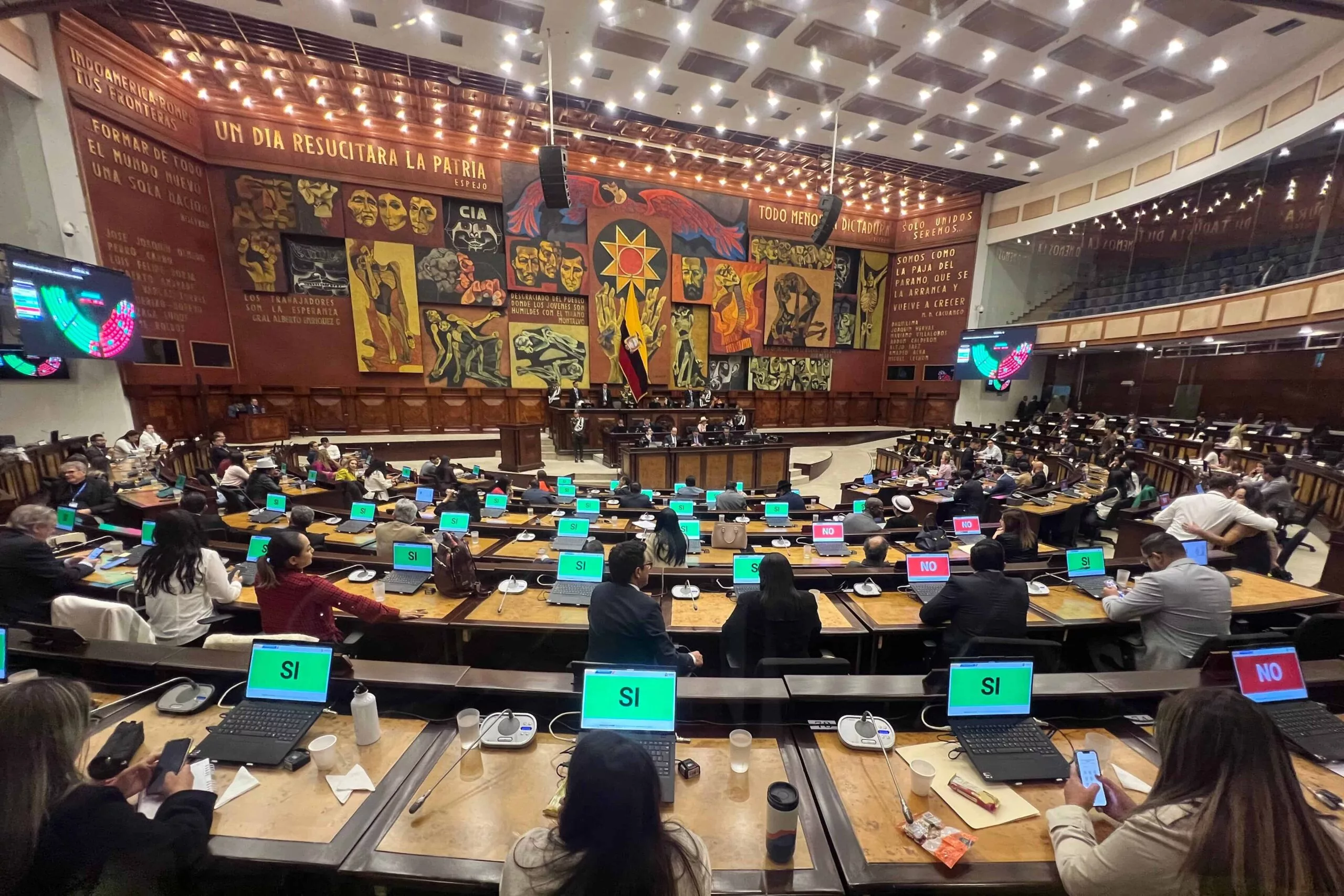
A high-stakes clash between courts and voters is unfolding in Ecuador, after the country’s top tribunal reopened the door to a kind of international arbitration that citizens had twice rejected at the ballot box.
A quiet legal battle in Ecuador carries a loud message for investors. It pits the country’s highest court against the expressed will of its voters.
At issue is a dry-sounding but powerful tool: the right of foreign companies to sue a government before an international tribunal. Ecuador has long said no to it.
What Ecuador’s constitution says
The story begins with the constitution of 2008. Approved by a large majority, it explicitly banned this form of investor-state arbitration.
The ban had a clear motive. Ecuadorians had grown wary of foreign firms bypassing local courts to settle disputes in private tribunals abroad.
A bruising history lay behind it. The country had tangled with oil majors over huge claims, and many wanted such cases kept out of outside hands.
One famous fight loomed large in the memory. A long-running dispute over Amazon pollution had produced a multibillion-dollar tug-of-war between Ecuador and a foreign company.
For its drafters, the clause was a shield. It was meant to keep a small nation from being outgunned in distant courtrooms.
So the prohibition was written in plainly. Changing it, the logic went, would require asking the people, not reinterpreting the text.
When the voters spoke twice
The current government wanted that door reopened. It argued that international arbitration would reassure investors and bring in capital.
So it put the question to a vote. In a 2024 referendum, a clear majority said no to allowing the arbitration.
A second attempt fared no better. Later, voters again rejected a separate process widely seen as a route to the same goal.
Twice, then, the public had spoken. The constitutional bar appeared to stand on firm democratic ground.
The votes were not close calls. In each case a solid majority backed keeping the prohibition in place.
That made the issue feel settled. If the ban already allowed arbitration, supporters argued, no referendum would have been needed at all.
How the court changed course
Then came the twist. Reviewing an investment treaty with the United Arab Emirates, the Constitutional Court took a different view.
Through careful interpretation, it found room for arbitration after all. Critics say it effectively rewrote the ban without changing a word of the text.
That is what has alarmed legal scholars. A group of international jurists has publicly questioned the court for sidestepping a recent popular mandate.
Their objection is about more than this one case. They warn that a court rewriting a constitution by reading sets a worrying precedent.
Supporters of the move see it differently. To them, the ruling simply aligns Ecuador with the global norms that draw in investment.
Why it matters
For investors, the appeal of arbitration is obvious. It offers a neutral forum, away from a country’s own courts, if a deal goes wrong.
That comfort can tip an investment decision. A clear route to a fair hearing makes a country an easier place to commit money.
But the manner of the change cuts both ways. A right granted by reinterpretation, against the voters’ wishes, may feel less secure than one settled cleanly.
It is also a test of Ecuador’s institutions. The episode asks who has the final say when courts and the ballot box appear to collide.
The answer will be watched well beyond its borders. Other governments and investors across the region face the same tension between sovereignty and openness.
For now, the matter is far from closed. Legal challenges and political argument are likely to keep the question alive for some time.
More: Ecuador news in English, every day from The Rio Times.
Frequently Asked Questions
What is investor-state arbitration?
It is a system that lets foreign investors sue a host government before an international tribunal, rather than in that country’s own courts. Supporters say it reassures investors, while critics see it as bypassing national justice.
Why is the court ruling controversial?
Ecuador’s constitution has banned such arbitration since 2008, and voters twice rejected lifting the ban. Critics argue the court reopened the door by interpretation, sidestepping the people’s recent decisions.
Why should foreign investors care?
Access to arbitration is a key protection many investors seek. But a right granted against the voters’ wishes may prove less stable, leaving questions over how durable the change really is.
Connected Coverage
This article was produced by The Rio Times’ automated newsroom system. How we use AI · Report an error · Editorial responsibility: Matthias Camenzind, Editor-in-Chief
LatAm Markets: Live Signals → — real-time movers, turnover leaders and FX across Latin America.