Dubrule Family’s Bid to Take Over Mobly and Tok&Stok Faces Shareholder Resistance
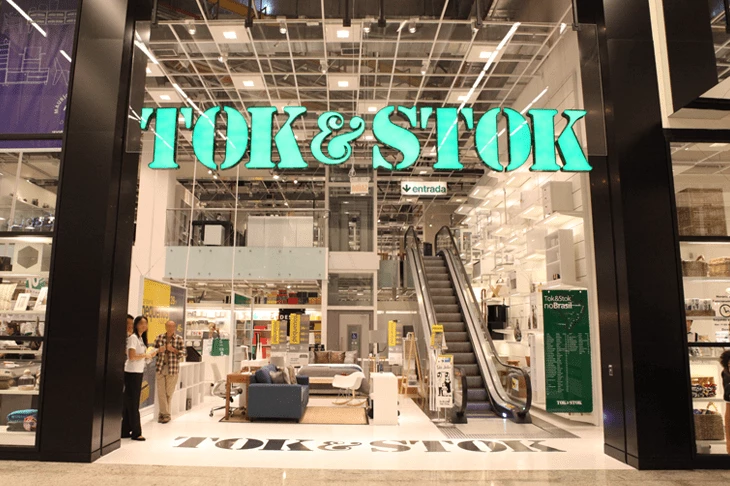
A fierce battle for control at Toky, the company born from Mobly’s 2024 merger with Tok&Stok, has exposed deep divisions among shareholders and management.
The story, sourced from recent legal filings and shareholder statements, reveals how a failed takeover bid by the Dubrule family has thrown Brazil’s home furnishings sector into turmoil.
The Dubrule family, founders of Tok&Stok, tried to regain control by launching a voluntary tender offer for all shares of Toky at R$0.68 per share. This price stood at about half the company’s recent trading range of R$1.35–R$1.39 and far below the November 2024 peak of R$2.20.
The offer valued the company at R$133.8 million ($22.3 million), a striking discount for a business that generated R$1.6 billion ($266.7 million) in revenue last year. Minority shareholders and Mobly’s board pushed back hard.
They cited not only the low offer price but also a R$600 million ($100 million) debt burden and ongoing losses-Mobly has never posted a profit since its 2021 IPO, burning R$140 million ($23.3 million) annually and accumulating R$685 million ($114.2 million) in losses.
The board also flagged unresolved governance issues and alleged that the Dubrule family, with support from German shareholder Home24 (which owns 44.4% of Toky), tried to manipulate share prices and orchestrate an off-the-books deal.
Tok&Stok Corporate Battle Intensifies Amid Legal Disputes
Mobly’s management submitted evidence of undisclosed payments of R$5.2 million ($867,000) for Dubrule family health plans since 2013, funded by Tok&Stok.
The legal fight escalated when the Dubrule family accused Toky’s management of bad faith, claiming they selectively edited internal communications to paint a misleading picture in court.
They denied any secret agreement with Home24 and said all negotiations for a direct stake purchase ended without a deal. Home24 also denied any collusion, stating it only wanted to sell its shares and that Mobly’s founder had even proposed a management buyout, which failed due to lack of funds.
At the heart of the dispute lies the “poison pill” clause in Toky’s bylaws, which requires any shareholder acquiring more than 20% of the company to make a tender offer to all shareholders.
The Dubrule family and Home24 sought to remove this clause, arguing it blocked legitimate transactions and imposed costly penalties. Minority shareholders overwhelmingly rejected this move, with 59.8 million shares voting to keep the poison pill and 54.5 million in favor of its removal.
Legal uncertainty persists. A judge allowed the shareholder meeting but suspended its effects pending further review. The failed bid and ongoing lawsuits have left Toky’s future unsettled, with its stock price fluctuating and business strategy in limbo.
The case highlights the risks and complexities of corporate control battles in Brazil’s evolving retail sector, where legacy families, foreign investors, and new management often clash over strategy and governance.
This article was produced by The Rio Times’ automated newsroom system. How we use AI · Report an error
LatAm Markets: Live Signals → — real-time movers, turnover leaders and FX across Latin America.
Read More from The Rio Times