Dollar Surges Against Brazilian Real as Trump Tariffs Spark Global Flight to Safety
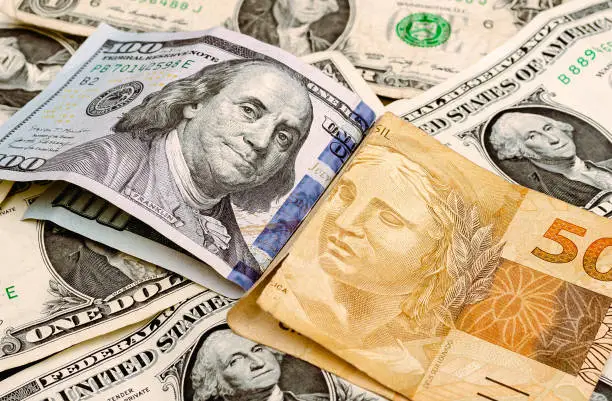
The Brazilian real plunged against the US dollar on April 7, 2025, with USD/BRL trading at 5.8435 early Monday morning, data from TradingView shows.
This dramatic reversal erased weeks of real strength in a matter of days, triggered by President Trump’s sweeping new tariff policies and China’s aggressive retaliation.
The market upheaval began when Trump implemented a 10% baseline tariff on all US imports effective April 5, alongside higher targeted levies against specific trading partners.
This move represented a fundamental rejection of post-World War II trading norms and sent shockwaves through global markets. China’s response came swiftly and decisively on Friday with the announcement of 34% retaliatory tariffs on all US goods, effective April 10.
Beijing also restricted exports of critical rare earth elements to the United States and expanded its “unreliable entity” list to include 11 American organizations.
The escalating trade conflict triggered a massive risk-off sentiment across global markets. Wall Street suffered its worst two-day plunge in years, with the S&P 500 dropping 6% on Friday alone.
Asian Markets and Emerging Currencies Struggle
Asian markets followed suit Monday morning, with Hong Kong’s Hang Seng plummeting 10.8% in its largest one-day decline in 16 years. This deteriorating market sentiment hit emerging market currencies particularly hard.
Investors rapidly unwound positions in higher-yielding but riskier assets like the Brazilian real in favor of traditional safe havens. The Swiss franc and Japanese yen posted significant gains against the dollar, with USD/CHF falling 0.9% early Monday.
Technical indicators confirm the dramatic shift in market sentiment. The USD/BRL chart shows a decisive break above all major moving averages, with strong upward momentum suggesting further potential weakness for the real.
The currency pair now trades at levels not seen since late March. Market participants now focus on whether Brazil’s central bank might intervene to stabilize the real if the selling pressure continues.
With US tariffs set to take effect on April 9 and China’s countermeasures following the next day, currency traders should prepare for continued volatility throughout the week.
The fundamental picture has shifted dramatically from just days ago, when the real had been strengthening steadily. Now, with global recession risks rising sharply and investment bank JP Morgan raising its recession probability estimate to 60%, emerging markets face significant headwinds that could continue to pressure the Brazilian currency in the days ahead.
This article was produced by The Rio Times’ automated newsroom system. How we use AI · Report an error
In depth
LatAm Markets: Live Signals → — real-time movers, turnover leaders and FX across Latin America.
Read More from The Rio Times