Energy
Key Facts
—The collapse. Cuba’s national grid disconnected entirely at 4:30 pm local time on Friday 10 July, according to the state utility.
—The repeat. It was the second full national blackout in a week and the fourth of 2026, after one on Monday that took until Wednesday to resolve.
—The trigger. Friday’s failure was linked to the Antonio Guiteras thermoelectric plant, as it tried to restart after its 17th breakdown of the year.
—The gap. July has been the worst month on record for generation, with the shortfall never below 2,000 megawatts against demand near 3,100.
—The fuel. Cuba produces only about 40% of the fuel it needs, and US pressure has choked imports since early 2026.
The latest Cuba blackout is not really news in the ordinary sense. It is the second collapse of the island’s entire power grid in a single week, and that repetition is the story.
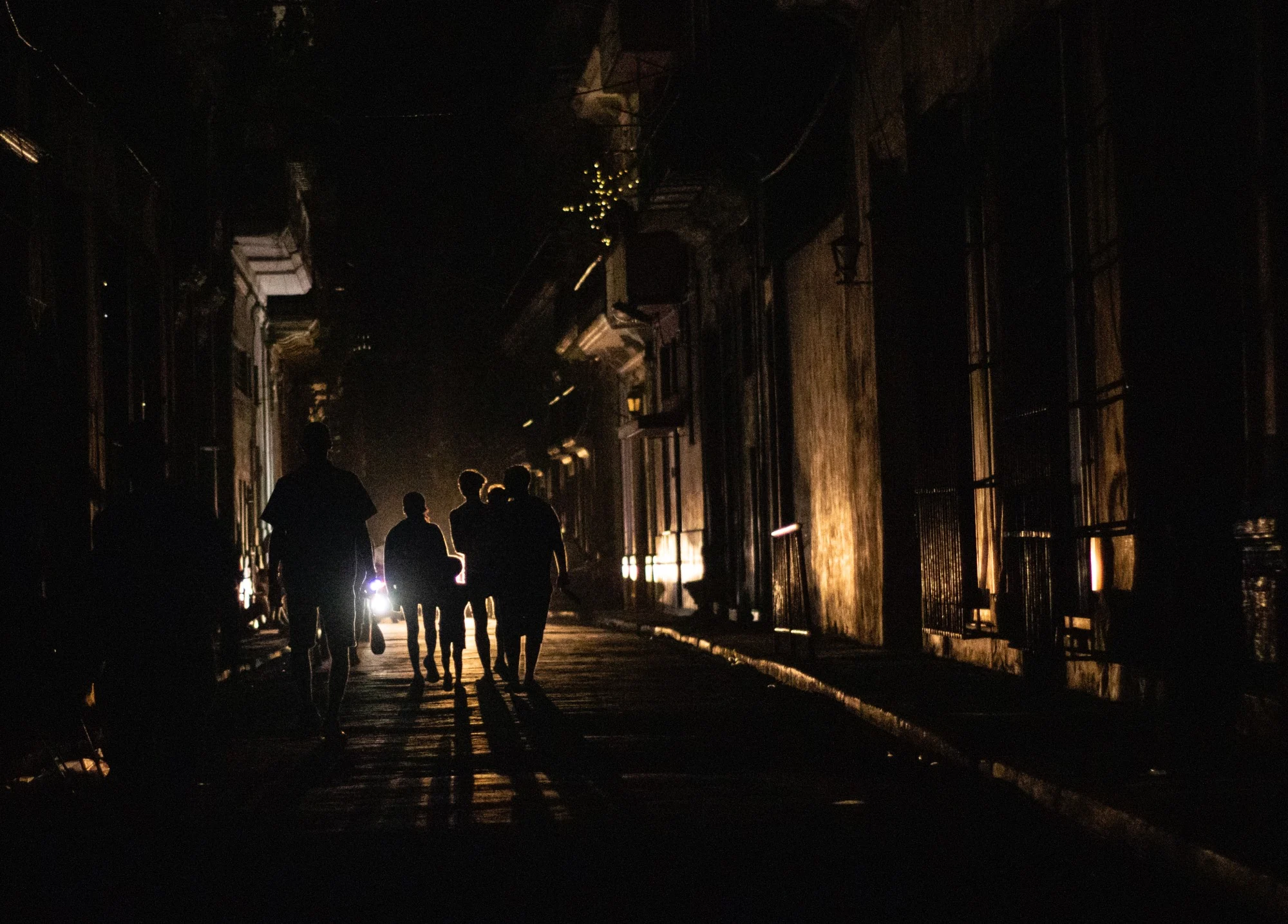
The state utility said the national system disconnected completely at half past four on Friday afternoon. It is the fourth such total failure of 2026 and roughly the tenth since the crisis began in late 2022.
The previous one had come only days earlier, on Monday. The country did not fully recover from it until Wednesday, and in much of the island the lights barely came back before they went out again.
Why the Cuba blackout keeps happening
The mechanics are grimly familiar. Friday’s collapse was tied to a fault at the Antonio Guiteras thermoelectric plant, one of a fleet of ageing, Soviet-era stations that fail one after another.
At the same moment, the island’s largest generating block, the Antonio Guiteras plant, was trying to restart after breaking down for the seventeenth time this year. When one big unit stumbles, the whole grid can follow.
Behind the machinery sits a fuel crisis. Cuba makes only about two fifths of the fuel it burns and must import the rest, and those imports have been squeezed hard since early this year.
Washington has warned that it would impose tariffs on any country selling oil to the island. That threat has thinned the flow of tankers, and a Russian cargo delivered in late March was largely spent within weeks.
Restoring the grid after a total collapse is slow and delicate. Engineers first fire up simple sources such as solar, hydro and small motors to feed tiny pockets, then knit those islands together until the big thermal plants restart.
How bad is the Cuba blackout crisis now?
By the raw numbers, worse than ever. July has been the weakest month for electricity generation since records began, with the daily shortfall never dropping below two thousand megawatts.
Set that against a demand of roughly three thousand one hundred megawatts and the scale of the gap is clear. Even on a good day the country cannot power much more than two thirds of what it needs.
For ordinary Cubans the abstraction is a daily ordeal. In Havana outages routinely exceed twenty-four consecutive hours, and in the provinces they can run past seventy.
The human toll is spreading. Authorities have cancelled tens of thousands of surgeries, public transport has largely stopped, and the state economy is expected to contract by at least six and a half percent this year.
A politically charged moment
The timing sharpens everything. Friday’s collapse landed on the eve of the fifth anniversary of the mass protests of 11 July 2021, when tens of thousands took to the streets, driven in part by these endless blackouts.
The government blames the US energy blockade and tightened sanctions. Washington counters that the island’s own economic model is the cause. Our reporting has shown that the crisis is rooted in decades of centralized control, chronic under-investment, and a political system that has suppressed the kind of private investment and maintenance incentives that keep grids reliable elsewhere. The blackouts have also repeatedly triggered public anger: in 2022, street protests erupted as citizens openly demanded the regime’s fall, and the current collapse lands on the eve of the fifth anniversary of the mass 11 July 2021 demonstrations that were driven in part by these same power failures.
Solar offers a thin ray of progress. With Chinese help, Cuba connected 49 new solar parks between early 2025 and early 2026, now generating about 5.8–20% of the country’s electricity, up from 5.8% a year earlier.
The government hopes to reach fifteen percent from solar by the end of the year. Even if it does, most supply still rests on the same worn-out thermal plants that keep breaking down.
More: Cuba news in English, every day from The Rio Times.
The big picture: Cuba explained — economy, politics, society and daily life in one read.
Frequently Asked Questions
When did the latest Cuba blackout happen?
Cuba’s national grid disconnected completely at 4:30 pm local time on Friday 10 July. It was the second full national blackout in a week and the fourth of 2026.
What triggered Friday’s failure?
The collapse was tied to a fault at the Nuevitas thermoelectric plant. At the same time, the larger Antonio Guiteras plant was trying to restart after breaking down for the seventeenth time this year.
How big is the power shortfall?
July has been the weakest month for generation on record, with the daily shortfall never below two thousand megawatts. Demand sits at roughly three thousand one hundred megawatts.
Why can’t Cuba fix the problem quickly?
Cuba makes only about 40% of the fuel it needs and must import the rest, and those imports have been squeezed since early 2026. Its ageing thermal plants also keep failing one after another.
Why should a foreign observer care?
A grid that fails twice in a week is a system in something close to collapse, not a run of bad luck. For any business or investor exposed to Cuba, reliable power can no longer be assumed at all.
Connected Coverage
Russia Sends Fuel Tanker to Cuba Despite US Blockade
Cuba’s Blackouts Show What Happens When a Country Runs Out of Power
Dark Island: Why Cuba Keeps Plunging Into Nationwide Blackouts
This article was produced by The Rio Times’ automated newsroom system. How we use AI · Report an error · Editorial responsibility: Matthias Camenzind, Editor-in-Chief
LatAm Markets: Live Signals → — real-time movers, turnover leaders and FX across Latin America.
Cuba and the United States
- What Is Going On Between Cuba and the United States?
- What Is Going On Between Cuba and the United States?
- Can Americans Still Travel to Cuba in 2026?
- Who Runs Cuba in 2026? Raúl Castro and the US Murder Charge