Copel, Raizen and Alcoa Navigate Divergent Paths in Latest Quarterly Results
Three major companies operating in Brazilian markets released quarterly results showing sharply different trajectories.
Copel completed a strategic asset sale, Raizen struggled with mounting debt, and Alcoa delivered strong profits. The contrasting performances reveal underlying shifts in energy, agribusiness and metals sectors.
Copel Completes Asset Sale After Privatization
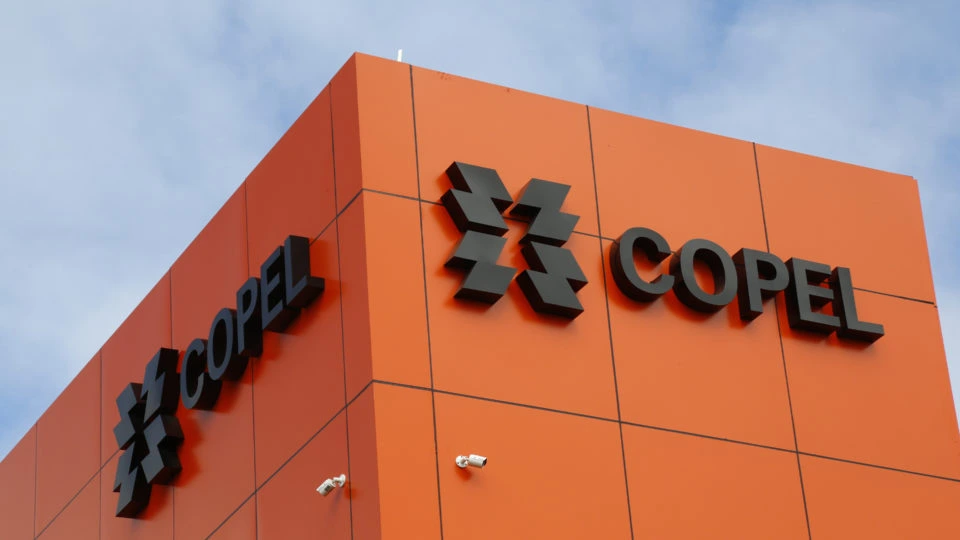
Companhia Paranaense de Energia concluded the sale of its stake in the Baixo Iguacu Hydroelectric Plant to Energo-Pro Brasil Holding for R$ 1.683 billion ($295 million).
The transaction followed approval by regulatory authorities and fulfillment of precedent conditions. The utility executed the deal through its wholly owned subsidiary Copel Geracao e Transmissao.
The payment structure spread across multiple dates. Copel received R$ 155.4 million ($27 million) in February 2025. Another R$ 1.517 billion ($266 million) arrived in October. The remaining R$ 10 million ($2 million) awaits completion of post-closing procedures.
The company stated the transaction demonstrates its ability to recycle assets and minority stakes efficiently. Management emphasized the deal captures value and generates consistent returns for shareholders.
The sale represents part of a broader restructuring strategy following privatization in August 2023. The state of Parana sold Copel through a follow-on offering that raised R$ 5.2 billion ($912 million).
The privatization ranked as the third-largest power sector offering globally in 2023. Foreign investors including U.S. asset managers GQG and Zimmer participated. Demand exceeded R$ 10 billion during bookbuilding.
State ownership dropped from 31 percent to 15.6 percent after the offering. The company shifted to a dispersed ownership structure without a controlling shareholder. The state retained three of nine board seats, down from five previously.
Santander analysts project improved financial performance ahead. They forecast EBITDA reaching R$ 6.2 billion ($1.1 billion) in 2026.
Net income should climb from R$ 1.7 billion ($298 million) in 2025 to R$ 2.6 billion ($456 million) in 2026. The projections assume continued asset optimization and operational improvements.
Raizen Reports Losses Amid Debt Concerns
Raizen registered a net loss of R$ 2.57 billion ($451 million) in the third quarter of the 2024/25 crop year. The result reversed a profit of R$ 793 million from the same period one year earlier.
Management attributed the decline to lower operational contributions and increased financial expenses including non-recurring effects.
The accumulated nine-month loss reached R$ 1.66 billion ($291 million). This compared unfavorably with gains of R$ 1.49 billion in the prior year period. The deterioration occurred despite higher sugar production and improved fuel distribution volumes.
Net debt climbed 22.5 percent year-over-year to R$ 38.59 billion ($6.8 billion). The leverage ratio stood at 3.0 times net debt to adjusted EBITDA.
Company executives explained the increase reflected seasonal patterns typical of this crop period. Higher working capital consumption, lower cash generation and ongoing investments contributed to the debt growth.
Adjusted EBITDA fell 20.5 percent to R$ 3.12 billion ($547 million) in the quarter. The metric measures operational cash generation potential. Management noted operational challenges and non-recurring items pressured results throughout the period.
Cane crushing totaled 35.1 million tonnes in the second quarter of 2025/26, up from 32.9 million tonnes previously. Favorable weather supported the improvement.
However, accumulated crop crushing declined to 59.6 million tonnes. Climate factors including fires and frost reduced volumes. The sale of cane following decommissioning of the Santa Elisa plant also impacted totals.
Sugar production reached 4.78 million tonnes with a 56 percent sugar and 44 percent ethanol mix. Ethanol sales decreased to 817,000 cubic meters. Second-generation ethanol production rose to 42,900 cubic meters, driven by the Univalem, Barra and Bonfim plants.
Fuel distribution volumes in Brazil ranged between 7.4 and 7.5 million cubic meters, up from 7.0 million in the prior year quarter.
Actions against illegal market practices supported growth. Argentina sales reached 1.75 to 1.8 million cubic meters following operational planning and a scheduled efficiency shutdown.
The company operates as a joint venture between Shell and Cosan. It combines sugar and ethanol production with fuel distribution across Brazil, Argentina and Paraguay.
The business employs more than 45,000 workers and operates over 8,100 Shell-branded stations. Recent reports suggest Raizen seeks to divest Argentina operations as part of portfolio simplification efforts.
Alcoa Posts Near-Triple Net Income Growth
Alcoa Corporation reported net income of $232 million in the third quarter of 2024. The result nearly tripled from $90 million in the same quarter of 2023.
The company reversed a $168 million loss posted in the third quarter of 2023. Earnings per share reached $0.88, substantially exceeding analyst expectations of $0.01.
Revenue totaled $2.9 billion, up 3.1 percent from the prior year quarter. The figure fell slightly below analyst projections of $2.97 billion. Higher aluminum prices drove revenue growth. Lower alumina prices and unfavorable currency effects partially offset gains.
Fourth quarter results showed continued momentum. Net income reached $202 million with revenue of $3.49 billion. Full year 2024 net income totaled $60 million on revenue of $11.9 billion.
The annual performance marked a significant recovery from a $651 million loss in 2023. Adjusted EBITDA excluding special items climbed to $455 million in the third quarter from $70 million one year earlier.
The fourth quarter figure reached $677 million. Full year adjusted EBITDA totaled $1.6 billion, up 196 percent from 2023. CEO William Oplinger stated the company maintained operational stability and portfolio optimization during the quarter.
Strategic actions included closing the acquisition of Alumina Limited in August 2024. The $2.2 billion transaction strengthened Alcoa’s integrated business model and provided full ownership of Alcoa World Alumina and Chemicals.
The company announced plans to sell its interest in Ma’aden joint ventures in Saudi Arabia. Management emphasized focus on continuous improvement to enhance competitiveness. Australian mine approvals remain a priority for expanding production capacity.
Aluminum production increased 5 percent year-over-year to 559,000 tonnes in the third quarter. Alumina production decreased 13 percent compared to the prior year quarter.
The company maintained its 2024 aluminum production guidance between 2.2 and 2.3 million tonnes. Alcoa operates 27 facilities across nine countries.
The company maintains first-quartile costs in bauxite and alumina production and second-quartile costs in aluminum production. Most facilities sit near bauxite mines, reducing transportation costs and ensuring supply chain stability.
The company’s Brazilian operations center on the Alumar complex in Sao Luis, Maranhao. Alcoa restarted aluminum smelting capacity of 268,000 tonnes annually in 2022 after a 2015 suspension.
The facility now operates with 100 percent renewable energy. Recent investments totaling $1 billion focused on reconnecting the smelter and transitioning from diesel to Flex Gas in anode baking furnaces.
Stock performance reflected mixed investor sentiment. Shares declined 0.84 percent in after-hours trading to $35.20 following third quarter results.
Regular market trading saw a 4.24 percent drop to $35.65. The caution came despite earnings beating expectations, suggesting concerns about global aluminum demand and pricing sustainability.
Live Company IntelligenceRaízen S.A. — the full investor dossier
Valuation & profitability
Price & risk
$0.2152-wk high
$1.27
Revenue trend · 6y
Ownership
Dividend
This article was produced by The Rio Times’ automated newsroom system. How we use AI · Report an error
LatAm Markets: Live Signals → — real-time movers, turnover leaders and FX across Latin America.
Read More from The Rio Times