Congo Signs the Lobito Corridor Rail Concession With Mota-Engil
DR CONGO · GEOPOLITICS
Key Facts
—Signed: The concession contract for the Dilolo–Sakania railway was signed in Kinshasa on 26 August 2026. Presidents Félix Tshisekedi and João Lourenço both attended.
—Scale: The line runs 1,004.5 kilometres, from Dilolo on the Angolan border to Sakania on the Zambian border. It passes through Kolwezi, Tenke and Lubumbashi.
—Money: Tshisekedi put the indicative investment at close to US$1.258 billion. That covers studies, rehabilitation, modernisation, extension, operation and maintenance.
—Term: The contract runs for 30 years. At the end of it, the infrastructure returns in full to the Congolese state.
—Risk: Financing and traffic risk sit with the concessionaire, Tshisekedi said. There is no sovereign guarantee, no operating subsidy and no minimum revenue guarantee.
—The state’s share: Kinshasa keeps at least 10 percent of the project company and seats in its governance. It also takes a royalty worth 7.5 percent of annual gross revenue.
—The counterparty: The concession was signed with the Portuguese construction group Mota-Engil, according to Angola’s state news agency ANGOP.
—Why it matters: Tshisekedi said logistics can account for up to 30 percent of the final price of Congolese copper and cobalt. Cheaper track is, in effect, a cheaper metal.
The Lobito Corridor concession signed in Kinshasa on 26 August hands the Portuguese group Mota-Engil three decades of the Dilolo–Sakania railway, against an indicative US$1.258 billion of investment and a 7.5 percent royalty to the Congolese state.
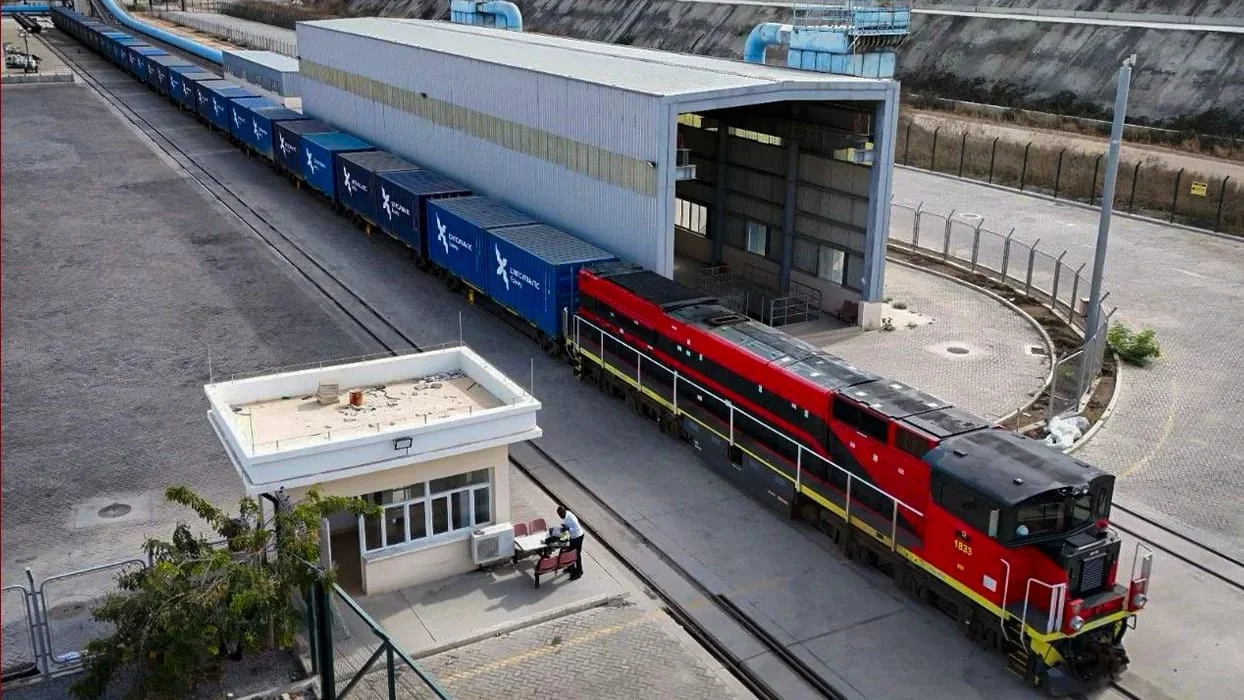
What the Lobito Corridor concession actually covers
The agreement concerns a single stretch of track, and it is the one that has always mattered most. The Dilolo–Sakania line runs 1,004.5 kilometres across the Congolese south-east, from the Angolan frontier to the Zambian one.
Mota-Engil itself describes the project in larger terms, speaking of roughly 1,037 kilometres and total investment of up to US$1.8 billion over the life of the contract. The government figure of close to US$1.258 billion, cited by President Félix Tshisekedi at the signing, is the indicative envelope for the works programme as Kinshasa defines it.
Along the way it threads through Kolwezi, Tenke and Lubumbashi, the industrial heart of Grand Katanga. That is where the copper and cobalt come from, which is why a rehabilitated line is worth more than its length suggests.
The concessionaire takes on studies, rehabilitation, modernisation, extension, operation and maintenance, Tshisekedi said on 26 August. The operating period is set at 30 years, after which everything reverts to the state.
A financing structure built to keep risk off the treasury
The commercial architecture is the part worth reading twice. Tshisekedi said the concessionaire alone carries the financing and the traffic risk, with no sovereign guarantee, no operating subsidy and no minimum revenue guarantee from the republic.
That is an unusually clean split for an African infrastructure deal of this size. Many comparable projects have left the host state underwriting demand that never arrived.
In exchange, the Congolese state keeps at least 10 percent of the project company and representation in its governing bodies. It also collects a concession royalty equal to 7.5 percent of annual gross revenue.
ANGOP named the counterparty as the construction group Mota-Engil. The company has been the presumed bidder since December 2025, when the US International Development Finance Corporation issued it a letter of intent to help finance the line.
Why a thousand kilometres of track changes the price of copper
Tshisekedi framed the case in the plainest possible terms. Logistics, he said, can reach 30 percent of the final price of Congolese copper and cobalt, and the corridor exists to bring that number down.
Today most Congolese metal leaves by road, heading south to Durban or east to Dar es Salaam. Both routes are long, congested and expensive, and both put a landlocked producer at the mercy of somebody else’s border post.
The Lobito route offers a third door, this time onto the Atlantic. For a buyer in Rotterdam or Baltimore, that is several thousand kilometres of sea freight saved.
The concession also carries local-content obligations. Mota-Engil is required to create Congolese jobs, train young workers, subcontract to national firms and transfer technology.
Washington’s interest, Lisbon’s contractor
The Lobito Corridor has become the clearest example of Western capital trying to compete with Chinese infrastructure lending in Africa. The Congolese section is the piece that turns a regional line into a transcontinental one.
That the operator is Portuguese rather than Chinese or American is telling in itself. Lisbon’s construction groups have long worked in Lusophone Africa, and they now sit at the point where American development finance meets Congolese ore.
For readers in Latin America the pattern will look familiar. It is the same contest over ports, rail and refining capacity that has reshaped the Pacific coast of South America over the past decade.
What Kinshasa promised about the national railway
The politics of conceding a railway in the Congo are delicate, and Tshisekedi moved to close off the obvious attack. The contract does not privatise the Société Nationale des Chemins de fer du Congo, he said, and it does not create a rail monopoly.
The line stays open to qualified operators on terms the president described as transparent and non-discriminatory. SNCC keeps exclusivity over passenger traffic and retains its right to carry freight.
Whether that balance survives contact with commercial reality is the open question. A concessionaire carrying all the traffic risk will want volume, and volume is easier to guarantee when competition is thin.
What to watch from here
The first test is financial close, because an indicative figure is not a funded one. The DFC letter of intent from December 2025 signalled willingness rather than commitment.
The second is the construction timetable, which was not published on the day. Neither Kinshasa nor Luanda gave a date for first rehabilitated traffic.
The third is Angola’s own section, which runs a further 1,344 kilometres from Luau to the port of Lobito. A corridor is only as fast as its slowest segment.
Frequently Asked Questions
What was signed in Kinshasa on 26 August 2026?
The Democratic Republic of the Congo signed a 30-year concession for the Dilolo–Sakania railway, the Congolese section of the Lobito Corridor. Presidents Félix Tshisekedi and João Lourenço attended the ceremony.
How much is the Lobito Corridor concession worth?
Tshisekedi put the indicative investment at close to US$1.258 billion over the life of the contract. It covers studies, rehabilitation, modernisation, extension, operation and maintenance.
Who is the concessionaire?
Angola’s state news agency ANGOP identified the counterparty as the Portuguese construction group Mota-Engil. The US International Development Finance Corporation issued the company a letter of intent in December 2025.
What does the Congolese state get?
Kinshasa keeps at least 10 percent of the project company, representation in its governance and a royalty of 7.5 percent of annual gross revenue. The infrastructure returns to the state after 30 years.
Does the deal privatise Congo’s national railway?
Tshisekedi said it does not privatise SNCC and does not create a rail monopoly. SNCC keeps exclusivity over passengers and retains its right to carry freight.
Connected Coverage
We reported the cabinet approval of this line on 4 August in Congo approves a US$1.26 billion railway for the Lobito Corridor, set out the wider route in the Lobito Corridor and the new railway for African copper and covered the parallel bet in Zambia’s western railway gamble. The contest behind all of it runs through our pillar, Africa: The New Scramble, with more from the region on our Central Africa hub.
This article was produced by The Rio Times’ automated newsroom system. How we use AI · Report an error
LatAm Markets: Live Signals → — real-time movers, turnover leaders and FX across Latin America.
Read More from The Rio Times