Israel Says Colombia Quit UN Genocide Case Against It
Key Facts
South Africa’s genocide case against Israel at the UN’s top court has become a test of which governments stand where on Gaza. Israel now says Colombia, one of the first states to back the case, has stepped out.
Israel’s foreign minister, Gideon Sa’ar, says Colombia has withdrawn from South Africa’s case at the International Court of Justice. The news site Infobae reported his confirmation late on 18 September.
Why This Matters
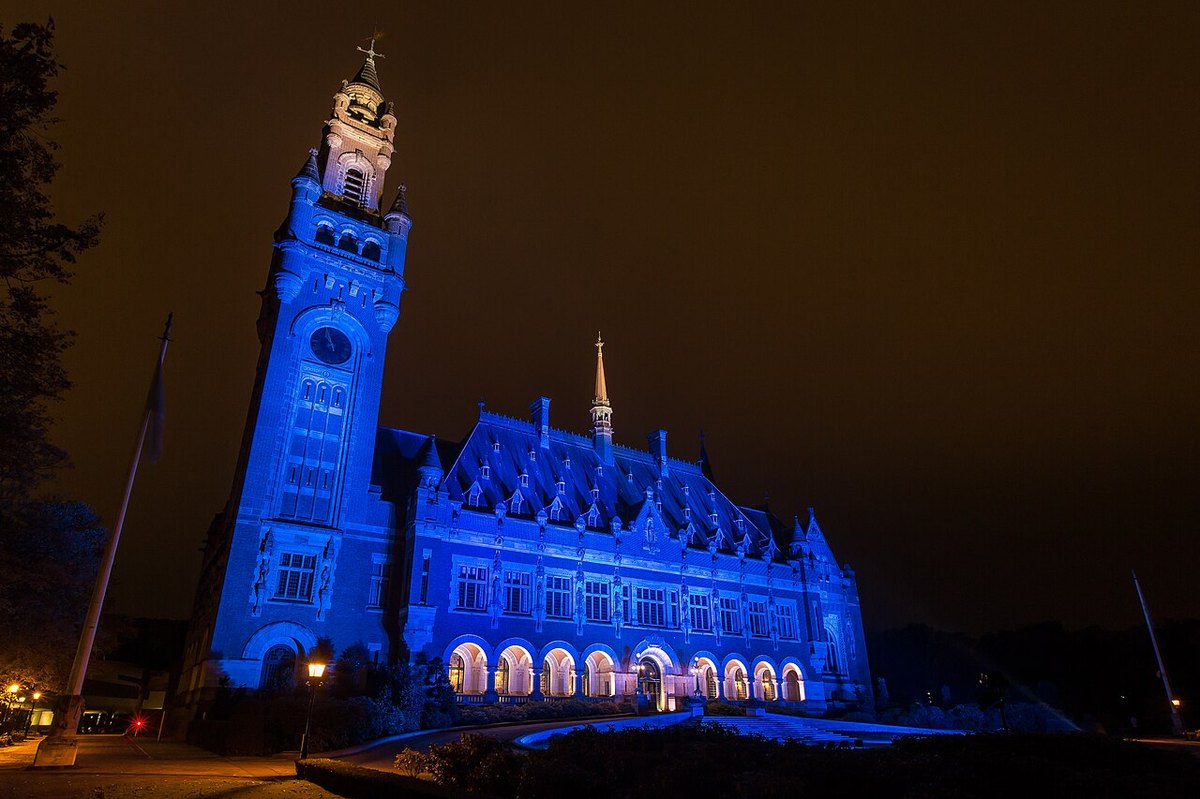
The International Court of Justice (ICJ) is the United Nations’ principal court and sits in The Hague. It settles legal disputes between states, not cases against individuals.
South Africa filed its case on 29 December 2023. It alleges that Israel breached the 1948 Genocide Convention in Gaza, which Israel denies.
Colombia filed its declaration of intervention on 5 April 2024, under the previous president, Gustavo Petro. It is the first declaration of intervention listed on the court’s docket.
About twenty states and Palestine have since filed declarations or applications in the case. Latin American filers include Mexico, Chile, Bolivia and Brazil, alongside European states such as Spain and Ireland.
Colombia’s exit matters more politically than legally, because interveners only offer the court their reading of the treaty. It shows how a change of government in Bogotá, Colombia’s capital, can reverse the country’s position on Israel within weeks.
How the Withdrawal Was Announced
The confirmation came from Israel rather than from Bogotá. Sa’ar thanked Colombia’s president, Abelardo de la Espriella, on X.
He cited an official Colombian statement withdrawing from what he called South Africa’s “false and malicious” suit, according to Infobae. Neither he nor Infobae gave a date for that statement.
Sa’ar said the step followed a conversation with Colombian Foreign Minister Omar Bula in Washington on 15 July. He added that the bond between the two countries was “stronger than ever”.
Israel’s ambassador in Bogotá, Vivian Aisen, thanked the government for “having chosen the right side of history”. She called the decision “brave and responsible”.
The Rio Times could not locate the Colombian statement on the foreign ministry’s website as of 19 September. Its exact wording and the legal instrument used have not been published.
The court’s case page also listed no withdrawal notice on that date, and its latest press releases do not mention Colombia. The move therefore rests, for now, on the Israeli account and Colombian press reports.
The July Announcement
The decision itself is not new. On 16 July, De la Espriella, then president-elect, said he would withdraw from the case once in office.
His office said Colombia “will withdraw its involvement in the case brought by South Africa against Israel”, the Times of Israel reported. The same statement said Colombia “will return to a responsible position in the international arena, including within UN bodies”.
It framed the move as part of restoring the historic relationship with Israel. The Associated Press (AP) quoted De la Espriella saying the relationship Petro broke “unilaterally” would be strengthened again.
He said Colombia would recover “its allies” and “its diplomatic word”. Bula, then foreign minister-designate, had met Sa’ar in Washington shortly before.
AP dated that meeting to 15 July, while the Times of Israel dated it to 14 July. Both sides said the plan included ambassadors, a mutual visa waiver and a Colombian embassy in Jerusalem.
De la Espriella took office on 7 August. Al Jazeera describes his government as far-right.
What Colombia Had Filed Under Petro
Colombia’s filing was signed by Ambassador Juan José Quintana as its agent, the state’s representative before the court. It relied on Article 63, paragraph 2, of the court’s Statute, its founding rulebook.
Colombia set out how it read Articles I to IV of the 1948 Genocide Convention. The filing also cited Petro’s public statements on Gaza.
The declaration stated plainly that Colombia “is not seeking to become a party in the proceedings”. It said its aim was to assist the court in construing the convention.
The court’s docket lists no order ruling on whether Colombia’s declaration was admissible. It shows no decision admitting or rejecting it.
Infobae recalled that Petro’s government described Israel’s actions in Gaza as “acts of genocide”. Israel has consistently denied the accusation.
How an Intervention Works
Article 63 applies when a case turns on the meaning of a treaty with several parties. Any other party to that treaty may then intervene.
The intervening state gives the court its reading of the treaty’s provisions. It does not argue about the facts on the ground.
It is not a plaintiff, and it cannot ask the court to rule against the respondent. It does not become a party to the dispute.
If the declaration is admitted, the court’s interpretation of the treaty binds the intervener too. Colombia’s own filing acknowledged that point.
Article 62 is a separate route for states claiming a legal interest in the outcome. Nicaragua used that route in this case, then withdrew its application.
Colombia’s exit therefore removes one voice on interpretation. It does not remove a claimant, and South Africa‘s claims stand unchanged.
Where the Case Stands
The court issued provisional measures, emergency orders pending a final ruling, on 26 January, 28 March and 24 May 2024. It has not ruled on the merits, meaning whether genocide occurred.
South Africa filed its Memorial, its main written argument, on 28 October 2024. Israel filed its Counter-Memorial on 12 March 2026 after two extensions, according to South Africa’s government.
An order of 21 May 2026 set South Africa’s Reply for 22 November 2027. Israel’s Rejoinder is due by 22 May 2029, according to SAnews, South Africa’s state news agency.
Filings in 2026 came from Paraguay, the Netherlands, Iceland, Namibia, the United States, Hungary and Fiji. The Rio Times has not reviewed each filing’s position.
Reactions So Far
Israel’s reaction is on record through Sa’ar and Aisen. The Rio Times found no South African government statement on Colombia’s September step.
South Africa’s Presidency said in June that “self-defence is not a defence to genocide”. That comment addressed Israel’s Counter-Memorial, not Colombia.
Petro had already attacked the plan to restore ties with Israel on 15 July. “Whoever supports a genocide will be genocidal in his own country,” he wrote on X, as quoted by AP.
He also called a Jerusalem embassy “a maximum rudeness to all the Islamic peoples of the world”, according to Infobae. He has since left office.
The Organisation of Islamic Cooperation (OIC), a bloc of 57 Muslim-majority states, condemned the planned embassy move on 16 July, Infobae reported. It warned of effects on relations with its member states.
In South Africa, analysts disagreed in July about whether others would follow Colombia, the SA Jewish Report reported. Political analyst Terence Corrigan said: “I don’t think it materially weakens the case.”
Advocate Mark Oppenheimer said the step “sends a clear signal” to other intervening states. No other state has announced a similar step, and no Palestinian statement on the September step could be found.
The Wider Foreign-Policy Shift
The withdrawal is one part of a broader turn since 7 August. Colombia’s foreign ministry recognised Israeli sovereignty over the Golan Heights on 10 August.
Its statement on X said the government “recognises Israeli sovereignty over this territory”, Al Jazeera reported. Colombia became the second country after the United States to do so.
Al Jazeera reported that the new government also cancelled Petro’s plan for an embassy in Ramallah. The United Nations regards the Golan as Syrian territory.
On 16 September, Bula told Congress the Israel relationship served security and intelligence cooperation. “Colombia first,” he said, according to the foreign ministry.
He said the government believed that “historic relationship must be recovered”. The Rio Times has separately covered Colombia’s exit from the Equal Rights Coalition.
Petro had broken relations with Israel in May 2024 over Gaza. Israel and Colombia announced mutual visa exemptions from 1 September.
What It Means If You Work Between Colombia and Israel
For travellers, the practical change is the visa waiver announced in August. Colombian press reported an additional pre-travel requirement for Colombians visiting Israel.
For defence and security suppliers, Bula has named intelligence, cybersecurity and anti-crime work as priorities. AP noted Colombia’s forces use Israeli-made jets and rifles.
For exporters to Muslim-majority markets, the OIC warning is worth tracking. It is conditional on the Jerusalem embassy actually opening.
For legal watchers, Colombia’s exit does not change the timetable. No written pleading is due in the main case before November 2027.
What Is Not Yet Known
The text of Colombia’s withdrawal statement has not been published. Nor is it known whether a formal letter has reached the court’s Registry, its administrative office.
It is unclear whether the court will issue an order or press release noting the withdrawal. It did so when Nicaragua withdrew its application.
No date has been announced for opening an embassy in Jerusalem. South Africa’s response to Colombia’s step is also not yet on record.
Frequently Asked Questions
Why does Colombia’s withdrawal matter?
Colombia was one of the first states to back South Africa’s case, under former president Gustavo Petro. Its exit signals a change in Bogotá’s foreign policy, though the legal claims are unchanged.
Has Colombia confirmed the withdrawal itself?
Not publicly in a text The Rio Times could find as of 19 September. The confirmation came from Israel’s foreign minister, and the court’s docket showed no withdrawal.
Was Colombia a party to South Africa’s case?
No, it filed a declaration of intervention under Article 63. Its own filing said it was not seeking to become a party.
When will the court rule on the merits?
Not soon, since South Africa’s Reply is due in November 2027. Israel’s Rejoinder is due in May 2029.
Sources: Infobae, Colombia’s withdrawal confirmed and reactions (18 September 2026), International Court of Justice, case docket South Africa v. Israel, International Court of Justice, press releases, International Court of Justice, about the Court, International Court of Justice, Declaration of Intervention of Colombia, Times of Israel, president-elect’s statement on the ICJ case (17 July 2026), AP via Yahoo Noticias, De la Espriella to withdraw from the case (16 July 2026), Al Jazeera, Colombia recognises Israeli claim over the Golan Heights (11 August 2026), SAnews, Presidency notes ICJ order of 21 May 2026, Infobae, Petro attacks Jerusalem embassy plan (16 July 2026), DIRCO, South Africa notes Israel’s response filing, Cancillería de Colombia, Bula on relations with Israel (16 September 2026), SA Jewish Report, will other countries follow Colombia (23 July 2026)
This article was produced by The Rio Times’ automated newsroom system. How we use AI · Report an error
Read More from The Rio Times