Colombia Critical Minerals Face $4.5B Crime Threat
Colombia · Economy
Key Facts
—The US$4.5 billion figure. It represents potential lost tax revenue from critical minerals by 2050, not current criminal proceeds.
—Study authors. The report comes from Colombian think tank Fedesarrollo and Loom Strategy Centre.
—Illegal gold baseline. Illegal gold extraction generated an estimated US$7.5-8.0 billion in 2025, equal to 1.9% of GDP.
—Urgent timeline. Researchers warn Colombia has a five-year window to regulate before organized crime fully captures the sector.
—Current illegal share. Roughly 74-80% of Colombia’s gold production is believed to be illegal.
A study has found that Colombia critical minerals could generate up to COP$19 trillion (about US$4.5 billion) in fiscal revenue by 2050, but only if the state reclaims the sector from organized crime.
What the COP$19 trillion figure means
The sum is an estimate of potential tax income the Colombian government could collect from copper, lithium, and other energy-transition metals by mid-century. It is calculated in net present value and represents a lost opportunity, not money already in criminal hands.
The study, by Colombian research center Fedesarrollo and Loom Strategy Centre, sets the potential revenue range between COP$10 trillion and COP$19 trillion. That upper bound equals roughly seven years of the nation’s defense and police investment budget.
For context, this fiscal windfall would be transformative for a country where social spending and rural development remain urgent priorities. The lower estimate alone matches more than a decade of the Ministry of Environment’s entire annual budget, underscoring the scale of what is at stake.
The shadow of illegal gold
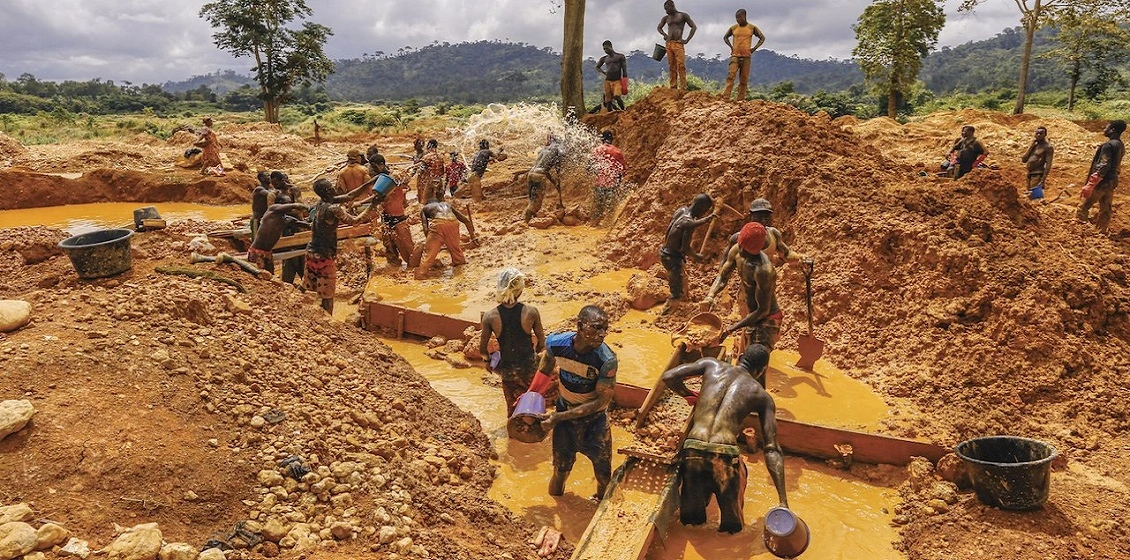
Researchers contrasted the future promise with the current crisis in gold mining. Illegal gold extraction alone generated an estimated COP$32-34 trillion (US$7.5-8.0 billion) in 2025, equivalent to 1.9% of Colombia’s gross domestic product.
Those illicit proceeds directly finance dissident FARC factions, the Clan del Golfo, and the ELN guerrilla group. The report warns that without swift action, critical minerals will suffer the same fate.
Colombia has long struggled with unlicensed mining operations, which often cause severe environmental damage by contaminating rivers with mercury and clearing protected forests. The gold sector’s experience serves as a cautionary tale: once criminal networks entrench themselves, dislodging them becomes exponentially harder and costlier for the state.
A five-year regulatory window
The authors stress that Colombia has roughly five years to establish formal regulations for critical minerals. Missing this window risks ceding control to illegal economies that will finance armed groups for decades.
Overcoming severe security problems and regulatory barriers is essential to attract formal international investment. The country currently ranks in the top 25% of nations with the highest mining potential worldwide.
This narrow timeline reflects the accelerating global race for lithium, copper, and other inputs vital for electric vehicle batteries and renewable energy infrastructure. Countries that move slowly on clear mining codes and security guarantees often watch investment capital flow to more predictable jurisdictions, leaving their resources untapped or exploited informally.
The global energy transition at stake
Failing to secure the sector jeopardizes Colombia’s role as a key supplier in the global energy transition. The study, titled “Regulating for the State, not for Crime,” argues that formalization is a national security priority.
Annual tax losses from the broader illegal mining economy already reach about COP$5 trillion (US$1.2 billion). The new data frames critical minerals as a fiscal lifeline the state cannot afford to lose.
Colombia holds significant geological reserves of copper in the Andean region and promising lithium deposits, though exploration remains in early stages compared to South American neighbors like Chile and Argentina. Tapping these resources legally could diversify the national economy away from its traditional dependence on oil and coal exports.
What it means for expats and investors
For foreign investors and expatriates eyeing Colombia’s mining sector, the study is both a warning and a roadmap. The US$4.5 billion revenue projection signals enormous upside, but only if the government tackles the security and regulatory obstacles that have long plagued extractive industries.
International mining firms typically require stable legal frameworks and physical safety for personnel before committing capital to exploration and production. The five-year window identified by researchers suggests that early movers who engage with formalization efforts could gain a first-mover advantage, while those who wait may find the best concessions already claimed or mired in legal uncertainty.
For expats living in Colombia, the study highlights how illegal mining fuels the armed groups responsible for instability in rural zones. A successful crackdown on illicit mineral extraction would likely improve security conditions in departments such as Antioquia, Chocó, and Cauca, where foreign residents and tourists sometimes venture.
What happens next
The Colombian government now faces pressure to translate the study’s findings into concrete policy. This includes drafting a dedicated regulatory code for critical minerals, strengthening law enforcement in mining regions, and creating incentives for legal operators to enter the market.
Observers expect heated debate in Congress, where balancing environmental protections, indigenous community rights, and investor interests has historically proven difficult. The study’s authors argue that delay is the greatest risk, as criminal groups are already scouting lithium and copper deposits for future exploitation.
International partners, including the United States and European Union, have expressed interest in securing diversified supply chains for critical minerals outside of China. Colombia’s ability to guarantee responsibly sourced metals could unlock technical cooperation and preferential trade terms, but only if Bogotá demonstrates measurable progress within the five-year window.
More: Colombia news in English, every day from The Rio Times.
Frequently Asked Questions
Is the US$4.5 billion already in criminal hands?
No. The COP$19 trillion (US$4.5 billion) is an estimate of future tax revenue Colombia could lose by 2050 if organized crime captures the critical minerals sector. It is calculated in net present value and represents a fiscal opportunity at risk, not money that has already been stolen or laundered.
Which armed groups are involved in illegal mining?
The study identifies dissident FARC groups, the Clan del Golfo, and the ELN as the main organizations financing themselves through illegal gold extraction. These groups operate across remote mining regions, extorting miners, controlling access to deposits, and smuggling gold out of the country.
How much of Colombia’s gold is mined illegally?
Various reports estimate that between 74% and 80% of the country’s total gold production comes from illegal operations. This staggering share explains why researchers fear critical minerals like copper and lithium could follow the same path without urgent government intervention.
Connected Coverage
Sources: Fedesarrollo; Loom Strategy Centre.
This article was produced by The Rio Times’ automated newsroom system. How we use AI · Report an error · Editorial responsibility: Matthias Camenzind, Editor-in-Chief
In depth