Colombia Launches Clean Energy Auction to Shore Up Its Power Grid
Colombia · Markets
Key Facts
—The launch. Colombia opened a long-term auction to contract new wind, solar and battery power.
—15-year deals. Winners get supply contracts of up to 15 years, with power flowing from 2030.
—A first. For the first time the auction includes a dedicated category for battery storage.
—The dates. Contracts are set to be awarded on July 23 and 24, with rules finalized this summer.
—Why now. Colombia leans on hydro dams for most of its power and fears shortfalls when droughts hit.
—The pitch. Officials cast it as stabilizing bills and powering future data centres and AI.
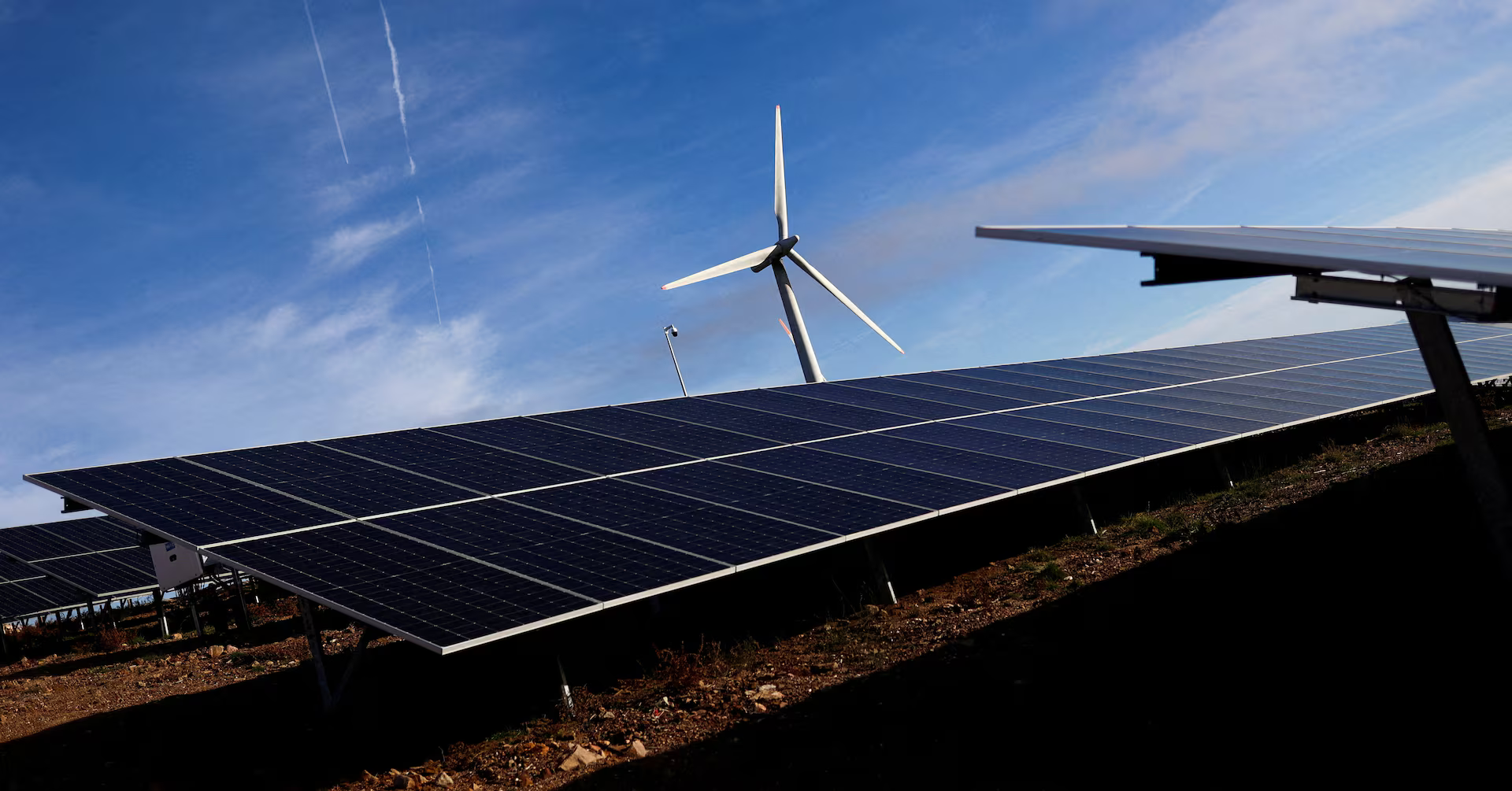
Colombia has opened a major Colombia clean energy auction, inviting companies to bid for long-term contracts to build wind, solar and, for the first time, battery-storage projects, in a bid to shore up a power system that leans heavily on rain-fed dams and faces shortfalls later this decade.
What the Colombia clean energy auction offers
Colombia’s Ministry of Mines and Energy, working with the country’s commodities exchange, the Bolsa Mercantil de Colombia, has formally launched a long-term clean-energy contracting auction. The mechanism lets the government sign supply contracts of up to 15 years with companies that will build new generation, giving developers the predictable revenue they need to raise financing and start building.
The contracts are designed for power to start flowing between 2030 and 2035, with a complementary round looking even further out. The auction is open to solar farms, wind farms, hybrid plants that combine the two, and, in a first for Colombia, standalone battery-storage projects.
Officials plan to award the contracts on July 23 and 24, after finalizing the detailed rules. Bidding documents are already posted on the exchange’s dedicated portal for interested generators and traders.
Why Colombia needs this, in plain terms
To understand why a routine-sounding auction matters, start with how Colombia keeps the lights on. In a normal year roughly 70% of its electricity comes from hydroelectric dams, which is cheap and clean but leaves the country dangerously exposed to drought.
When the weather pattern known as El Niño dries up the rivers, those dams generate less, and Colombia must fall back on power plants burning natural gas or other fuels. The problem is that the country’s own gas output has been falling, forcing it to buy expensive imported supply, so a dry spell squeezes the system from two directions at once.
Industry monitors have warned for months that Colombia’s reliable supply is set to fall short of demand from 2026 onward unless new projects come online. The auction is the government’s main tool for closing that gap, locking in fresh wind and solar capacity, and crucially the batteries that store it for when the sun sets and the wind drops.
The squeeze is not hypothetical. Colombia lost gas self-sufficiency in late 2024, and imported gas now covers roughly a third of demand in tight weeks, at prices that can run far above home-produced supply.
At the same time, the country’s build-out of renewables has lagged its own ambitions, with industry groups noting it is running at about half of the targets set for this government’s term. New long-term contracts are meant to put that expansion back on track before the next dry season exposes the system again.
Live Market IntelligenceColombia — Live Market Board
Rio Times · Live Market Intelligence
Colombia — Live Market Board
+0.00%
209,066.90
+1.38%
66,411.11
+0.55%
11,043.36
+0.17%
2,828,027
-0.16%
2,531.15
+0.00%
60,956.11
-0.51%
| Instrument | Last | Change | YoY | Prev. | High | Low | Volume |
|---|---|---|---|---|---|---|---|
| COLCAP | 2,531.15 | +0.00% | — | 9.04 | 9.05 | 9.02 | 4,133 |
| USD/COP | 3,140 | +0.03% | -22.04% | 3,139 | 3,141 | 3,105 | — |
| BRENT | 88.88 | -0.03% | +34.42% | 88.91 | 90.07 | 88.12 | 29,713 |
| WTI | 83.11 | -0.11% | +31.57% | 83.20 | 84.35 | 82.40 | 166,848 |
| ECOPETROL | 16.92 | -0.53% | +98.01% | 17.01 | 17.05 | 16.79 | 737,591 |
| BANCOLOMBIA | 95.87 | -2.18% | +96.15% | 98.01 | 100.36 | 95.73 | 188,740 |
| GRUPO AVAL | 5.40 | +2.66% | +76.89% | 5.26 | 5.49 | 5.32 | 146,447 |
| TECNOGLASS | 42.30 | -1.10% | -48.04% | 42.77 | 42.73 | 42.05 | 60,908 |
| CREDICORP | 375.17 | -0.49% | +49.60% | 377.00 | 384.43 | 372.27 | 88,375 |
| BUENAVENTURA | 34.45 | -1.02% | +88.07% | 34.80 | 35.62 | 34.33 | 275,831 |
| SOUTHERN COPPER | 193.97 | -0.26% | +104.01% | 194.48 | 199.36 | 192.59 | 367,102 |
The storage twist and the investor signal
The standout feature is that first dedicated slot for battery storage. Wind and solar only produce when nature cooperates, so batteries that soak up surplus daytime power and release it after dark are what turn intermittent renewables into something the grid can lean on during a tight evening peak.
Energy Minister Edwin Palma framed the effort as “decarbonized firmness,” a deliberate contrast with calls to expand fossil-fuel drilling, and argued the country will need a steady flow of renewable power to serve new demand from data centres and artificial intelligence. The message to investors is that Colombia wants long-term private capital in clean power and is offering 15-year contracts to attract it.
The caution, which foreign readers should weigh, is delivery. Colombia has held renewable auctions before, yet much of the awarded capacity has been slow to reach the grid, held up by permitting and by missing transmission lines, most notably the stalled link meant to carry La Guajira’s vast wind potential to the rest of the country.
So the launch is a genuine step, and the storage category is a real innovation, but the test is whether these projects actually get built and connected this time. With a presidential election in October and the supply gap widening, the July award dates will be an early read on whether investors believe the window is open.
More: Colombia news in English, every day from The Rio Times.
Frequently Asked Questions
What is being auctioned?
Long-term contracts of up to 15 years to supply electricity from new wind, solar, hybrid and battery-storage projects, with power expected to start flowing from 2030.
Why is Colombia holding it now?
Colombia relies on hydro dams for about 70% of its power and faces projected supply shortfalls from 2026, worsened by droughts and falling domestic gas output. New capacity is needed to close the gap.
When are contracts awarded?
The government plans to award the long-term contracts on July 23 and 24, 2026, with the auction to be implemented before the end of July.
Connected Coverage
Colombia’s Firm-Energy Deficit Widens Through 2030
Colombia Economy 2026: Petro Reforms, Coffee, Oil and Growth
This article was produced by The Rio Times’ automated newsroom system. How we use AI · Report an error · Editorial responsibility: Matthias Camenzind, Editor-in-Chief