Colombia’s 2027 Budget Reaches Congress With A US$9.5bn Gap
Colombia · Economy
Key Facts
- Budget total — The 2027 spending plan totals COP 575.6 trillion, roughly 27% of GDP, according to La República.
- Financing gap — The Comptroller’s Office flags a COP 30.2 trillion shortfall (about US$9.5 billion) that needs new legislation.
- Contingent income — The budget relies on COP 30.2 trillion in contingent revenues from a yet-to-be-approved financing law.
- Uncovered spending — Of that gap, COP 8.292 trillion (around US$2.6 billion) has no identified source, per Infobae’s calculations.
- Political friction — The Centro Democrático party asks to return the bill to the Finance Ministry for corrections and better justification.
- Leadership change — Minister Germán Ávila resigned effective 7 August 2026; Miguel Gómez Martínez is the designated successor.
- Legal deadlines — Congress must set the budget amount by 15 September and vote by 20 October, reports Infobae.
The outgoing government’s spending plan faces a financing gap. It also faces political pushback.
This sets up a tense fiscal debate. Investors and residents will watch closely.
Colombia’s 2027 national budget landed in Congress. It has a COP 575.6 trillion price tag.
That is about US$181 billion. But it carries a COP 30.2 trillion financing hole.
That is around US$9.5 billion. The outgoing government hopes to fill it with a new tax law.
The Comptroller’s Office flagged that gap. La República and El Espectador reported it.
This means your taxes and utility bills will be affected. The pace of public investment in Colombia will also change.
A tense legislative fight will shape all of this. It will last over the next two months.
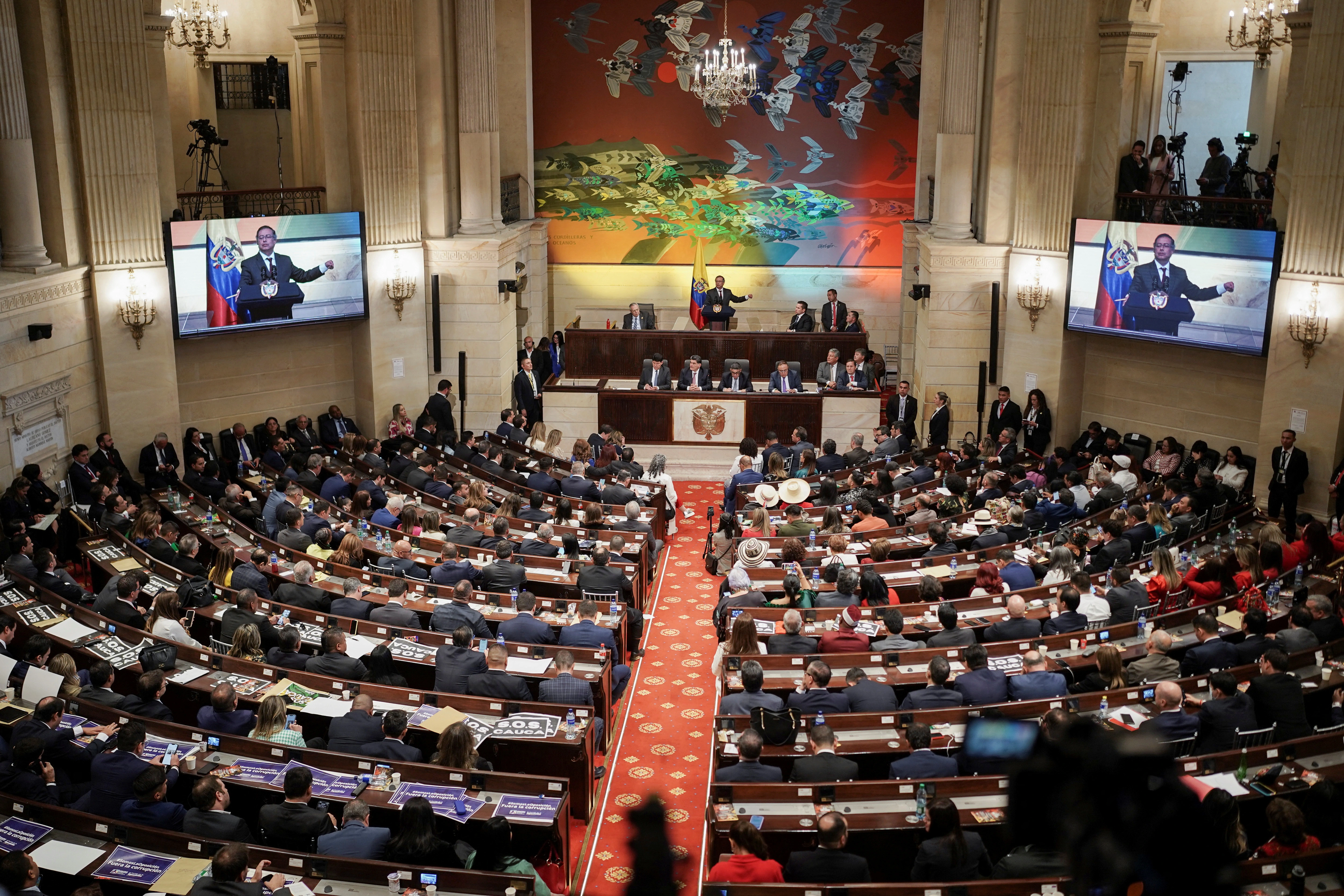
Understanding Colombia’s 2027 National Budget
Every year, the national government drafts a General Budget of the Nation, a document that lays out all public spending for the following year: salaries, infrastructure, health transfers, defence, and debt payments. The Finance Ministry submits it to Congress, where the third and fourth committees of both the Senate and the House review the numbers, debate the sources of income, and vote on the total amount.
The key dates are set: Congress must fix the budget amount by 15 September and vote the final text no later than 20 October, according to Infobae. That gives lawmakers roughly eight weeks to pick apart a document that represents about 27% of the country’s GDP, as La República notes.
Where the Money Comes From — and Where It Doesn’t
The 2027 budget proposal, presented by the outgoing administration of Gustavo Petro, leans on a mix of tax revenue, royalties, and debt. But COP 30.2 trillion of that income is what officials call contingent: it only materialises if Congress approves a separate financing law, a kind of tax reform that the government has not yet secured.
The Comptroller’s Office, the independent audit body, has already warned that this creates a structural shortfall. According to El Espectador’s reporting on the radicado bill, the project requires those additional revenues to balance the books. La República cites the same COP 30.2 trillion figure as the desfinanciación, or unfinanced portion, of the budget.
Colombia’s 2027 budget proposal was filed at COP 575.6 trillion (about US$181 billion), with a financing gap of COP 30.2 trillion (about US$9.5 billion). The government wants to close that hole with a separate financing law, but lawmakers have asked the finance ministry to revise or return the project before debate begins.
The outgoing administration identified COP 21.9 trillion (about US$6.9 billion) in funding sources, leaving roughly COP 8.3 trillion (about US$2.6 billion) with no clear backing. Under the plan, Congress must approve the new revenue measures, but the discussion has yet to start, and some legislators want the accounts recalculated first.
The Hole Within the Hole
The picture gets worse when you look closer. Infobae, citing calculations around the government’s coverage plan, reports that the outgoing administration identified financing for only COP 21.9 trillion of that gap. That leaves COP 8.292 trillion — roughly US$2.6 billion — with no source of funding identified at all.
In practice, this means the budget as submitted is not fully backed by real revenue. If Congress does not pass the financing law, or if the promised income falls short, the government would face a shortfall that could force spending cuts, delays in transfers to regions, or new debt issuance on less favourable terms.
Colombia’s 2027 National Budget Faces Political Storm and a New Minister
The political climate is tense. The Centro Democrático party has filed a motion to return the bill to the Finance Ministry, demanding that officials correct and properly justify several funding sources, as reported by Semana. The discussion has not even formally started in the plenary committees, yet the pushback is already loud.
Adding to the uncertainty, Finance Minister Germán Ávila resigned with effect from 7 August 2026, the same day the budget was filed. Miguel Gómez Martínez is the designated minister in the incoming government, meaning the person defending the numbers in Congress may shift mid-debate.
Why This Matters for You
If you live in Colombia or hold assets here, this budget is your forecast for inflation, interest rates, and public services. A wider fiscal deficit typically pressures the peso, raises the cost of government borrowing, and can push the central bank to keep rates higher for longer — directly affecting your mortgage, your car loan, and the yield on your local bonds.
The COP 30.2 trillion gap is not an accounting footnote; it is roughly 1.2% of GDP. If it is not closed with clean revenue, the adjustment could come through spending freezes that delay highway projects, or through higher taxes on businesses and individuals later. For investors, the signal is simple: watch the congressional calendar, especially the first two weeks of September, because the outcome will set the tone for the Colombian peso and the local equity market through 2027.
The Road Ahead
The next steps are procedural, but the politics are heavy. The third and fourth committees of the Senate and the House will hold hearings, likely calling the new minister to defend each line item. The Centro Democrático’s request to return the bill will be voted on early in the process.
If the bill survives intact, the financing law becomes the next battleground — and that is where the real fiscal fight will happen. For now, the numbers on the table are COP 575.6 trillion in spending, COP 30.2 trillion in hoped-for revenue, and a political calendar that runs to 20 October.
More: Colombia news in English, every day from The Rio Times.
Frequently Asked Questions
What is the total value of Colombia’s 2027 national budget?
The proposed budget totals COP 575.6 trillion, which is about US$181 billion. This represents roughly 27% of the country’s GDP, according to La República.
How big is the financing gap in the 2027 budget?
The Comptroller’s Office has flagged a financing gap of COP 30.2 trillion, approximately US$9.5 billion. This amount depends on a separate financing law that Congress has not yet approved, and part of it — COP 8.292 trillion or about US$2.6 billion — has no identified source, per Infobae.
Who is the new finance minister handling this budget?
Germán Ávila resigned with effect from 7 August 2026. Miguel Gómez Martínez is the designated minister in the incoming government, and he will likely be the one defending the budget in Congress.
When must Congress approve the 2027 budget?
Congress must set the budget amount by 15 September and vote on the final text by 20 October, according to Infobae. The Centro Democrático party has already asked to return the bill to the Finance Ministry for corrections.
Connected Coverage
Sources: Ministerio de Hacienda y Crédito Público; Contraloría General de la República; El Espectador; La República; Portafolio.
This article was produced by The Rio Times’ automated newsroom system. How we use AI · Report an error
Read More from The Rio Times