Cities in Brazil Get Ready for Surge in Burials, But Funeral System May Collapse
SÃO PAULO, BRAZIL – As the health care system in Brazil falters and the number of deaths climb due to the Covid-19 pandemic, the country is now facing a possible mortuary system collapse. Three of the country’s largest cities – Manaus, Rio de Janeiro and São Paulo – are already feeling the pressure of what to do with the dead from the disease.

The children of 82-year-old Joaquim Lopes da Silva, in Manaus, capital of Amazonas state, say that before they could bury their father they spent three days looking for his body. According one of his sons, João Maximo, he and his siblings had to search in several refrigerated containers to identify the body.
“There were many bodies one on top of another, without any identification. We had to take a risk, we had to take a risk in the freezer to identify our father,” said Maximo to a local newspaper in Manaus.
The nightmarish situation faced by the Silva family, however, did not end there. With understaffed cemetery personnel, the family decided to bury its patriarch themselves.
“We are burying him ourselves, because there is no grave digger, no one from the administration, no one to help us,” said the indignant son when a local TV filmed them carrying dirt and debris to put on top of the coffin
On Sunday (26), Manaus, located deep in the Amazon region and home to a high number of vulnerable populations, such as indigenous people, had the highest record of burials since the beginning of the pandemic of the new coronavirus – 140 burials and two cremations in less than twenty-four hours were recorded in the capital alone, according to the Manaus city hall. Before the Covid-19 pandemic the capital city registered an average of only thirty burials per day, reports the Union of Mortuary Companies of the State (Sefeam).
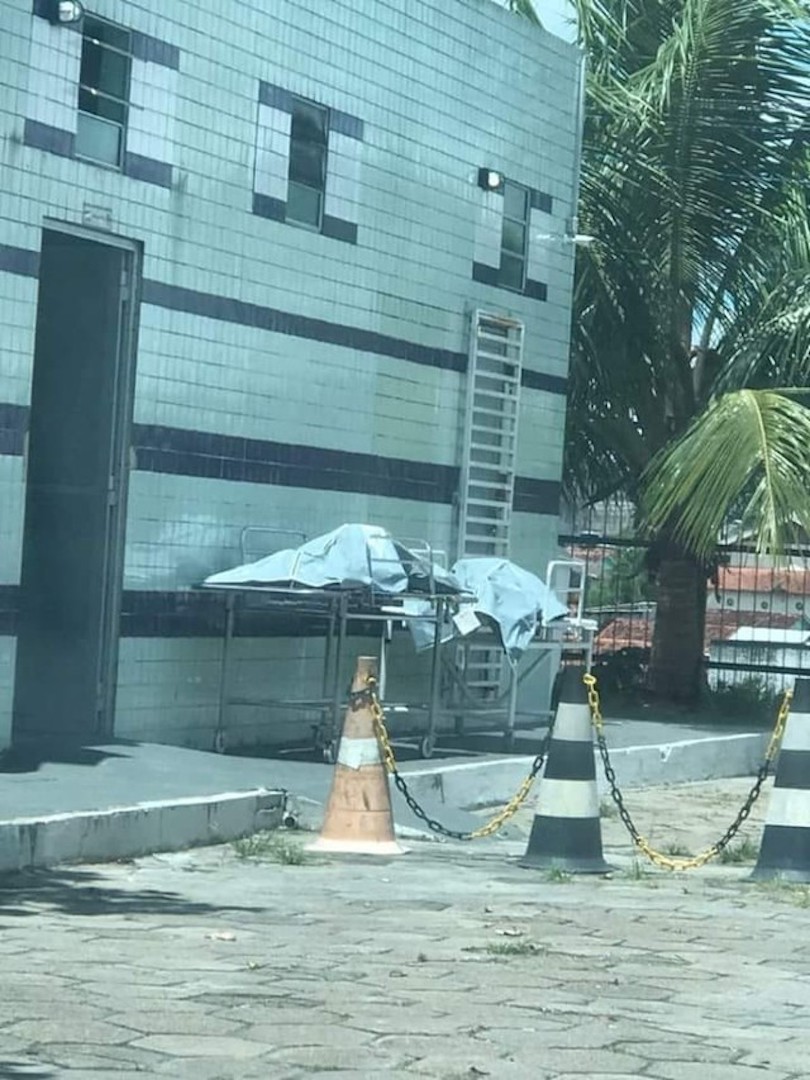
One of Manaus’ main public cemeteries, Nossa Senhora Aparecida, opened mass graves to be able to meet the surge in burial demands, and received refrigerated containers to store the possible overflow of bodies.
With the imminent risk of the collapse of the city’s mortuary system, Manaus started to perform burials at night on Monday (April 27th), according to footage by a local TV station.
Well into the night, reflectors helped illuminate graves as machines lined up coffins, one on top of the other, in layers, separated only by boards. After the video footage caused an uproar, officials announced they would no longer use deep holes as mass graves.
But Manaus is not the only city in Brazil to announce it will be resorting to refrigerated containers to store bodies before burials.
In Rio de Janeiro, refrigerated containers have already been set up outside several hospitals, to be used to store those who perished inside. The containers have, on average, the capacity to store eighteen bodies. There are reports on social media of families waiting hours for a funeral hearse to come pick up the body of a dead loved one, thought to have died of the new coronavirus.
With 61 deaths registered in Rio de Janeiro state between Monday and Tuesday, the state now has 738 deaths due to Covid-19.
The growing numbers of deaths in São Paulo city led Mayor Bruno Covas to announce measures to increase mortuary operational capacity in the city. Among the measures are the opening of thousands of new burial plots and the purchase of new refrigerated containers that can temporarily store up to 1,000 bodies a day to meet the growing number of deaths. The Vila Formosa Cemetery, considered the largest cemetery in Latin America, will function as a logistics center for those who have died due to Covid-19.
“We are opening up 1,300 new plots, with the use of mini backhoes, and, if necessary, we will work 24 hours per day here in the city of São Paulo,” Covas told reporters.
To meet the expected surge in the number of burials, officials have also hired 220 undertakers. The city has also added 32 funeral hearses to the existing 36.
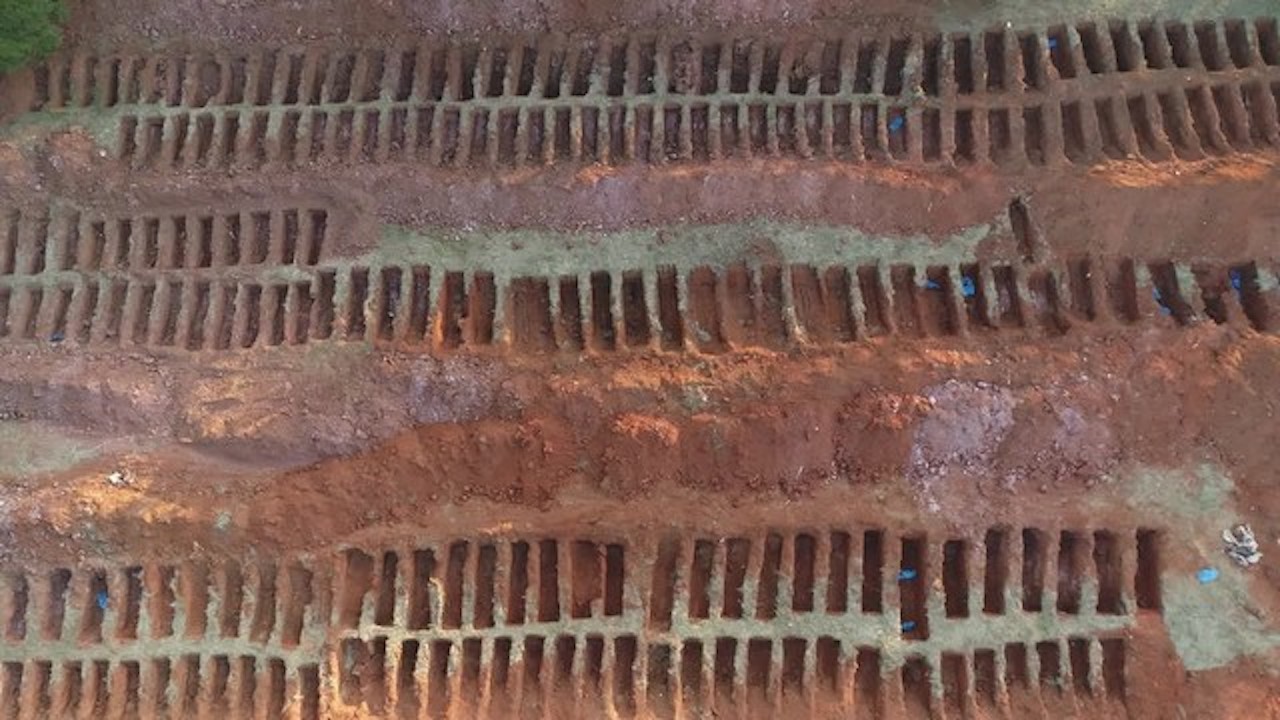
“Our concern is that we are prepared to organize and minimize the pain of families, so that they can give a dignified burial to those who will eventually die. That is why we have prepared a contingency plan, so that we can have a functioning burial service here in São Paulo,” he said. “We have to be prepared for the worst scenarios.”
On Tuesday (April 28th) Covas signed a decree expanding the measures in relation to funeral services and determined that if the number of burials reaches 400 per day, families will not be able to choose where the victims will be buried. They will be placed near to other victims, so as to accelerate burial operations. The decree issued by the mayor also allows nighttime burials in municipal cemeteries.
More: Brazil news in English, every day from The Rio Times.
Editorial responsibility: Matthias Camenzind, Editor-in-Chief · Editorial standards · Report an error