China’s Lunar Leap: The Chang’e-6 Mission’s Groundbreaking Return
In the ever-expanding narrative of space exploration, China marked a significant milestone with the Chang’e-6 mission.
This mission returned to Earth carrying the first-ever samples from the far side of the moon.
This feat not only demonstrates China’s advanced capabilities in space but also plays a crucial role in enriching our knowledge of the moon’s structure and evolutionary tale.
Launched on May 3, the Chang’e-6 mission reached the moon’s South Pole-Aitken Basin by June 2.
This location, an immense and mostly uncharted impact crater, provided an ideal site for gathering unique geological samples.
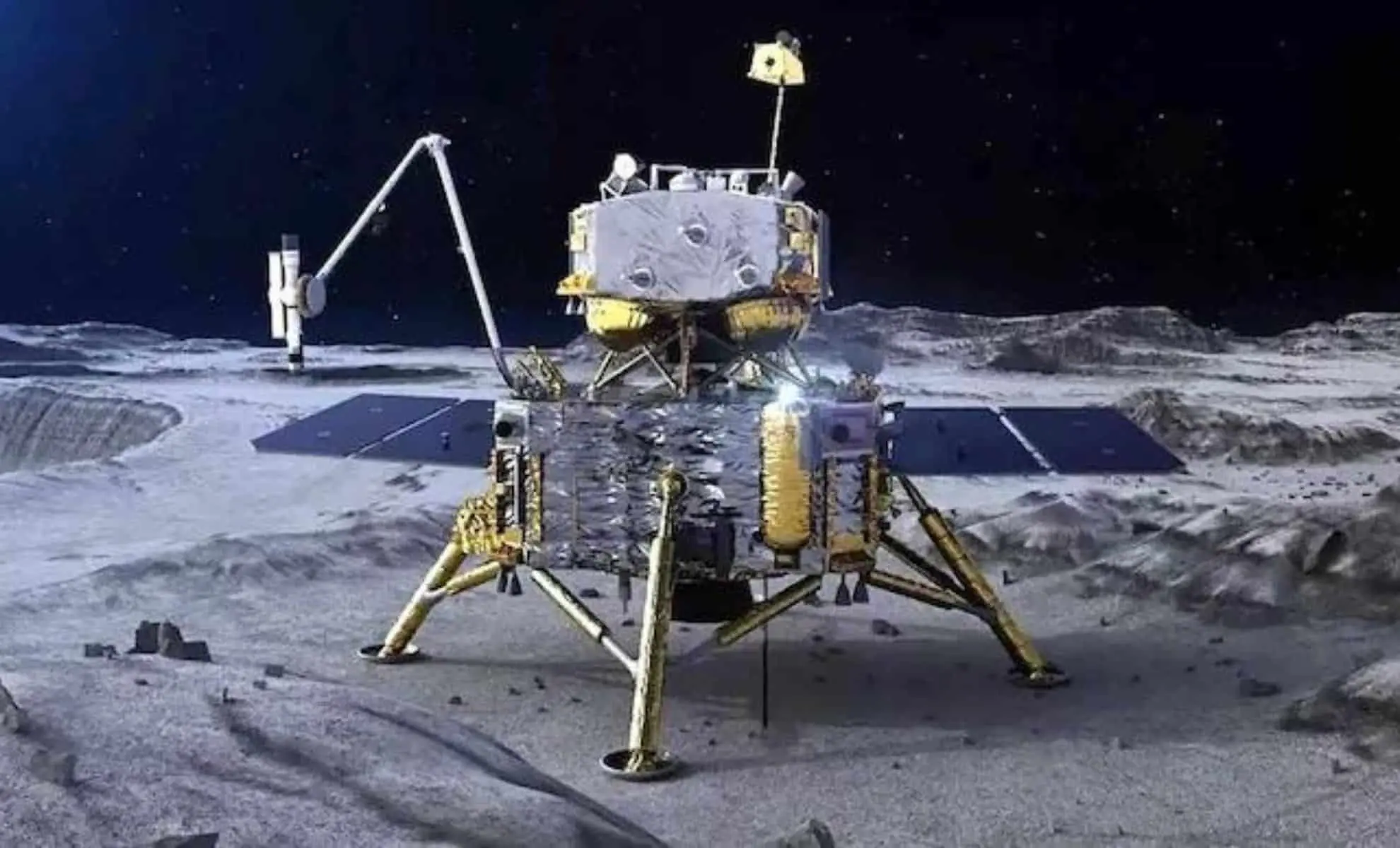
These samples included around two kilograms of rock and soil, unaffected by the volcanic processes more common on the moon’s near side.
Overcoming substantial communication hurdles through a relay satellite, China managed successful contact and operation in this obscured lunar region.
The spacecraft’s return journey concluded in Inner Mongolia on June 4. Here, recovery teams efficiently secured the pioneering samples shortly after the 2 p.m. landing.
The China National Space Administration (CNSA) recognized the mission as a resounding success, underscoring its seamless execution and vital contributions to global lunar studies.
The samples obtained are poised to shed light on the contrasting geological characteristics between the moon’s near and far sides.
Insights from these samples are anticipated to deepen our understanding of how the moon, and potentially other bodies in our solar system, formed and evolved.
Such research is pivotal for the broader field of planetary science. It offers fresh perspectives on the processes that shaped our cosmic neighborhood.
China’s Lunar Ambitions
Looking ahead, the CNSA has set ambitious goals. China aims to become a major player in lunar exploration with plans for crewed missions and a permanent lunar base by 2030.
This strategy aligns with the growing global interest and competitive spirit in space exploration.
The United States’ Artemis program actively underscores its goal to send astronauts back to the moon by 2026.
China’s success with Chang’e-6 not only propels scientific understanding forward but also strategically places China at a significant standing in the international space community.
However, this mission serves as a cornerstone for future international collaborations in space exploration.
It cements China’s role as a key influencer in shaping the future trajectory of lunar and interplanetary research.
In this broader context, the success of the Chang’e-6 mission is more than a technical achievement.
In short, it represents a narrative of international ambition and cooperation. It embodies scientific curiosity and the unyielding human desire to explore the unknown frontiers of space.
This article was produced by The Rio Times’ automated newsroom system. How we use AI · Report an error
Read More from The Rio Times