China has launched a $47 billion semiconductor fund, the largest in a series to boost its chip sector.
The China Integrated Circuit Industry Investment Fund Phase III aims to counter U.S. restrictions on advanced technology access.
The first fund phase began in 2014 with 138.7 billion yuan ($19.2 billion).
The second phase followed five years later with 204.1 billion yuan ($28.2 billion).
The Ministry of Finance holds a 17% stake, leading the fund.
The National Development Bank’s subsidiary holds 10%, and a Shanghai municipal government investment company owns 9%.
Other state-owned enterprises also hold various stakes.
The fund will focus on AI-related semiconductors and manufacturing equipment.
U.S. export controls have limited China’s ability to produce advanced devices, including AI chips.
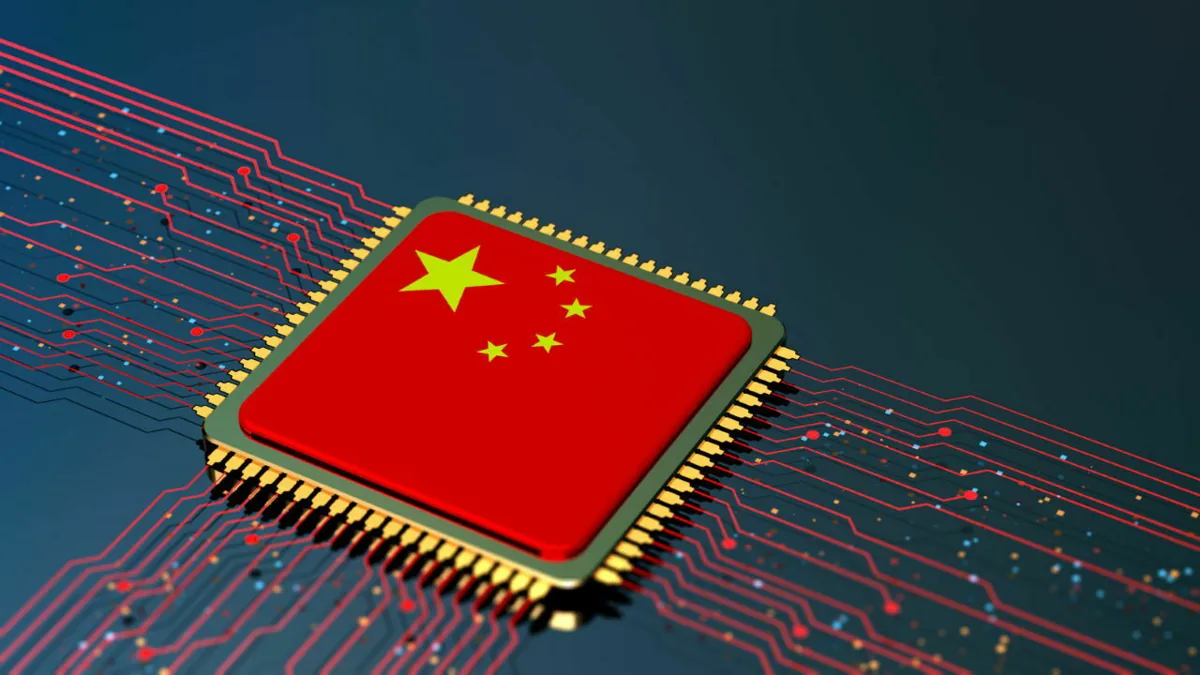
The fund aims to support R&D to enhance AI capabilities using current chipmaking technology.
Additionally, the fund will help develop chip manufacturing equipment restricted by the U.S.
It will assist Chinese semiconductor companies in switching from international to domestic suppliers for silicon wafers, chemicals, and industrial gases.
This aligns with China’s “Made in China 2025” plan, which promotes high-tech industrial development.
Zhang Xin, formerly of the Ministry of Industry and Information Technology, represents the fund.
He has played a key role in formulating semiconductor policies and managing previous fund phases.
Zhang will continue to lead investment decisions in this third phase.
This fund is part of China’s response to U.S. tech restrictions.
In October 2022, the U.S. introduced export controls, preventing Chinese companies from buying advanced chips without a license.
The Biden administration has also urged allies like the Netherlands and Japan to impose similar restrictions.
In retaliation, Beijing has imposed export controls on strategic raw materials essential to global chipmaking.
China’s $47 Billion Bet to Dominate the Global Chip Market
Despite corruption scandals involving key figures in state-owned chip companies, including Lu Jun of Sino IC Capital, China remains committed to its tech ambitions.
Xi Jinping’s administration aims for tech self-reliance by 2030, striving to make China a global technology leader.
Huawei’s launch of a smartphone with a 7-nanometer processor from China’s Semiconductor Manufacturing International Corporation (SMIC) exemplifies these efforts.
In a meeting with Dutch Prime Minister Mark Rutte, Xi Jinping declared that no force could stop China’s technological progress.
This determination underscores China’s resolve to overcome international barriers and establish itself as a tech superpower.
This article was produced by The Rio Times’ automated newsroom system. How we use AI · Report an error · Editorial responsibility: Matthias Camenzind, Editor-in-Chief