Mexico’s Beloved Casa de Tono Weighs a US$400 Million Sale
Key Facts
—The story. La Casa de Tono, a beloved Mexican restaurant chain, is exploring a sale valued at more than US$400 million.
—The suitor. Grupo Gigante, a large Mexican retail and restaurant group, is the leading interested buyer; other Mexican consortiums are also circling.
—The adviser. The chain has hired BBVA Mexico as its exclusive financial adviser for the process.
—The assets. A deal would include its 81 locations across Mexico City and the surrounding metro area.
—The goal. The aim is to accelerate expansion into the United States and Latin America.
La Casa de Tono, the Mexican restaurant chain with 81 locations, is exploring a sale valued at over US$400 million, with Grupo Gigante as the leading interested buyer, to accelerate expansion into the United States and Latin America.
One of Mexico City’s most-loved cheap-eats institutions could be about to change hands. A potential Casa de Tono sale would value the chain — famous for its pozole and long lines — at more than US$400 million, drawing interest from one of the country’s big retail groups.
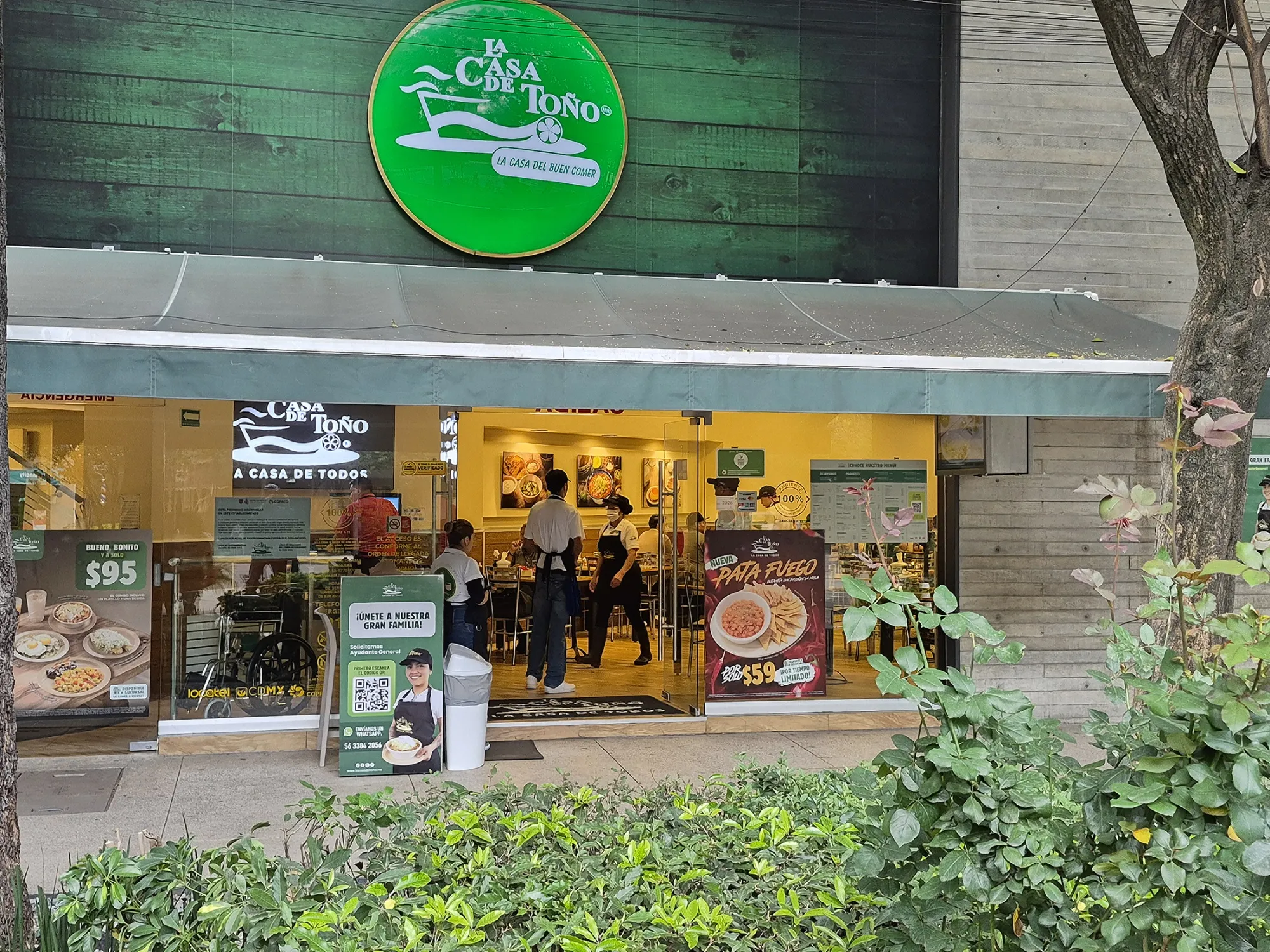
La Casa de Tono is a Mexican restaurant chain built on affordable, generous comfort food: pozole, flautas and other classics served fast, cheap and often late into the night. Its outlets are known for the queues outside them.
That everyday popularity has turned a homegrown eatery into a business other companies now want to own. In a city where street food and fondas dominate daily life, building a chain that can draw consistent crowds is a rare achievement. The brand has done so by sticking to a simple formula: large portions of traditional dishes at prices that working families can afford, served in no-frills settings that turn tables quickly.
According to people familiar with the process cited by Bloomberg, the chain is testing the market for a sale that could reshape one of Mexico’s most recognizable food brands.
What Is on the Table
The potential deal would value La Casa de Tono at more than US$400 million. It has hired BBVA Mexico as its exclusive financial adviser to run the process. Hiring an exclusive adviser is standard practice in deals of this size. It means the chain is not fielding offers informally but running a structured process designed to attract the best possible terms from serious bidders.
A transaction would include the chain’s 81 restaurants spread across Mexico City and its metropolitan area — the dense, high-traffic footprint that makes the brand attractive. That concentration is both a strength and a question mark. It gives a buyer immediate scale in one of the world’s largest urban markets, but it also means the chain has not yet proven it can succeed elsewhere.
The stated goal is growth: new owners with deeper pockets could push the chain beyond Mexico into the United States and the rest of Latin America. For a brand built on a very local identity, that kind of leap involves more than just opening new kitchens. It means adapting supply chains, training staff in new countries, and figuring out whether pozole can command the same loyalty in cities where it is far less familiar.
Who Wants to Buy It
The leading suitor is Grupo Gigante, a large Mexican group with interests spanning retail and restaurants. It already runs well-known dining brands in Mexico, giving it the operating know-how to scale a chain like this. Grupo Gigante’s background in both retail real estate and food service means it could offer more than just capital. It could provide the back-end infrastructure — distribution, site selection, supplier relationships — that a regional chain needs when it starts opening locations far from home.
Reports say other Mexican consortiums are also interested, though they have not been named. That competition is part of what could push the final price above the US$400 million mark. When multiple bidders emerge, sellers gain leverage, and the final number often reflects not just what the business is worth today but what a buyer believes it can become under new ownership.
For a buyer, the appeal is a proven, cash-generating brand with loyal customers and a clear runway to open more locations. In an industry where new restaurant concepts fail at high rates, acquiring a chain that already has decades of customer trust removes a huge amount of risk.
Why It Matters
The interest shows how valuable a scalable, mass-market Mexican food brand has become. What began as an affordable local eatery is now the object of a nine-figure bidding conversation. That trajectory mirrors what has happened in other parts of the world, where family-founded restaurant groups have grown into publicly traded companies or been absorbed by larger conglomerates.
It also fits a wider pattern of consolidation in Mexican dining, where bigger groups buy up popular independents to grow faster and export them abroad. For the Mexican restaurant sector, a deal of this size would be a signal to investors that homegrown food brands can command valuations once reserved for technology or manufacturing firms.
If the chain does expand into the United States and Latin America, it would join a small club of Mexican restaurant brands taking their food across borders — carrying pozole and flautas well beyond the capital. That path has been walked before, but rarely by a chain so closely associated with a single city’s everyday eating habits. The question is whether the qualities that made it beloved in Mexico City — the late hours, the low prices, the specific taste of its broths — can survive translation into new markets with different costs and palates.
For now the sale is only being explored, and no deal is guaranteed. But the price tag alone signals how far a bowl of pozole and a long line out the door can travel. What to watch next is whether Grupo Gigante firms up its offer or whether one of the unnamed consortiums steps forward with a competing bid. Also worth following is any signal from the chain about how it would handle the operational challenge of moving beyond its home market while keeping the experience that built its reputation.
More: Latin America news in English, every day from The Rio Times.
Frequently Asked Questions
How much could La Casa de Tono sell for?
Reports value a potential sale of the Mexican restaurant chain at more than US$400 million, with BBVA Mexico acting as its exclusive financial adviser.
Who wants to buy La Casa de Tono?
Grupo Gigante, a large Mexican retail and restaurant group, is the leading interested buyer, and other unnamed Mexican consortiums are also said to be interested.
Why is La Casa de Tono considering a sale?
New, better-capitalized owners could accelerate the chain’s expansion into the United States and Latin America. A deal would include its 81 locations in and around Mexico City.
Sources & Further Reading
Bloomberg Linea — Grupo Gigante esta detras de la intencion de venta de La Casa de Tono
El Financiero — La Casa de Tono podria venderse por mas de 400 millones de dolares
Infobae — La Casa de Tono evalua vender la cadena por mas de 400 millones de dolares
Connected Coverage
Sources: La Casa de Tono; Grupo Gigante; BBVA Mexico.
This article was produced by The Rio Times’ automated newsroom system. How we use AI · Report an error
In depth
LatAm Markets: Live Signals → — real-time movers, turnover leaders and FX across Latin America.
Read More from The Rio Times