A question looms over global markets: is China suddenly pivoting to capitalism?
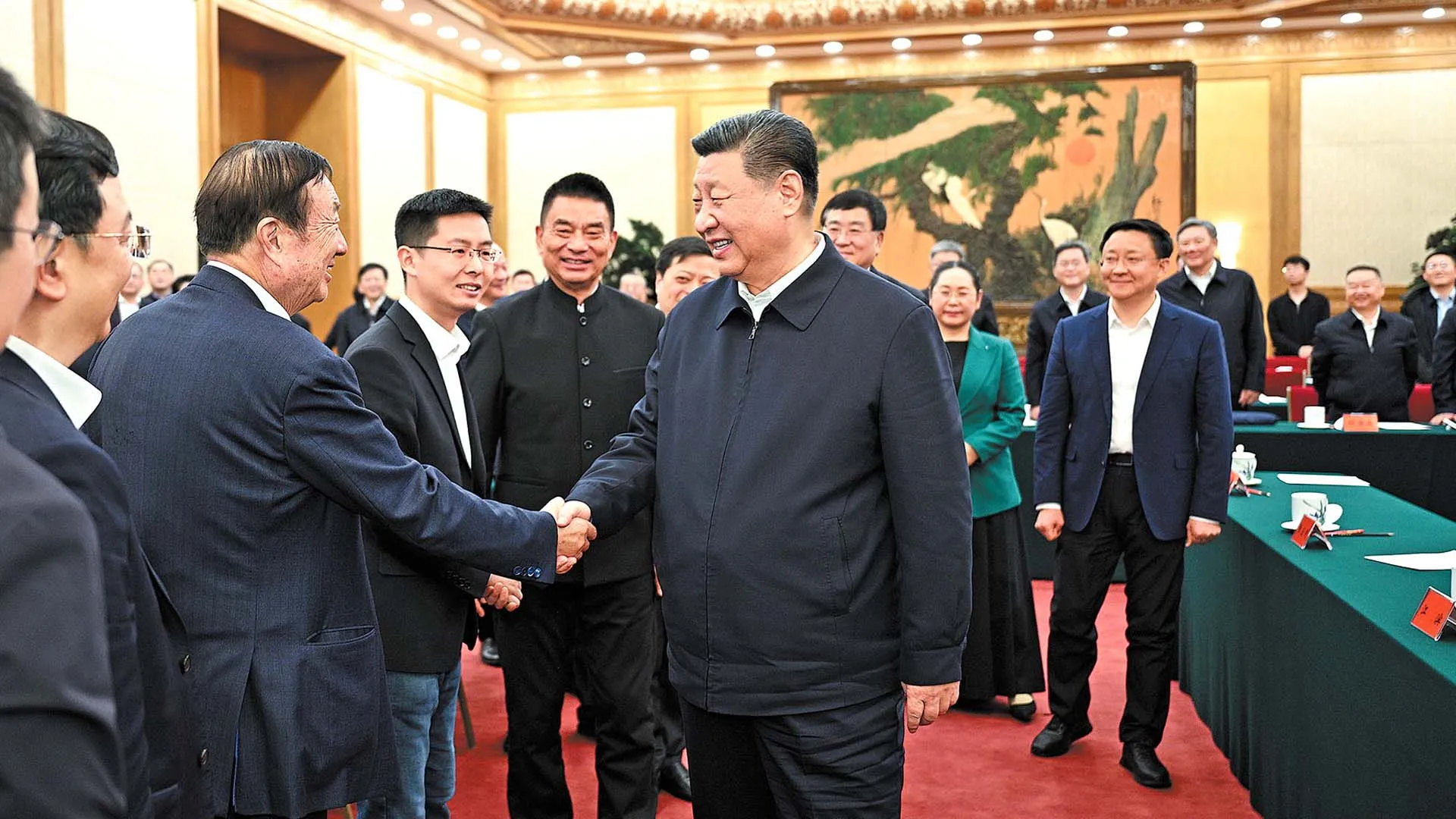
On February 17, 2025, Xi Jinping gathered tech giants—Alibaba’s Jack Ma, Huawei’s Ren Zhengfei, ByteDance’s Zhang Yiming—in Beijing, urging the private sector to “drive China’s growth,” per official statements.
Geopolitical analyst George Friedman calls it seismic: “Xi said last week it’s the private sector that must drive China, essentially abandoning communism.” He views this shift as “panic” amid economic woes.
Economist Jeffrey Sachs agrees, noting Xi “abandoned ideology” that week, pressed by global tides. Is this a capitalist break, or a tactical feint? China’s economy stumbles under scrutiny.
GDP growth fell to 4.7% in 2024, per government statistics, missing Xi’s 5% goal—a shadow of 2018’s 6.6%. Exports, 45% of GDP by official counts, faltered as the EU imposed 45% tariffs on electric vehicles in October 2024, cutting EV exports 20% in Q4, per customs figures.
A real estate slump—Evergrande’s $300 billion default in 2021 still echoing—saw property investment drop 10% in 2024, per economic data.
Xi’s Economic Balancing Act
Youth unemployment hit 16.3% by December, per labor surveys, igniting online cries of a “jobless future.” Consumer prices fell 0.8% in 2024, marking 15 months of deflation—the longest since 1999, per economic analyses—draining spending power. Is capitalism Xi’s fix?
Signs point to a shift. Xi’s February 17 plea elevates private firms—60% of GDP, 80% of urban jobs, 90% of exports, per state figures—after a 2020-2022 tech crackdown fined Alibaba $2.8 billion and halted Ant Group’s $37 billion IPO, costing $2 trillion in valuations.
“Unleash your talents,” Xi urged, promising a “clean and amicable” climate as foreign investment crashed 82% to $15 billion in 2024, per financial records.
Japan sees it as a jab in the U.S. tech rivalry, as Huawei’s 5G patents rose 15% in 2024, according to patent records. Meanwhile, Korea calls it “panic” as China’s $1.2 trillion Asian trade surplus faces U.S. tariff threats of 60%.
Yet the socialist core holds. Official rhetoric insists this is “socialism with Chinese characteristics”—the 2024 Data Security Law tightened party oversight, mandating state audits of private data.
Xi’s Pragmatic Pivot
Xi’s “Made in China 2025”—$1.4 trillion in R&D since 2015, per science ministry data—yielded tech gains (6 top-50 universities by 2024, per academic rankings), but state-owned firms, 40% of industrial assets, grew just 1.8% annually since 2020, per global economic reports.
U.S. chip bans since 2022 forced Huawei’s 7nm chip to pre-ban stocks—a state lifeline, not a market free-for-all. Some argue Xi extends China’s hybrid model, not a capitalist break.
The stakes test this balance.
Industrial output fell 5.6% in January 2025, as U.S. exports dropped 15%, per trade data. Xi targets a 6% rebound, but private firms face $600 billion in debt maturities in 2025.
Stocks rose 3% post-speech, yet stagnation looms if state firms resist; tighter party grip awaits if gains falter. Xi’s pivot isn’t a sudden embrace of capitalism but a pragmatic move to harness private ingenuity within a socialist framework. It reflects a response to necessity rather than a shift in ideology.
This article was produced by The Rio Times’ automated newsroom system. How we use AI · Report an error
Read More from The Rio Times