Canada’s Liberals Win Again, Betting on Continuity Despite Economic Decline
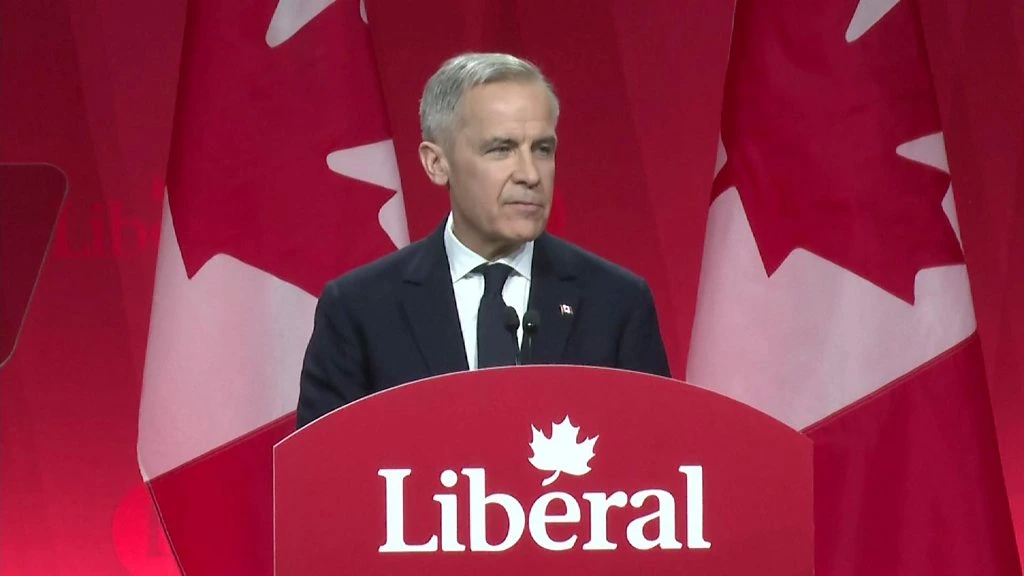
In a decision that defied global shifts toward libertarian and reformist policies, Canadians re-elected the Liberal Party, led by former Bank of Canada Governor Mark Carney, for a fourth consecutive term.
Securing 164 seats in the 338-seat House of Commons, the Liberals edged out the Conservatives’ 147, with the New Democrats (NDP) and Bloc Québécois claiming 21 and 5 seats, respectively.
The minority government will depend on smaller parties to govern, locking in continuity despite a decade of economic stagnation under Liberal rule. The election unfolded amid heightened U.S. trade tensions and domestic discontent.
Carney, a political novice with a global financial resume, campaigned on his ability to counter U.S. President Donald Trump’s tariff threats, appealing to voters anxious about economic sovereignty.
Yet, the Liberal victory reflects a paradox: Canadians entrusted the party responsible for a decade of sluggish growth to navigate an increasingly volatile future.
A Decade of Economic Drift
Canada’s economic woes are stark. Since 2015, GDP per capita has grown by a mere 1.7%, trailing most developed nations. Real GDP per capita fell by 1.3% in 2023 and plummeted 14% in 2024, leaving Canada’s per capita income at $51,815—virtually unchanged from 2014.
Meanwhile, U.S. per capita income soared from $55,264 to $87,961, highlighting Canada’s relative decline. Federal debt has nearly doubled, from $800 billion in 2015 to $1.4 trillion in 2024, adding $15,000 per citizen. The public service swelled by 43%, yet productivity has stagnated.
The military faces a crisis, with a 16,000-personnel shortage and nearly half its equipment unusable. High taxes and regulatory burdens have choked the service sector (70% of GDP) and oil industry, while immigration, once a growth driver, has fueled unemployment as temporary residents flood the labor market.
These failures have decoupled Canada’s economy from the U.S., its largest trading partner, at a time when global markets demand agility.
A Global Anomaly
While countries like the U.S., Argentina and European nations embrace libertarian reforms to curb state overreach and boost competitiveness, Canada doubled down on the status quo.
Carney’s campaign leaned on his international credentials and promises of stability, framing the election as a defense against U.S. pressure. This resonated in urban centers and among voters prioritizing social programs like childcare and climate initiatives.
Exit polls showed 62% of Liberal voters cited “leadership experience” as their top factor, even as 78% expressed concern about living costs. The Conservatives, led by Pierre Poilievre, pushed tax cuts and deregulation, gaining ground in Western Canada but falling short in vote-rich Ontario and Quebec.
The NDP and Bloc Québécois, focusing on affordability and regional issues, fragmented the progressive vote, indirectly bolstering the Liberals.
“Canada’s choice is perplexing,” said economist Laura Chen of McGill University. “Voters backed the architects of economic decline, betting on familiarity over reform in a world moving the other way.”
An Uncertain Future
The Liberal win ensures short-term stability but raises questions about Canada’s long-term prosperity. Carney has vowed to boost innovation and diversify trade, but his minority government faces a fractious parliament.
The NDP and Bloc Québécois, likely coalition partners, demand costly concessions on housing and regional priorities, risking further debt. The Conservatives, emboldened by their gains, pledged fierce opposition.
“Canadians can’t afford another decade of drift,” Poilievre warned. With the Liberals’ track record—stagnant incomes, a strained military, and growing economic divergence from the U.S.—voters may have delayed the reckoning but not escaped it.
As global peers pivot toward bold reform, Canada’s bet on continuity could deepen its slide, leaving its citizens poorer in a world demanding change.
This article was produced by The Rio Times’ automated newsroom system. How we use AI · Report an error · Editorial responsibility: Matthias Camenzind, Editor-in-Chief