Canada’s $1 Trillion Investment Pitch Meets A China Pivot And A Trump Test
Key Points
- Mark Carney is selling a Beijing reset as part of a $1 trillion, five-year investment drive to retool Canada’s economy.
- The deal’s hard deliverables are specific: up to 49,000 Chinese EVs at 6.1% tariffs, steep canola tariff cuts, and a visa-free pledge.
- The strategic risk is U.S. blowback if Washington reads this as Canada defying a tougher Western Hemisphere line on China.
(Analysis) Mark Carney stood in Beijing and described a world that has stopped moving in straight lines. Technology is racing ahead. Energy systems are being rebuilt. Trade rules are fraying faster than diplomats can repair them.
His conclusion was simple: Canada cannot wait for stability to return, because stability is no longer guaranteed. That framing matters, because it explains why the speech sounded less like diplomacy and more like a balance-sheet pitch.
[video_player file=”https://www.riotimesonline.com/wp-content/uploads/1768/79/Canada-final-cmpressed-1.mp4″]
Carney said Canada is trying to unleash $1 trillion of investment at home over the next five years. Then he presented a China partnership as one tool to make that ambition believable, and less dependent on one buyer.
Canada has long been marketed as America’s calm, prosperous cousin, with similar wealth and fewer shocks. Yet many Canadians now argue that the model has slipped, and that the country’s strengths are being eaten by costs.
Productivity has lagged. Business investment has disappointed. Housing has become a national pressure point. For outsiders, that domestic squeeze is the hidden engine behind the foreign policy pivot.
The Concrete Deal, In Plain Numbers
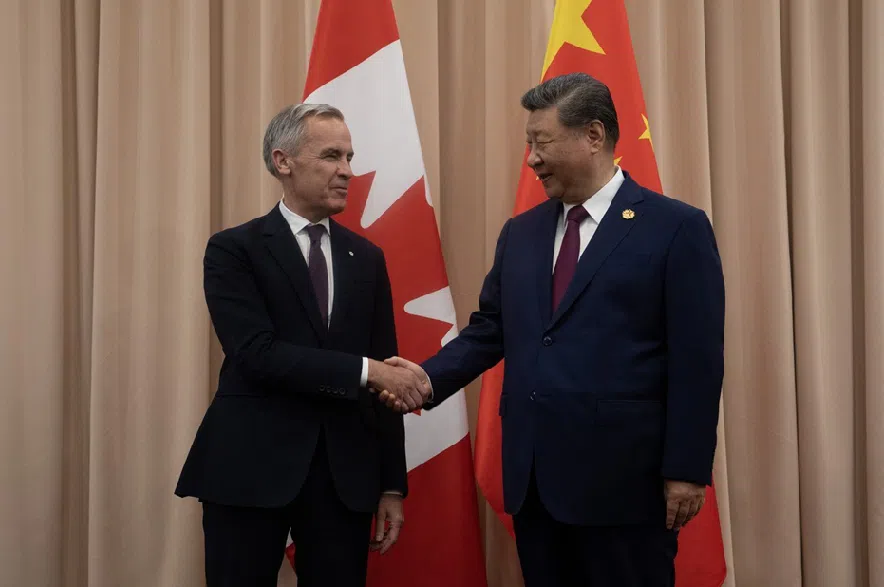
Carney announced a new Canada–China “strategic partnership” built around five pillars. Those pillars were clean energy, expanded trade, multilateral coordination, public safety cooperation, and stronger cultural ties.
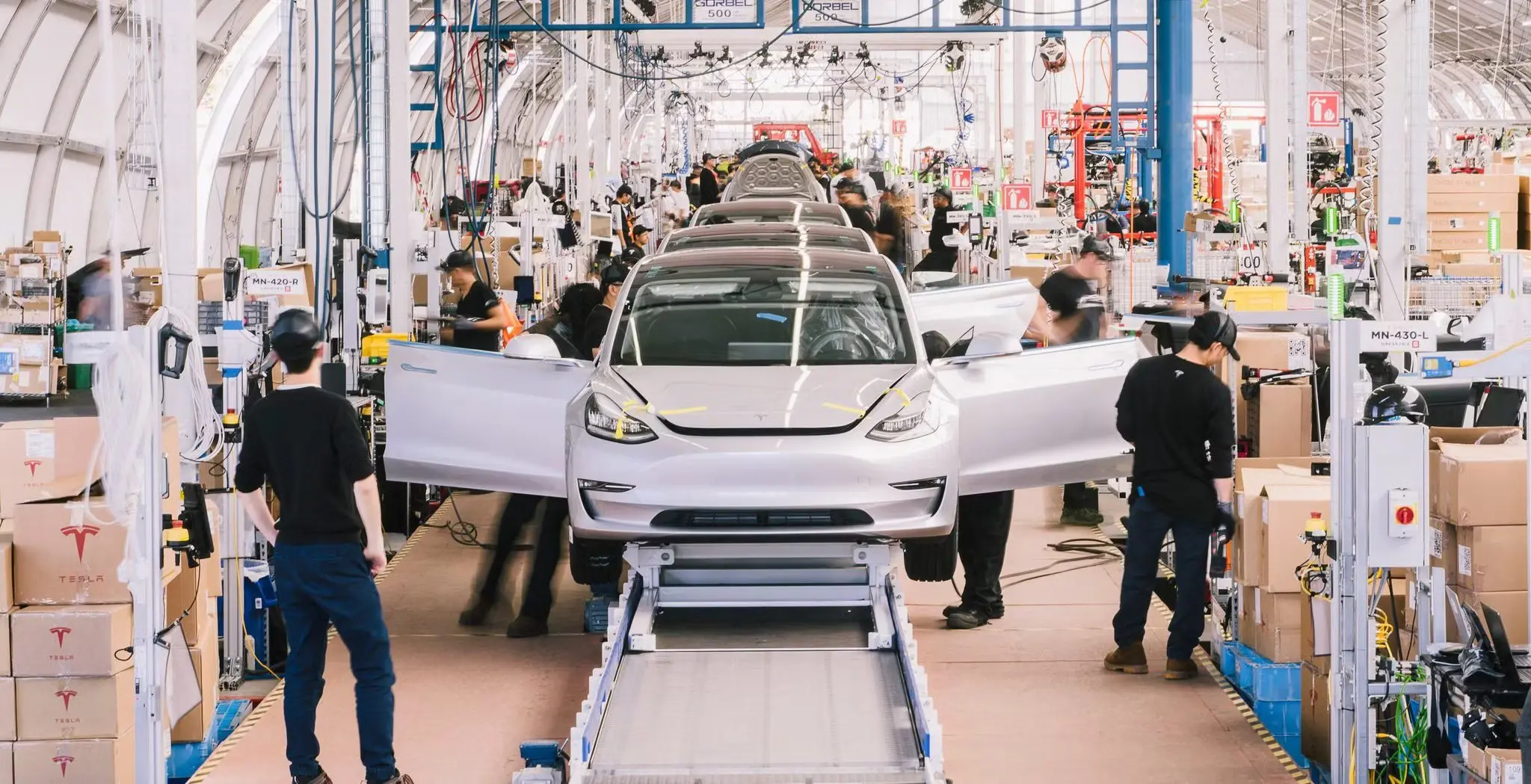
The speech then moved quickly into deliverables, because outcomes were the point of the trip. The boldest concession was in electric vehicles. Canada will allow up to 49,000 Chinese EVs into its market.
Carney said they would enter at a 6.1% tariff rate, framed as a return to pre-friction terms. He argued that China builds affordable, energy-efficient vehicles, and Canada needs that reality to learn and compete.
He also tied the opening to expected Chinese investment in Canada’s auto sector within three years. Within five years, he added, more than half the imported EVs should have an import price below $35,000.
Agriculture was the second headline, and it came with dates that exporters can actually plan around. By March 1, Carney said China is expected to lower tariffs on Canadian canola seed to about 15%.
He contrasted that with a current combined tariff level of 84%, which effectively prices Canada out. He also said canola meal, lobsters, crabs, and peas should avoid “anti-discrimination” tariffs from March 1 through year-end.
Ottawa’s claim is that these changes could unlock nearly $3 billion in new export orders. Then came a people-to-people headline that plays well beyond economics.
Carney said Xi committed to visa-free access for Canadians traveling to China, alongside expanded cultural exchange.
The Story Behind The Story Is Washington
The speech never mentioned Trump, but Washington sat behind every line about dependence and diversification.
Carney said the Canada–China relationship has been distant and uncertain for nearly a decade. He blamed that distance for stalled investment and slower business growth in Canada.
He also said it left Canada more dependent on its largest trading partner, a dependency that carries strategic cost. For foreign readers, this is the key: Canada is testing whether it can widen options without punishment.
A tougher U.S. posture toward China in the hemisphere makes that test more dangerous than it looks. The risk is not only tariffs. It is friction, inspections, procurement barriers, and investment politics that raise uncertainty fast.
Even small uncertainty can derail big capital plans, especially when a government is selling a $1 trillion investment push.
Why Canada Is Reaching For A Big Reset
Carney’s China package is easier to understand when Canada’s internal pressures are kept in frame. A country can sound rich on paper and still feel brittle when costs outrun wages and growth thins out.
Housing stress, weak productivity, and limited competition in key sectors have sharpened political anger in recent years.
Debates over immigration, infrastructure capacity, and labor-market integrity have added heat, and reduced trust in institutions.
In that domestic environment, export relief becomes political oxygen. Cheaper EV supply speaks to living costs. Canola relief speaks to farmers and regional economies.

Visa-free travel and cultural ties speak to business networks, universities, and tourism flows. Carney also used energy to broaden the pitch beyond goods and visas.
He said Canada intends to double its energy grid over 15 years across hydro, nuclear, solar, and wind. Carney pointed to partnership opportunities in storage and offshore wind as part of the new relationship.
The leader also said Canada is scaling LNG fast, aiming for 50 million tonnes per year by 2030 for Asian markets. The bet is that Canada can rebalance without triggering a response that forces it back into dependence.
If China implements the tariff cuts on schedule and investment follows, Carney gains time and credibility at home.
If Washington treats the move as a provocation, Canada may discover that diversification is hardest when one neighbor controls the gates.
Related coverage: Brazil’s Morning Call | Africa Intelligence Brief — January 16, 2026 This is part of The Rio Times’ daily coverage of global affairs and Latin American financial news.
This article was produced by The Rio Times’ automated newsroom system. How we use AI · Report an error · Editorial responsibility: Matthias Camenzind, Editor-in-Chief
Read More from The Rio Times