Canada-Uruguay Investment Pact Enters Modernization Phase
The governments of Canada and Uruguay agreed on March 7 to begin negotiations for modernizing their bilateral investment agreement, in place since 1999.
Mary Ng, Canada’s Minister of Export Promotion, International Trade and Economic Development, announced the start of talks to update the Foreign Investment Promotion and Protection Agreement (FIPA).
The modernized agreement aims to strengthen economic ties between both nations while adapting to contemporary economic realities. Canada updated its FIPA model in 2021 to ensure trade benefits reach more segments of society.
The new framework focuses especially on creating opportunities for women, Indigenous peoples, and small to medium-sized enterprises. Bilateral merchandise trade between Canada and Uruguay reached $202 million in 2024.
Canadian exports totaled $91.6 million while imports from Uruguay amounted to $110.4 million. Canada primarily exports potassic fertilizers, agricultural machinery, and harvesting equipment to Uruguay.
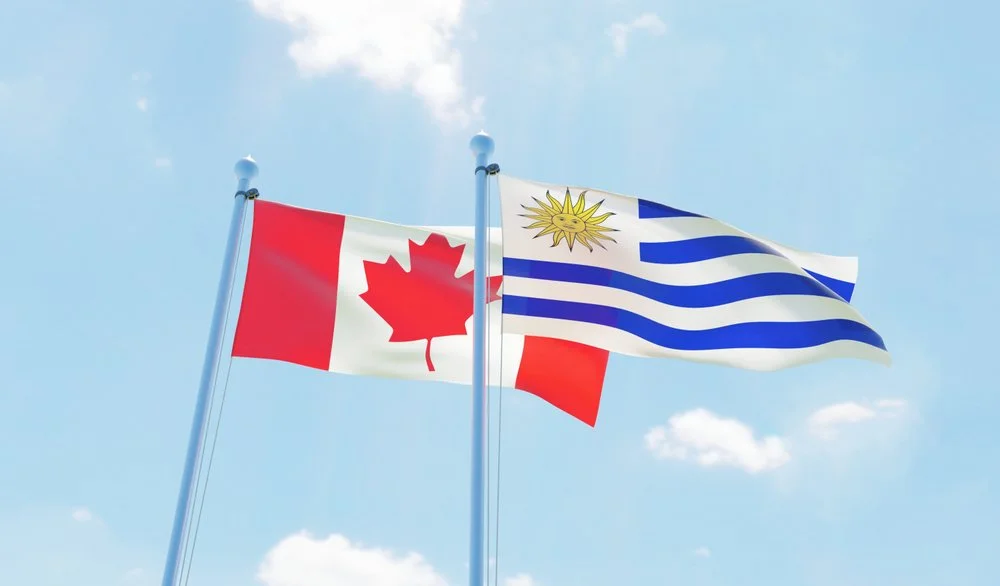
Uruguay and Canada’s Trade Agreement
Uruguay sends frozen bovine meat, sheep and goat meat, and sawn wood to Canadian markets. Juan Labraga, Director of Commercial Policy Advisory at Uruguay’s Ministry of Economy and Finance, emphasized Uruguay’s commitment to investor certainty.
“This agreement reaffirms our dedication to providing legal certainty and respecting acquired rights of foreign investments,” said Labraga. He also highlighted Uruguay‘s intention to incorporate best practices for public health and environmental regulations.
The timing coincides with broader economic shifts in both countries. Uruguay recently transitioned to a new government under President Yamandú Orsi of the Frente Amplio party. The country expects modest economic growth of approximately 2.7% in 2025.
Canada pursues this agreement as part of its ongoing trade diversification strategy. The country has successfully increased non-US exports from $195 billion in 2017 to $296 billion in 2024. Canada currently maintains 15 active Free Trade Agreements covering 51 countries and has implemented 38 FIPAs worldwide.
Both countries express optimism that the modernized agreement will create jobs, attract investment, and increase competitiveness in global markets. Negotiation details remain forthcoming as teams from both nations begin the formal process.
More: Latin America news in English, every day from The Rio Times.
This article was produced by The Rio Times’ automated newsroom system. How we use AI · Report an error
Read More from The Rio Times