Bulgaria’s Eurozone Entry Tests Currency Stability Amid Global Shifts
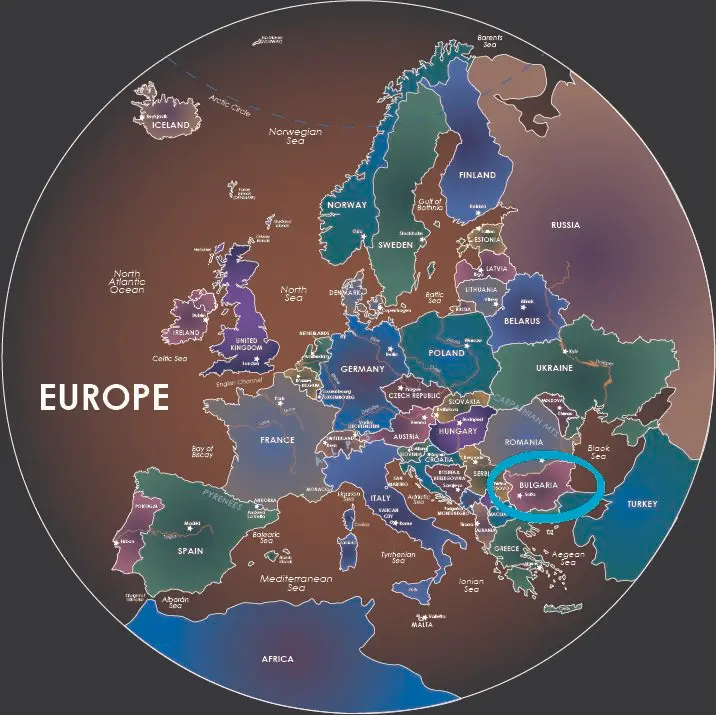
The European Commission and European Central Bank (ECB) confirmed Bulgaria’s euro adoption effective January 2026, expanding the bloc to 21 members.
While Bulgaria meets technical criteria—2.7% inflation (below the 2.8% threshold), a 3.0% budget deficit, and 24.1% debt-to-GDP—its structural weaknesses inject risks into the eurozone’s stability and the currency’s global standing.
Bulgaria remains the EU’s poorest nation, with GDP per capita 34% below the bloc average. Over 30% of its economy operates informally, complicating tax collection and reform implementation.
The ECB acknowledges these challenges but emphasizes compliance with fiscal rules. Critics argue admitting economically weaker states like Bulgaria (0.5% of eurozone GDP) sets a precedent that could dilute the currency union’s resilience, particularly during crises.
Currency Competition Dynamics
The euro accounts for 19.83% of global foreign reserves as of 2024Q4, trailing the dollar’s 57.8%. Bulgaria’s entry risks reinforcing perceptions of the eurozone prioritizing political integration over economic rigor, potentially deterring reserve managers seeking stability.
ECB President Christine Lagarde has advocated expanding the euro’s global role to counter dollar dominance, but fragmentation concerns—highlighted by 2024 sovereign debt warnings—undercut this ambition.
Structural Drags on Competitiveness
Bulgaria’s wage levels (€550/month) and productivity gaps may pressure eurozone labor markets. While its small economy limits immediate fallout, prolonged stagnation could strain ECB policymaking.
The bloc already faces growth headwinds: the IMF cut 2025 eurozone GDP forecasts to 0.8% amid U.S. tariff uncertainty, with Germany—contributing 28% of eurozone output—projected at 0.1% growth.
Strategic Implications
For businesses, Bulgaria’s adoption reduces transaction costs in a $4.3 trillion EU trade corridor but introduces latent risks. The country’s corruption perceptions (69th globally) and political instability—five elections since 2021—raise governance concerns.
Meanwhile, 50% public opposition fuels disinformation campaigns, including unfounded claims about EU confiscating savings, threatening smooth currency transition.
The euro’s resilience hinges on balancing expansion with stringent oversight. As Lagarde noted, “Earning influence requires stability”—a test Bulgaria’s integration intensifies amid global shifts toward bilateral trade blocs and reserve diversification.
This article was produced by The Rio Times’ automated newsroom system. How we use AI · Report an error
Read More from The Rio Times