Brazil’s “Centrão” Bloc Takes Center Stage in Political Scenario
SÃO PAULO, BRAZIL – Brazil’s president Jair Bolsonaro was elected on the promise of breaking with the old politics of “one hand washes the other”, but according to analysts, the president’s political power is being undermined by this congressional party coalition.

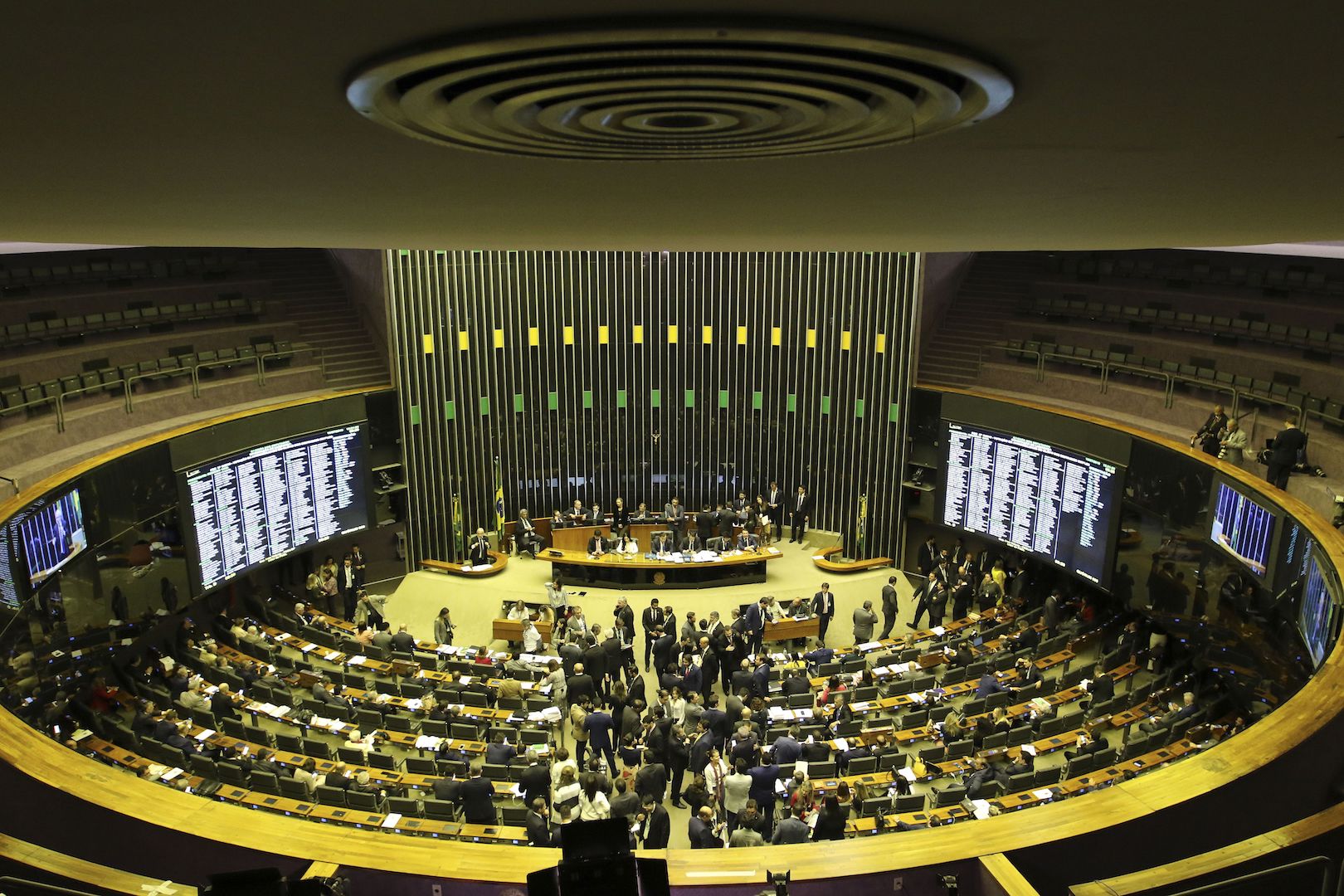
The group of approximately 200 Chamber members, led by chamber president Rodrigo Maia, is known as the “Centrão”. They are from center and center-right political parties that since Brazil’s re-democratization in 1988 have sought to ally themselves with whichever group is in power.
Maia attributes to these Centrão deputies the approval of one of Brazil’s most important Congressional bills: the social security reform.
“It is the Centrão that is pushing through the Social Security reform,” said Maia to journalists. “Many times, our leaders are disrespected; sometimes in the press; criticized in the wrong way, but it is these leaders who are making the changes in Brazil,” Maia said in a speech just before the Chamber approved the Social Security Reform constitutional amendment in the first voting round by 379 votes to 131.
Another Centrão deputy, Artur Lira, of the PP (Progressive Party), agrees. “Without our participation, neither the opposition nor the government would We were the determining factor,” Lira told Brazilian daily Folha de S.Paulo.
According to political analysts, president Bolsonaro has had much of his political power weakened due to on-going scandals and continual controversies brought about by his cabinet members, family members, and himself. That, say analysts, has left Maia in a more powerful position. According to the leader of the chamber, he is “merely filling a void”.

“Until now, the executive power has not put forward an agenda for the main issues facing the country,” he is said to have written in a text message interview to Bloomberg.
According to Helena Chagas, member of Journalists for Democracy, an NGO which funds independent journalists, Maia has come out of the first round of voting for the social security reform with greater political strength, while the administration is seen by the population as having done little to persuade representatives to vote for the bill.
“He has filled the void left by the Executive, with its unpreparedness and disarticulation,” added Chagas.
The current Centrão is made up of a few center, center-right wing parties including the Progressive Party (PP), Liberal Party (PL), Republican Party (PRB), Labour Party (PTB), Social Democratic Party (PSD), Solidarity (SD), and Democrats (DEM). Some of these political parties, like the DEM of Rodrigo Maia, once had a much larger representation in Congress and Brazil’s political life, but their power dwindled as the country’s political parties shifted towards left and right-wing extremes.
Among the common objectives of the Centrão parties are the attempts to consolidate one of their own, in this case, Rodrigo Maia, as a guarantor of political stability in Brasília and to have a leading voice in handing out political appointments and government funds.
The group also tries to combat some of the actions proposed by Brazil’s justice minister in the realm of the Lava Jato corruption scandal, since many of the politicians involved or mentioned in the investigations are or were from these political parties.
These representatives, many of whom do not even admit they are part of the Centrão, are neither allies nor opposition to the Bolsonaro Administration, voting on bills according to their constituents’ beliefs and what political advantage they can obtain from voting one way or the other.
In the case of the social security reform, Bolsonaro’s administration retreated from its mantra of not exchanging political support for funds. On the eve of the vote, the government decided to resort to the old practice of convincing lawmaker: the authorization to fund, within the federal budget, individual deputies’ riders to appropriation bills.
In July alone, the government disbursed R$ 2.55 billion in lawmakers’ riders, according to a survey by the NGO Contas Abertas.
With other reforms and executive branch bills waiting to be voted on in Congress, including justice minister Moro’s anti-corruption bill, the easing of arms regulations and the labor reform bill, the Centrão is bound to remain in the spotlight and increase its political power in the coming months.
“Together, these center-right parties, which together with the Democratic Movement (MDB) and the Social Democracy Party (PSDB) make up almost two-thirds of the chamber, can command the agenda for the next three years,” concludes Chagas.
More: Brazil news in English, every day from The Rio Times.
Editorial responsibility: Matthias Camenzind, Editor-in-Chief · Editorial standards · Report an error