Brazil’s STF to Review Order Blocking Disclosure of Financial Data without Judicial Order
RIO DE JANEIRO, BRAZIL – After the most awaited trial of the year, which overturned the possibility of imprisonment before all appeals are exhausted and led to the release of former president Lula on Friday, November 8th, the Federal Supreme Court (STF) is preparing to discuss another controversial case with far-reaching political repercussions.
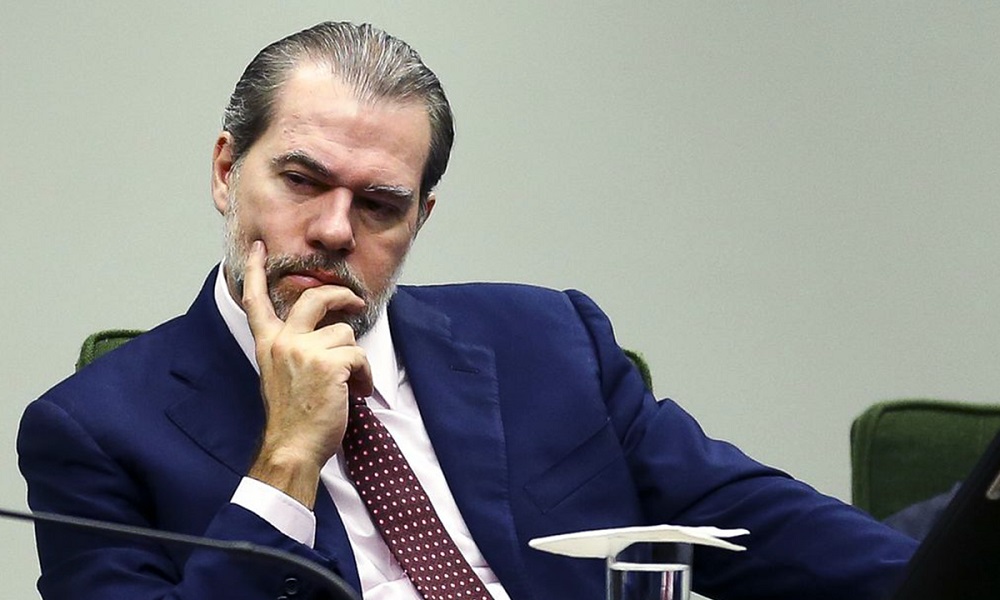
The court will review the individual order by its Presiding Justice, Dias Toffoli, who halted all criminal investigations in the country that have received and used data from a governmental watchdog body, such as the former COAF, without prior judicial authorization.
The case is scheduled to be heard at the Supreme Court’s plenary session on November 21st. Toffoli is rapporteur and may decide to anticipate the examination of the matter to November 20th.

In the case of imprisonment before appeals are exhausted, the STF hearing was of interest to former president Lula, who was released after spending 580 days in prison in Curitiba.
In the COAF case, the outcome interests Senator Flávio Bolsonaro, son of President Jair Bolsonaro. The senator is the plaintiff in the petition that led to Toffoli’s decision to suspend criminal investigations throughout the country.
So far, Bolsonaro has not spoken about the STF ruling that changed the case law and has barred the imprisonment of those convicted defendants who are still appealing. Privately, the president has told aides and allies that the Supreme Court’s decision must be respected.
Regarding the COAF case, since Toffoli’s preliminary (provisional) ruling in July, an investigation involving Flávio by the Rio de Janeiro Prosecutor’s Office has been stalled.
The senator is suspected of having received kickbacks of part of his staff employees’ salaries when he was a deputy in the Rio de Janeiro Legislative Assembly, a practice known as “splitting”.
Suspicions stemmed from a R$1.2 million (US$300 thousand) transaction in the accounts of Fabrício Queiroz, Flávio’s former chief of staff.
The transaction was deemed atypical by the COAF (Financial Activities Control Council), which has been renamed UIF (Financial Intelligence Unit) under Bolsonaro’s government.
When asking the STF to suspend the investigation against Flávio in Rio, his defense leveraged an appeal that was already on the court docket, that questioned the sharing of data by the Federal Treasury -not the COAF – with the Prosecutor’s Office for criminal purposes, wwithout prior judicial authorization.
Flávio’s defense argued that the Rio de Janeiro prosecutors had breached the senator’s banking and tax secrecy rights, by not having obtained a judicial order to receive the COAF reports.
In response to the petition, Justice Toffoli extended the discussion on data sharing to all financial oversight bodies (the federal Treasury, COAF and the Central Bank) and broadened the scope of his decision to all investigations in the country with similar features.
“Only those who want a fascist and police-run state, which chooses its victims, do not want judicial control [over investigations]. Instead of justice, they want revenge,” Toffoli told Folha at the time, explaining the measure.
Subsequently, Justice Minister Sérgio Moro went to the Supreme Court to advise Justice Toffoli of his dissatisfaction with the ruling, saying that it could jeopardize the fight against money laundering in the country.
As reported by Folha, by late October at least 700 investigations had been halted as a result of Toffoli’s ruling, according to a survey by the Prosecutor General’s Office.
The largest number of cases (307) were related to tax-related crimes, such as tax evasion and money laundering (151), including corruption schemes.
Moro’s visit to Toffoli angered President Bolsonaro and aggravated the Planalto Palace’s distrust of the Minister of Justice, which was already tarnished by the messages disclosed by The Intercept Brasil website and other media outlets, such as Folha. Amid the controversy, the UIF was transferred from the Ministry of Economy to the Central Bank.
Toffoli has said that he is seeking a solution with the President of the Central Bank, Roberto Campos Neto, to establish a procedure for the transfer of confidential data that complies with the Constitution.
The goal is to prevent excesses and, simultaneously, to reassure the officials of the oversight bodies who may have been aggrieved by the July ruling. As a result, the minister hopes to build a favorable environment for his position in the STF.
The appeal has been on the STF docket since March, but the judgment has been postponed. At that time it had just been made public that the Treasury had conducted an internal investigation into STF Justice Gilmar Mendes and his wife, Guiomar.
An investigation was then begun to determine who had leaked information on Justice Mendes. The Treasury investigation was intended to detect alleged “corruption sources, money laundering, concealment of assets or influence peddling”.
The Treasury officially reported that Gilmar had been the target of a preliminary investigation, but that there had been no formal inspection procedure on the magistrate and that he was not complicit with “conclusions of criminal practices,” which transcend the body’s legal role.
The judgment of Flávio’s case will come at a time when the shadow of his former right-hand man Queiroz, is once again inconveniencing the Bolsonaro clan.
Last month, audios of the retired state police officer surfaced. In one of them, Queiroz shows concern over the investigation by the Rio de Janeiro Prosecutor’s Office and compares it to a problem “the size of a comet”.
“That’s what I’m saying, the guy is super protected there. I don’t see anyone doing anything to try to help me out there. The MP [Prosecutor’s Office] has a comet-sized wish to bury us. I didn’t see anyone act,” he said in a July recording.
Source: Folhapress
More: Brazil news in English, every day from The Rio Times.
This article was drafted with automated assistance and reviewed before publication. How we use AI · Report an error · Editorial responsibility: Matthias Camenzind, Editor-in-Chief