Brazil’s Inflation Surge Exposes Structural Weaknesses and Market Skepticism, says Central Bank
Brazil’s Central Bank and financial market analysts have sounded the alarm as inflation climbed to 5.48% in March 2025, the highest since February 2023.
The Brazilian Institute of Geography and Statistics (IBGE) confirmed that food and beverage prices jumped 7.68% over the past year, outpacing the overall inflation rate.
Transportation, health, personal care, and clothing costs also rose sharply, underscoring how price pressures now affect nearly every household expense. The Central Bank’s official inflation target for 2025 is 3%, with a tolerance ceiling of 4.5%.
However, the market expects inflation to reach 5.65% this year, well above the target. The persistent overshoot has forced the Bank to keep the Selic interest rate at 14.25%, with analysts predicting a further rise to 15% by year-end.
High interest rates make borrowing more expensive and slow investment, but authorities see them as necessary to contain inflation. Despite strong GDP growth of 3.4% in 2024, the market projects a slowdown to 1.98% in 2025.
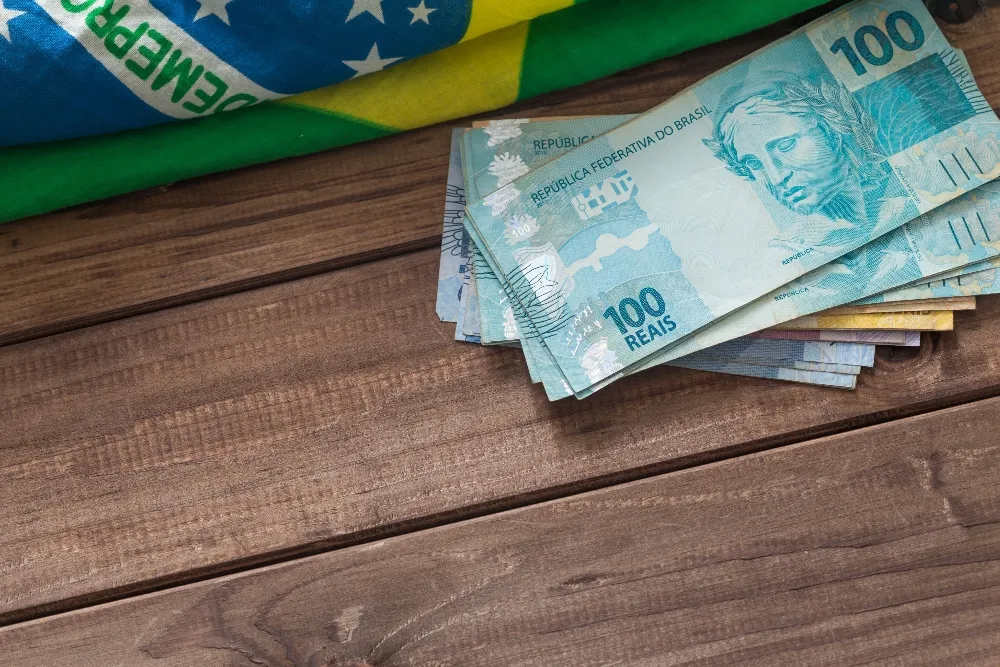
The government’s more optimistic forecast of 2.3% growth faces skepticism from investors, who cite fiscal fragility and external risks as key concerns. The Brazilian real continues to weaken, with forecasts placing it at 5.90 per US dollar by the end of 2025.
This depreciation makes imported goods, especially food and energy, more costly for Brazilian consumers. Recent global trade developments have added new uncertainty.
U.S. Tariffs Add Pressure to Brazil’s Fragile Economic Outlook
The United States imposed a 10% tariff on Brazilian exports, the minimum rate among major trading partners. While the direct impact appears limited, analysts warn that a broader global slowdown could further pressure Brazil’s economy.
Some expect the U.S. tariffs to weaken the dollar, which could ease inflation slightly in Brazil, but the overall risk environment remains high. Brazil’s fiscal policy remains constrained, with the government likely to meet targets only through additional adjustments.
Public debt continues to rise, and the prospect of general elections in 2026 adds further uncertainty. Analysts agree that inflation will remain elevated in the short term, only gradually easing if tighter monetary policy and external conditions stabilize.
The story behind the numbers reveals a country grappling with deep-seated structural challenges. Persistent inflation, high interest rates, and currency weakness threaten to erode recent gains, leaving investors cautious about Brazil’s near-term prospects.
This article was produced by The Rio Times’ automated newsroom system. How we use AI · Report an error
LatAm Markets: Live Signals → — real-time movers, turnover leaders and FX across Latin America.
Read More from The Rio Times