Brazil’s high school exam can be a door-opener to Portuguese universities and beyond
RIO DE JANEIRO, BRAZIL – Created in 1998 as a performance assessment of Brazilian students, the National High School Exam (ENEM) gradually took on another role, a selection tool to access higher education institutions. Since 2009, ENEM has been officialized as a gateway exam to Brazilian universities, along with the traditional “vestibular”.
What few people know – but should be an added attraction for those taking the exam – is that the test results can also be used to secure a place in foreign universities, especially if the dream is to do a degree in Portugal.
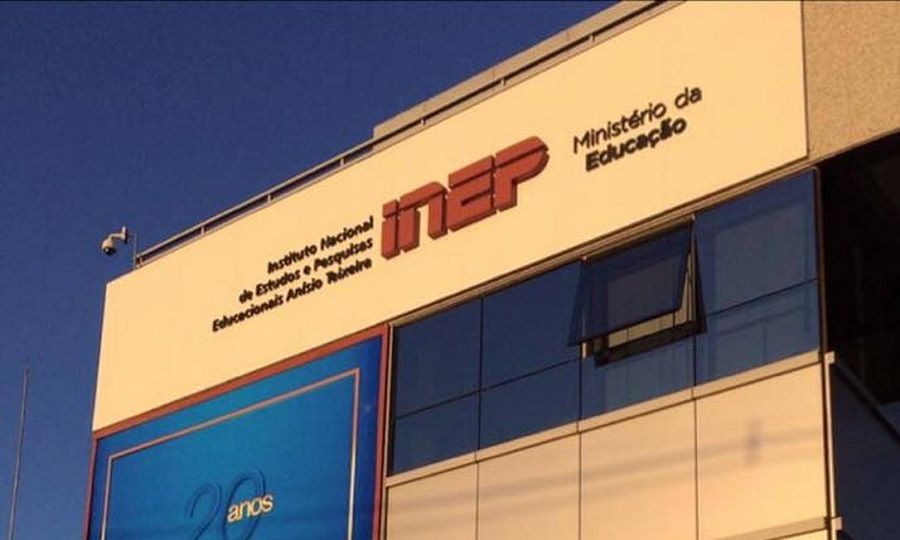
In March 2014, a Portuguese government decree regulated several issues concerning international students in the country. This legislation led to an agreement with the National Institute of Educational Studies and Research Anísio Teixeira (INEP), the federal agency responsible for the ENEM exam.

From then on, a program called ENEM Portugal was instituted, which makes possible, as the autarchy itself stresses in a note, “inter-institutional agreements between INEP and Portuguese higher education institutions.” At the time, several universities accepted ENEM results, but in a non-systematic way.
The agreement guaranteed a unity of processes and improved agility, with direct communication with the Brazilian autarchy. “INEP facilitates [the partners] access to the scores,” said the agency’s communications department.
There are currently 51 Portuguese institutions in the program, with “facilitated access to the grades of Brazilian students interested in undergraduate courses in Portugal.” “Each institution defines the rules and weights for using the grades,” explains INEP.
The autarchy stresses that these agreements do not involve “transfer of resources” and “do not foresee student financing by the Brazilian government.”
For those who are thinking about trying an academic life overseas, this is important: even European public universities usually charge tuition fees when the student is a foreigner, especially if he or she is from outside the European Union.
In the case of national students, the fees, even if they exist, are usually subsidized by the government.
Coimbra
Considered one of the oldest and most traditional university institutions in the world and recognized by UNESCO as a World Heritage Site, the University of Coimbra, whose history dates back to a papal bull signed in 1290, was the first foreign entity to sign the agreement with INEP, in May 2014.
According to the institution, Brazilians who have completed high school and who took the ENEM exam in the last five years can apply for a place. The selection process for the next classes is open until April 15.
In a statement, the university points out that since 2014 “formalized the use of these results under a protocol established with INEP”, which “gives the University of Coimbra access to the ENEM database to validate candidates’ results for the selection process.”
The main advantage is that “Brazilian candidates do not have to take new exams to enter the courses” of Coimbra. There are fees, of course. These are 50 euros to apply and 20 euros to enroll in the course. A preparatory year is necessary, officially called “year zero”, which costs 5,000 Euros.
After that, the annual undergraduate tuition is 7,000 euros. There is a provision for merit-based scholarships, reducing the annual fee by 1,000 to 2,000 euros.

Other universities
Founded in 1911, the University of Porto is another Portuguese institution much sought after by Brazilians. According to information from the university, ENEM is also valid thanks to an agreement signed with INEP in 2016.
The institution stresses that it accepts the Brazilian test results both for admission to undergraduate courses and integrated master’s degrees. Still, it emphasizes that “the ENEM scores may have a different weight depending on the course or faculty in which the candidate intends to enter.”
At the University of Porto, annual tuition fees vary between 3,500 and 8,000 euros. But there is good news for Portuguese speakers: “given the ties that unite Portugal to the states that make up the Community of Portuguese Language Countries (Angola, Brazil, Cape Verde, Guinea-Bissau, Equatorial Guinea, Mozambique, São Tomé and Principe, and East Timor), a fee reduction of up to 45% can be applied,” states the institution.
Portugal’s largest public institution of higher education, the University of Lisbon, is another signatory of the Brazilian autarchy agreement. In this case, it accepts the results of ENEM taken up to three years before the application; however, registration for the current selection process closed on February 19th.
The minimum score required depends on the area of knowledge desired, so it is necessary to consult case by case.

Around the world
According to INEP, there is nothing to stop other higher education institutions worldwide from accepting ENEM results in their selection processes, even if they have not signed any agreement with the Brazilian autarchy.
The argument is that certain foreign universities could accept the Brazilian exam in the same way as they acce[t ACT or SAT aptitude tests, applied in the United States, and valid for higher education institutions there. In these cases, the main advice is that those interested should check on a case-by-case basis.
In general, institutions ask for certificates of completion of the equivalent of high school and proof of proficiency in English or in the language in which the classes are taught.
When there is a request for proof of high school completion, ENEM can eventually be accepted as an evaluation.
BBC News Brazil contacted eleven universities in the UK, Ireland, USA, and Canada, asking if ENEM can be used in their admission processes and if so, how this is done.
As of Tuesday afternoon, March 30th, only Oxford University had replied. The answer was clear: in the renowned millennial institution in the UK, ENEM is not recognized in the selection process. Kingston University said it “does not have a specific admission policy for ENEM” because it receives “few requests from students from Brazil” – and its general policy is to analyze “case by case”.
Source: BBC Brasil
More: Brazil news in English, every day from The Rio Times.
This article was produced by The Rio Times’ automated newsroom system. How we use AI · Report an error
Read More from The Rio Times