Brazil’s Development Bank Eyes Seabed Mining for Critical Minerals
BRAZIL · ECONOMY
Key Facts
—The signal. the head of Brazil’s development bank says it wants to extend its critical minerals strategy to offshore, or seabed, mining.
—The partners. he wants Petrobras, whose offshore oil expertise could transfer to mining, to work alongside the miner Vale.
—The map. the bank is charting strategic areas of the seabed in partnership with Brazil’s Navy.
—Onshore first. on land it is already weighing 56 projects worth about R$50 billion, roughly US$10 billion.
—Latin American impact. a push to turn Brazil’s mineral wealth into supply, easing the region’s reliance on Chinese critical-minerals chains.
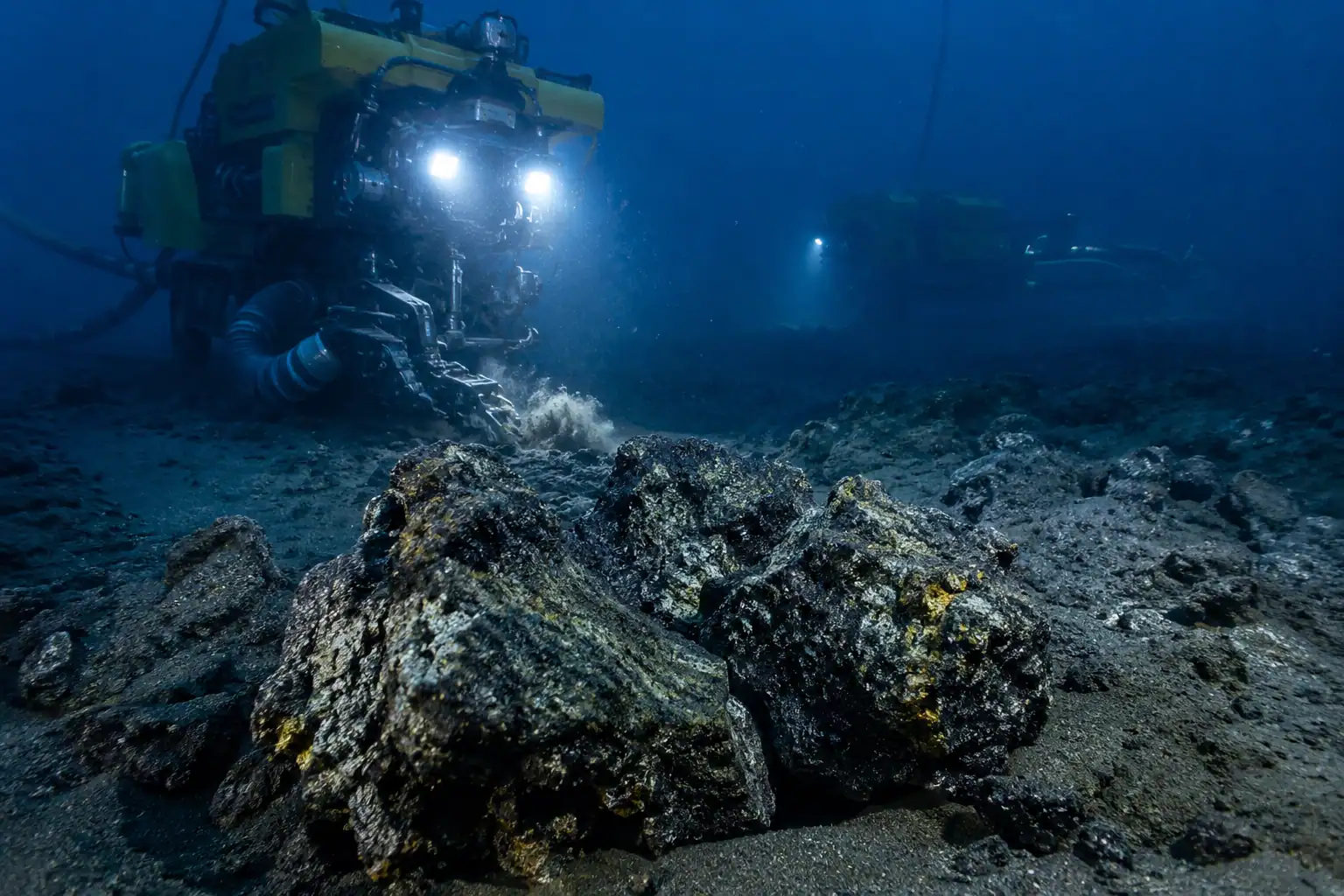
Brazil’s national development bank wants to push its critical minerals drive into a new frontier, the ocean floor, with the bank’s president signaling interest in seabed mining and a role for Petrobras alongside Vale.
Why Brazil Is Eyeing the Seabed for Critical Minerals
Brazil’s development bank wants to take its critical minerals strategy offshore. Speaking in Rio de Janeiro on Tuesday, the bank’s president, Aloizio Mercadante, called marine mining a future chapter for the country and drew a parallel with its offshore oil industry. He spoke at a national border-protection forum held at the bank’s headquarters.
The idea leans on existing expertise. Mercadante said he wants to bring in Petrobras, the state-controlled oil company whose research arm already studies critical minerals on the continental shelf, to work alongside the miner Vale. He framed the three together as the core of an offshore push.
The groundwork is security-led. The bank is mapping strategic and sensitive areas of the seabed in partnership with Brazil’s Navy. The minerals in question feed batteries and the shift to electric vehicles.
An Onshore Push Already Underway
The offshore idea sits on top of a land-based effort that is further along. The bank is analyzing 56 critical minerals projects it expects to mobilize about R$50 billion, or roughly US$10 billion. It has also set up a R$1 billion fund, near US$200 million, jointly with Vale to back smaller mining-research firms.
A second, larger fund targets processing. That R$5 billion vehicle, close to US$1 billion, is meant to build the refining capacity that turns raw ore into battery-grade material. Together the funds anchor a strategy the government chose over a single state-owned mining champion.
The aim is to reduce reliance on China. Brazil holds some of the world’s largest reserves of niobium, rare earths and nickel, yet produces little refined output. Officials want to convert that geology into supply that the United States, Europe and Asia can draw on.
Live Company IntelligencePetroleo Brasileiro Petrobras SA ADR — the full investor dossier
Wall Street view
Valuation & profitability
Price & risk
$10.6552-wk high
$21.99
Revenue trend · 6y
Ownership
Dividend
The Caveats
The offshore plan is a signal, not a deal. Mercadante described seabed mining as a future frontier rather than a funded project, and no timeline or budget has been attached. The continental-shelf mapping remains at an early stage.
It is also contentious. Deep-sea and seabed mining is environmentally controversial, and Brazil’s own legal framework for critical minerals is still moving through Congress. How the country balances extraction against environmental safeguards will shape whether the idea advances.
Frequently Asked Questions
What did Brazil’s development bank say?
Its president signaled interest in extending the country’s critical minerals strategy to offshore, or seabed, mining, and in bringing Petrobras in alongside Vale. It was a statement of intent, not a funded project.
Why involve Petrobras and the Navy?
Petrobras has deep offshore oil experience that could transfer to mining the seabed, and the Navy is helping map strategic underwater areas. The bank sees the two as natural partners for an ocean-based push.
How big is Brazil’s critical minerals effort?
On land the bank is weighing 56 projects worth about R$50 billion, roughly US$10 billion, alongside funds with Vale and for processing. Brazil holds major reserves of niobium, rare earths and nickel.
Connected Coverage
For background, see The Rio Times on the Vale and BNDES critical minerals fund now raising capital, and on how Lula chose a fund model over a state mining company. Our Brazil mining 2026 guide maps the wider sector.
This article was drafted with automated assistance and reviewed before publication. How we use AI · Report an error
Read More from The Rio Times