Brazil trains 700 marines for river operations in southeastern part of country
By Roberto Caiafa
RIO DE JANEIRO, BRAZIL – The largest exercise of its kind ever held in the state of Minas Gerais, its main objective was to maintain the readiness and operational capability of the Marine Corps in all regions of Brazil while reinforcing the Navy’s presence in the state.
The Furnas region was not chosen by the Marine Corps by chance, as it concentrates a power generation park around the Furnas Hydroelectric Plant and its 1,216 MW.
The privileged location of the plant (500 km from Rio de Janeiro, 400 km from São Paulo, and 300 km from Belo Horizonte) has allowed the construction of eight other plants over the years, since the 1960s, resulting in a potential for more than 6,000 MW installed.
DESCRIPTION OF THE EXERCISE
On May 16, an operational demonstration was held to present the main capabilities of the training to the authorities, local guests, and the press.
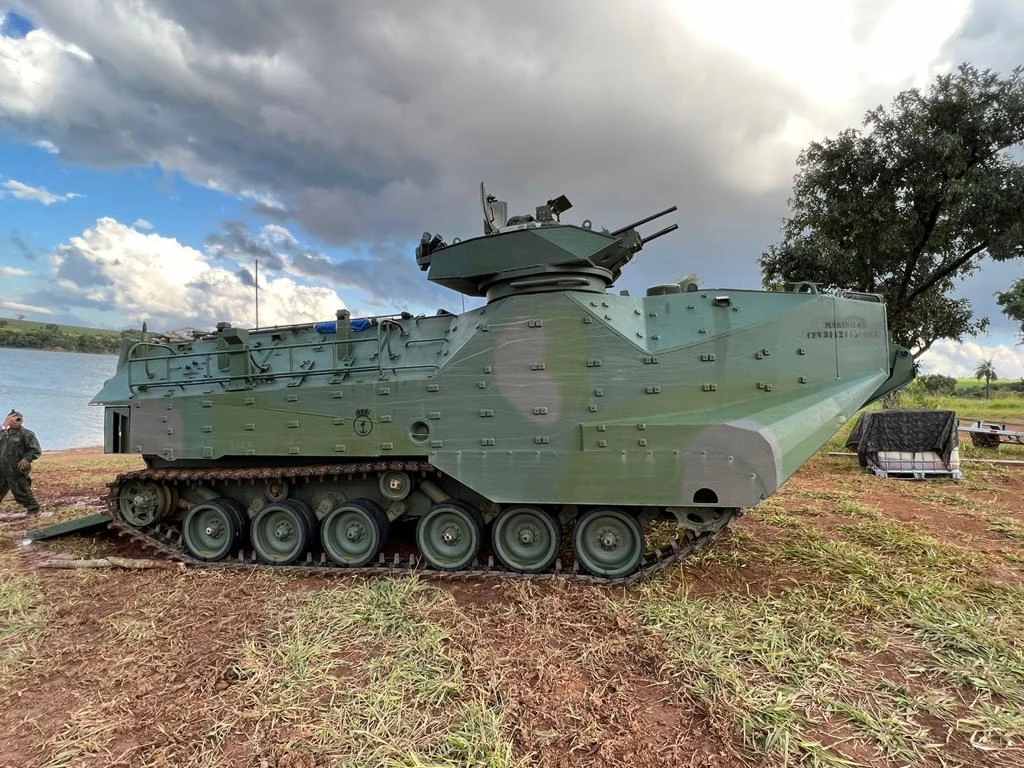
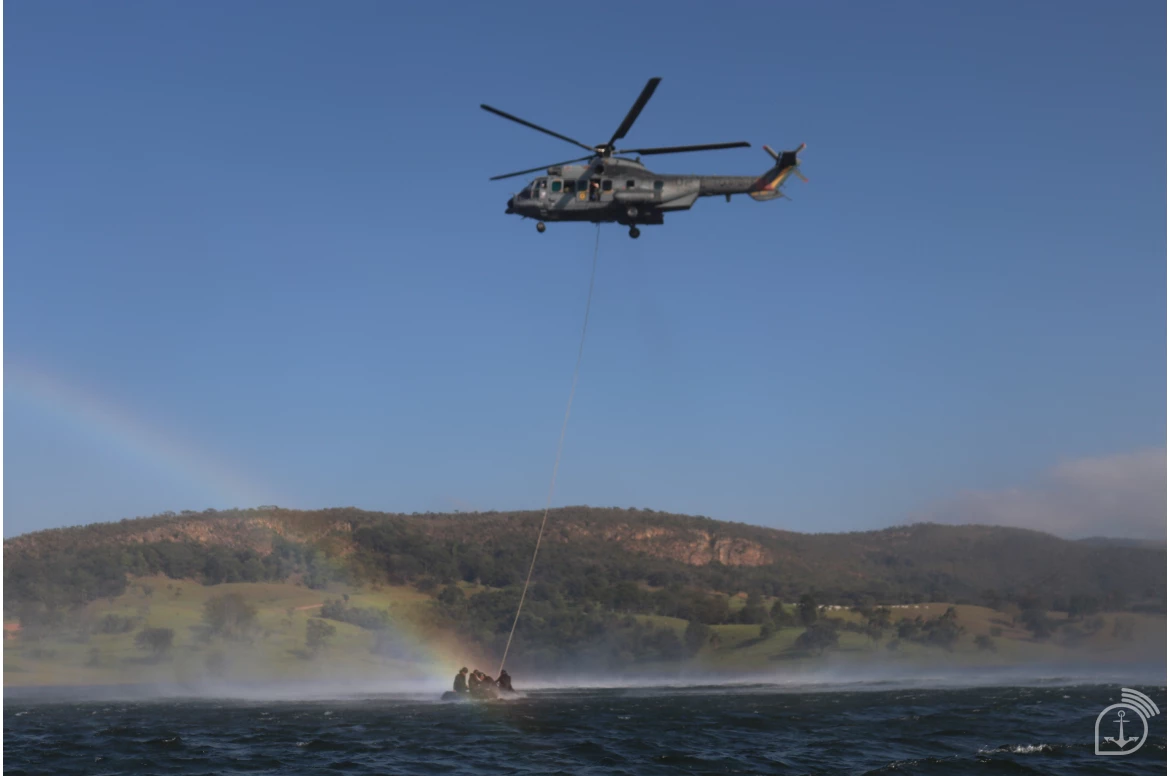
Operation Furnas mobilized more than 700 marines, a platoon of amphibious tracked armored vehicles (CLAnf), two AF-1 Skyhawk fighters, UH-15/H-225M Super Cougar and UH-12 Esquilo helicopters, dozens of ships, vehicles (light and heavy) and various military equipment of the Brazilian Navy.
The troops involved in the training belong to the Naval Fleet and Naval Air Force stationed in Rio de Janeiro, as well as the Furnas River Station stationed in São José da Barra (MG).
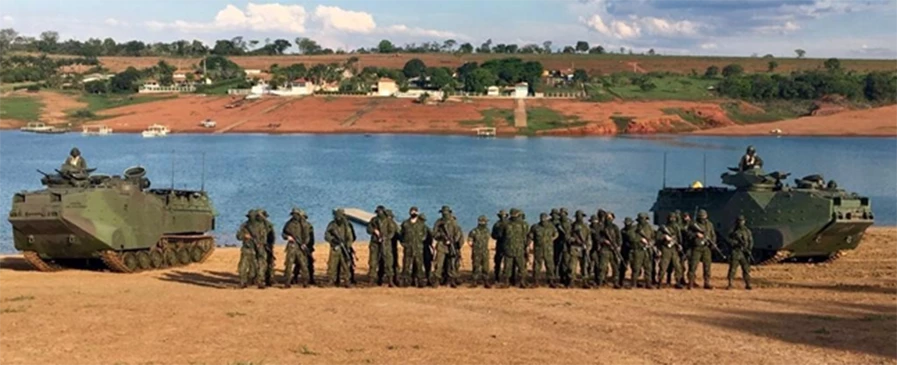
Activities conducted during the exercise included river landings, CLAnf operations in a river environment, day and night river routing, crossing techniques, hellocasting, day and night tethered flight, diving, operational free jumping, and rappelling.
Naval aviation helicopters used during the exercise launched their missions from an activated airbase in Furnas with support from Navy technology.
NAVAL FORCES FLEET
The Fuzileiros da Esquadra Force (FFE) is the Brazilian Navy’s amphibious force used for naval warfare operations, limited use of force and benign activities.
It is a strategic force for immediate deployment that is amphibious and expeditionary in nature.
Recent deployments include participation in peacekeeping operations in Haiti and Lebanon, law and order operations in Rio de Janeiro, and humanitarian assistance and civil defense support during rains in Petrópolis.
In April of this year, the Marine Corps Rapid Reaction Force was certified by the United Nations (UN) for Level 3 peacekeeping operational readiness, the highest operational level for that organization. This made the force the first in the country to receive this certification and is currently the only one in the world.
More: Brazil news in English, every day from The Rio Times.
This article was produced by The Rio Times’ automated newsroom system. How we use AI · Report an error · Editorial responsibility: Matthias Camenzind, Editor-in-Chief