Brazil Supreme Court Justice Halts Extra Pay Perks as Audit Court Allows Double-Dipping on Salary Cap
Brazil · Public Finance
Key Facts
—Nationwide Freeze Brazil’s Supreme Court suspended extra payments in all three branches and levels of government, immediately affecting the take-home pay of judges, prosecutors, and senior civil servants.
—Budgetary Black Hole The Judiciary alone spent about R$6.7 billion (roughly US$1.2 billion) on above-cap salaries in 2024, a cost that directly pressures Brazil’s fiscal deficit and limits public investment capacity.
—Clashing Institutions While the STF moves to block pay above the constitutional ceiling, the Federal Audit Court (TCU) has authorized ‘teto duplex’ arrangements that let individuals legally receive combined salaries above the cap.
—Investor Confidence Billion-dollar spending on super-salaries undermines fiscal responsibility laws, eroding the credibility of Brazilian public accounts and signaling weak cost control to foreign investors.
—Legal Uncertainty The São Paulo state court appealed the freeze, arguing it creates legal chaos and asymmetry, meaning the final rules for public-sector pay are still in flux.
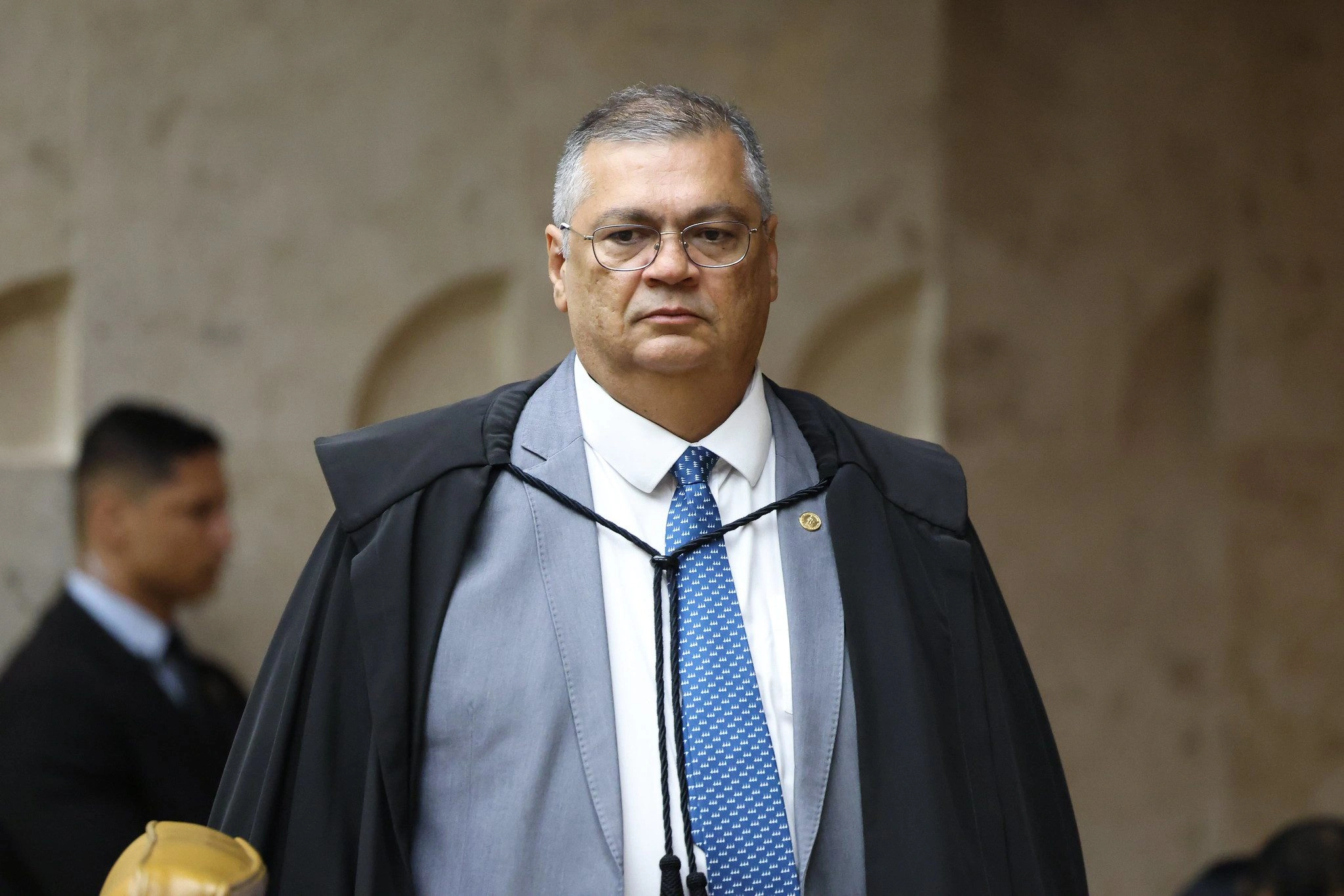
Justice Flavio Dino of Brazil’s Supreme Court ordered the immediate suspension of extra-salary ‘penduricalhos’ across all branches and levels of government, directly setting the judiciary on a collision course with the Federal Audit Court (TCU), which has authorized ‘teto duplex’ mechanisms that allow individual public servants to receive payments well above the constitutional cap.
A Nationwide Crackdown on ‘Penduricalhos’
On February 5, 2026, STF Justice Flavio Dino issued a monocratic injunction suspending the payment of so-called ‘penduricalhos’—extra benefits, allowances, and gratifications that push public-sector pay above the constitutional ceiling—across the Executive, Legislative, and Judicial branches at the federal, state, and municipal levels. Dino defined these payments as unconstitutional schemes used to ‘inflate salaries’ and ‘circumvent the public service salary cap,’ noting that when a benefit is given regularly, it acquires a remunerative nature and must be subject to the cap.
The decision requires all government organs to review the legal basis of such payments within 60 days and immediately halt any lacking explicit legal backing. Dino also prohibited Congress from creating new laws authorizing above-ceiling pay until it passes an ordinary law defining which indemnity payments can be excluded.
The ruling came days after Congress approved projects that could raise staff salaries from around R$30,000 (roughly US$5,400) to up to R$70,000 (roughly US$12,600) per month.
The Institutional Clash: STF vs. TCU on the Salary Cap
Dino’s sweeping order directly contradicts the legal interpretation advanced by the TCU, which has authorized what is known as ‘teto duplex.’ This principle applies the constitutional ceiling—set at R$46,366.19 per month (roughly US$8,350)—to each salary or benefit separately rather than to a person’s total income. The TCU’s stance allows public servants holding two legitimate positions to receive up to the cap for each role, and it has extended this logic to approve separate counting of leadership gratifications for Congressional staff and full parliamentary salaries in addition to public pensions.
The clash pits the STF’s drive to enforce a hard fiscal ceiling against the TCU’s permissive reading of accumulation rights. While Dino seeks to end the ’empire of penduricalhos’ by closing loopholes, the TCU continues to create new exceptions.
A document from the federal management secretariat previously stated that the Constitution provides no basis for receiving amounts above the ceiling, arguing it prohibits any remuneration or advantage exceeding the established limit.
The Billion-Dollar Cost of Super-Salaries
The financial stakes are immense. In 2024, the Brazilian Judiciary spent R$6.7 billion (roughly US$1.2 billion) on remuneration above the constitutional cap.
Judges received, on average, R$270,000 (roughly US$48,600) in additional, cap-busting amounts over the year, with aids and benefits now accounting for over 43% of magistrates’ net income. The Judiciary alone consumes 1.6% of Brazil’s GDP, a figure higher than international averages.
State-level data illustrates potential savings. São Paulo’s Finance Department argued before the STF that enforcing the ceiling on all state servants is ‘decisive for controlling Executive spending’ and would save about R$1.3 billion (roughly US$234 million) per year for that state alone. Meanwhile, the STF’s own criteria-setting decision from March 2026 estimated that tightening rules on penduricalhos across the board could yield annual savings of R$7.3 billion (roughly US$1.3 billion).
Legal Backlash and the ‘Teto Duplex’ Precedent
The São Paulo State Court (TJ-SP) has already appealed Dino’s order, arguing that a blanket suspension before national legislation creates federative asymmetry, compromises justice administration, and generates systemic legal uncertainty. The court warns of irreversible financial effects.
Despite this, Dino, alongside fellow STF Justice Alexandre de Moraes, has doubled down by demanding explanations from seven state courts after identifying salaries that hit R$495,000 (roughly US$89,100) in a single month.
Frequently Asked Questions
What exactly are ‘penduricalhos’ in Brazil’s civil service?
‘Penduricalhos’ is a colloquial term for extra payments—such as housing aid, meal allowances, and leadership gratifications—that are added to a public servant’s base salary. Critics say they are often classified as ‘indemnity payments’ to bypass the constitutional salary cap, allowing total monthly pay to reach hundreds of thousands of reais.
Why does suspension of these payments matter for public finances?
The Judiciary alone spent R$6.7 billion (about US$1.3 billion) on above-cap salaries in 2024. Enforcing the cap could save up to R$7.3 billion (about US$1.4 billion) nationally per year, welcome news for investors and residents concerned about Brazil’s fiscal deficit and the efficient use of tax revenues.
How does the TCU’s ‘teto duplex’ rule allow super-salaries?
The TCU allows the constitutional salary cap to be applied separately to each public position or benefit a person holds. This means a retired judge who becomes a congressman can legally receive two full salaries, even if the combined amount greatly exceeds the monthly cap of roughly R$46,366.
Sources: Dino suspende penduricalhos de servidores, Judiciário pagou quase R$ 7 bi de remunerações acima do teto salarial em 2024, TCU aprova penduricalhos acima do teto para funcionários do Congresso, Entenda a decisão do STF que estabeleceu critérios para o pagamento de penduricalhos, Estado de SP questiona decisões judiciais que validam salários acima do teto, TCU decide que acumulação de salários dos servidores públicos pode ser acima do teto nacional
Read More from The Rio Times