Brazil Pushes Most of Its 2026 Railway Auctions to 2027
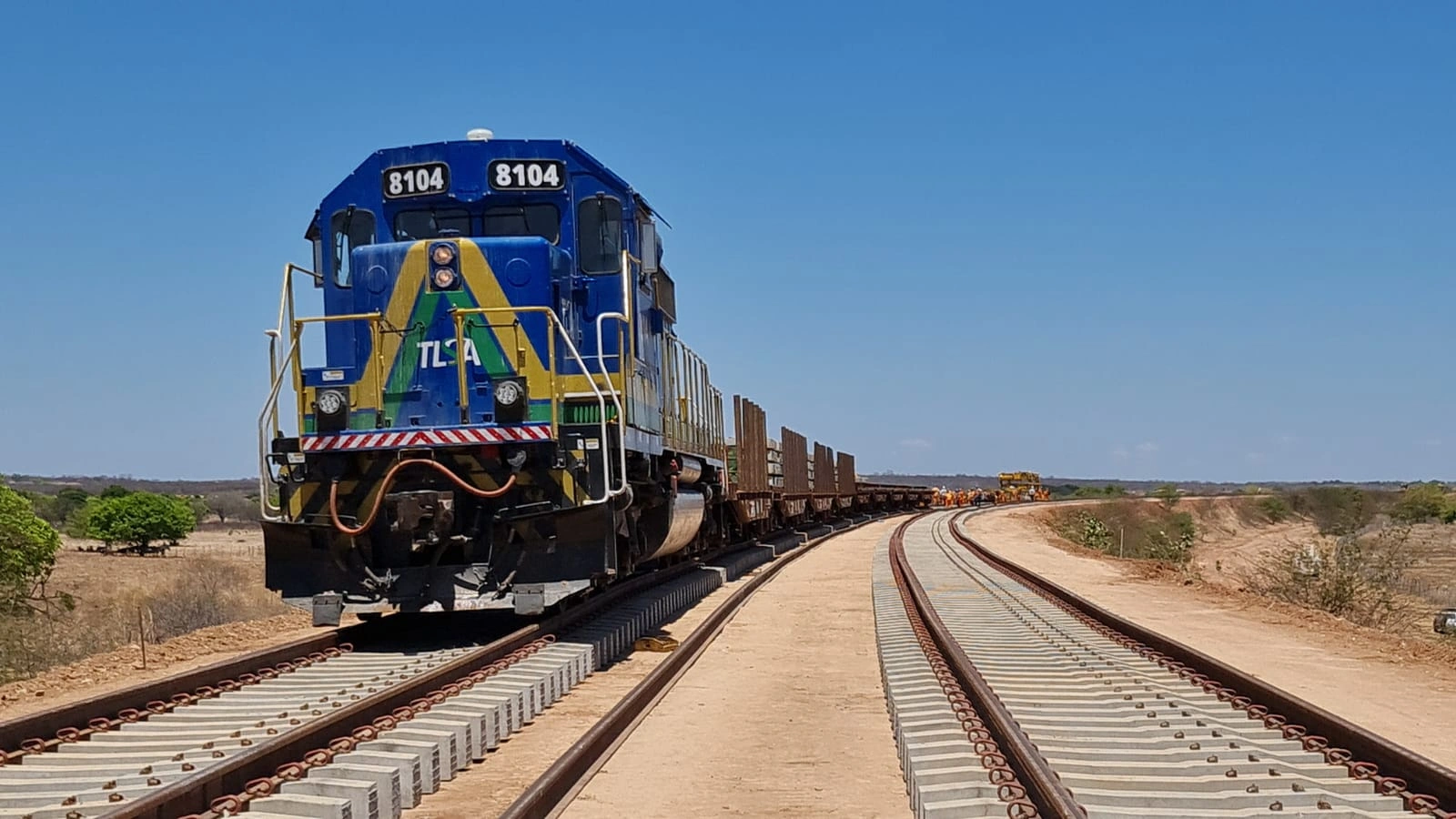
Brazil · Markets
Key Facts
—Slipping. The eight rail auctions Brazil meant to hold in 2026 have mostly been pushed into 2027.
—The number. The plan covers about R$140bn ($28bn) in construction across thousands of kilometres of track.
—Why. The government blames unfinished technical studies, draft rules and audit-court review.
—Election shadow. One big auction now lands in October, the same month Brazil votes for president.
—At stake. The tracks would move soy, corn and iron ore to port more cheaply than trucks.
—Headliner. The contested Ferrogrão soy line is among the projects slipping to December or later.
The Brazil railway story of the year was meant to be a wave of auctions handing huge stretches of track to private operators in 2026, but the timetable has quietly fallen apart, with most of the eight planned sales now pushed into 2027 and one big one landing awkwardly in the middle of a presidential election — a familiar rhythm in a country that has spent decades promising a rail revolution and delivering mostly truck-choked highways.
The Brazil railway timetable has quietly unravelled
Late last year Brazil unveiled its most ambitious plan in decades to rebuild its railways: eight separate concessions, in which private companies win the right to build and run a stretch of track for decades in exchange for the investment, all to be auctioned during 2026. The package was sized at roughly R$140bn ($28bn) in direct construction spending, with far larger sums, well over half a trillion reais, flowing through the resulting operations over the life of the contracts.
The pitch to investors was a rare thing in Brazilian infrastructure: a clear calendar, with each tender published and then auctioned about three months later.
That calendar has now slipped. Reporting by the newspaper Folha de São Paulo on June 5, confirmed across Brazilian outlets, found that none of the original dates held and that most of the eight projects have been pushed into 2027.
The Transport Ministry says the delays reflect unfinished technical studies, the slow drafting of tender rules by the rail regulator, and the review every big concession must pass at the federal audit court, the body that vets whether the terms protect the public purse. In the ministry’s own words, the new timing reflects the complexity and novel design of the country’s new railway policy.
Which lines moved, and into an election
The specifics matter for anyone tracking Brazilian logistics. The Southeast Railway Ring, a planned line of almost 246 kilometres linking São João da Barra in Rio de Janeiro state to Santa Leopoldina in Espírito Santo, was meant to go to auction in June; its tender has not even been published, and the sale is now pencilled in for September.
The Minas-Rio Corridor, originally slated for April, is still under review at the audit court and has been rescheduled for later in the year, the very month Brazilians go to the polls to choose their next president. Holding a major state asset sale during an election campaign adds a layer of political risk that bidders dislike.
Further down the list, the East-West Corridor known as Fico-Fiol, a route between Caetité in Bahia and Água Boa in Mato Grosso carrying an estimated R$41.85bn ($8.3bn) price tag, and the Ferrogrão, the politically charged 933-kilometre soy line from Sinop in Mato Grosso to Itaituba in Pará, have both been remarked to December 2026 from earlier slots in August and September.
The northern extension of the North-South Railway, from Açailândia to Barcarena, has slid all the way to October 2027. In short, what was sold as a 2026 story has become a 2027 one.
Live Market IntelligenceBrazil — Live Market Board
Rio Times · Live Market Intelligence
Brazil — Live Market Board
+1.38%
209,066.90
+1.38%
66,746.78
+1.06%
11,043.36
+0.17%
2,828,027
-0.16%
2,531.15
+0.00%
60,956.11
-0.51%
| Instrument | Last | Change | YoY | Prev. | High | Low | Volume |
|---|---|---|---|---|---|---|---|
| IBOV | 209,066.90 | +1.38% | +21.85% | 206,220.24 | 168,310 | 167,142 | — |
| USD/BRL | 5.16 | +0.01% | -5.13% | 5.16 | 5.18 | 5.14 | — |
| SELIC | 14.00% | — | — | — | — | — | |
| PETR4 | 41.64 | -0.05% | +35.19% | 41.66 | 41.97 | 41.15 | 41,499,400 |
| VALE3 | 72.97 | +0.83% | +30.75% | 72.37 | 73.54 | 72.66 | 17,658,000 |
| ITUB4 | 38.60 | -1.03% | +4.57% | 39.00 | 39.34 | 38.39 | 29,487,800 |
| BBDC4 | 16.85 | +0.36% | +3.50% | 16.79 | 16.90 | 16.67 | 19,416,900 |
| BBAS3 | 19.37 | +0.47% | +0.73% | 19.28 | 19.44 | 19.16 | 11,069,200 |
| B3SA3 | 14.26 | -0.21% | +12.73% | 14.29 | 14.47 | 14.11 | 33,037,800 |
| ABEV3 | 14.89 | -0.80% | +21.91% | 15.01 | 15.07 | 14.81 | 16,453,100 |
| WEGE3 | 47.59 | +0.49% | +29.99% | 47.36 | 48.08 | 47.36 | 3,364,600 |
| PRIO3 | 59.14 | -0.19% | +50.67% | 59.25 | 59.81 | 58.74 | 3,325,600 |
| SUZB3 | 41.33 | +2.35% | -23.55% | 40.38 | 41.48 | 40.35 | 3,914,900 |
| RENT3 | 34.68 | -0.09% | +0.84% | 34.71 | 34.96 | 34.35 | 7,979,100 |
| AZZA3 | 15.89 | -2.63% | -53.76% | 16.32 | 16.42 | 15.82 | 1,330,300 |
| CSNA3 | 4.30 | +0.47% | -42.65% | 4.28 | 4.41 | 4.26 | 10,076,100 |
| GGBR4 | 24.69 | +2.19% | +51.38% | 24.16 | 24.85 | 24.18 | 7,047,600 |
| ENEV3 | 24.21 | -1.38% | +70.49% | 24.55 | 24.64 | 23.99 | 9,297,000 |
Why a foreign investor should care
For readers outside Brazil, the easy reaction is to shrug at another government missing a deadline. But the stakes are real and specific.
Brazil is an agricultural and mining superpower whose biggest competitive weakness is the cost of moving goods to port. Rail carries only about a quarter of the country’s freight despite its continental size, and a large share of the installed track sits idle.
Trucks haul soybeans and iron ore hundreds of kilometres over crowded highways, adding cost that eats into the prices farmers and miners receive. New railways are the most direct fix, which is why this programme drew interest from the handful of big operators that dominate Brazilian rail and from infrastructure funds at home and abroad.
Each year of delay is a year in which that cost advantage goes uncaptured and in which global buyers keep weighing Brazilian supply against rivals. The slip also tests the credibility of the new framework the government built precisely to give investors predictability; a calendar that misses every date undercuts the message.
None of this means the projects are dead. The Ferrogrão recently cleared a major legal hurdle when Brazil’s top court upheld the law underpinning it, and the regulator has opened public consultation on a separate southern network whose current operator’s contract expires in 2027.
The pipeline is intact; what has changed is the timing, and in infrastructure, timing is most of the story. The question now is whether a government heading into an election can hold even the revised dates, or whether 2027 itself starts to slip.
Frequently Asked Questions
What exactly has been delayed?
Brazil planned eight railway concession auctions for 2026, worth about R$140bn ($28bn) in construction. Most have now been pushed into 2027 after none of the original dates were met.
Why were the auctions postponed?
The Transport Ministry cites unfinished technical studies, slow drafting of tender rules by the regulator, and the review each concession must clear at the federal audit court.
Does the delay affect the Ferrogrão soy railway?
Yes. The contested 933-kilometre Ferrogrão line from Mato Grosso to Pará has been remarked to December 2026 or later, though it recently won an important ruling at Brazil’s top court.
Connected Coverage
Brazil Plans Eight Railway Auctions in Historic Push
Brazil’s Top Court Clears 933km Amazon Soy Railway in 8-1 Vote
This article was drafted with automated assistance and reviewed before publication. How we use AI · Report an error · Editorial responsibility: Matthias Camenzind, Editor-in-Chief