Brazil: Pantanal now has one of the largest early fire detection projects in the world
Every year, from July to October, the highest alert against fire outbreaks in the Pantanal is lit. This is the most critical period of the dry season in the region, which considerably increases the risk of the fire spreading, threatening the entire biome, one of the richest and most unique on the planet.
Preventing forest fires is now a global challenge, aggravated by climate change, and the Pantanal has been hard hit by the problem in recent years. Therefore, efforts to monitor and fight fires in the plain have been expanded and improved.
One of the new allies in tackling the issue is a modern system capable of detecting in 3 minutes the exact location of a small heat source, kilometers away, generating an alert and triggering brigades to fight the flames, preventing them from reaching large proportions.

Baptized Abrace Pantanal (Embrace Pantanal), the unprecedented project in Brazil, launched in June, is one of the largest in the world when it comes to environmental preservation through quick identification and better firefighting. The plan is to protect 2.5 million hectares of native area, equivalent to the territory of Belgium.
The implementation of the innovative solution, which guarantees real-time surveillance 24 hours a day, is the result of a task force that unites the local community, NGOs and the private sector, associating different expertise and technologies.
In this articulation are the early outbreak detection system of the startup Umgrauemeio; the capacity for communication, mobilization and firefighting planning of the independent management centers – Brigada Aliança, Instituto Homem Pantaneiro (IHP) and Polo Socioambiental Sesc Pantanal –; and financing from JBS in the acquisition and installation of equipment and in the structuring of brigades.
SO THAT 2020 DOES NOT REPEAT ITSELF
The monitoring strategy began to be designed after the tragic fires of 2020, the worst in the history of the Pantanal. More than a quarter of the entire biome was destroyed, according to data from the Environmental Satellite Applications Laboratory at the Federal University of Rio de Janeiro (Lasa-UFRJ).
“It was disquieting to see 26% of the Pantanal, one of the main UNESCO world biosphere reserves, be consumed by fire, compromising more than 4 million hectares, killing around 17 million vertebrates and emitting millions of tons of CO2 into the atmosphere”, recalls the Chief Innovabilty Officer (CIO) and co-founder of Umgrauemeio, Osmar Bambini.
With Abrace Pantanal supporting local institutions that have historically fought fires in the biome, the goal is to prevent extreme events like the one of two years ago from happening again.
The moment for implementation could not be more opportune: in 2022, the drought arrived earlier than expected in the region and with great intensity, leaving the scenario even more favorable for the spread of forest fires, according to a technical note from the SOS Pantanal institute.
HOW THE MONITORING SYSTEM WORKS
The early identification of fire outbreaks is carried out by the Pantera® software, an integrated platform for managing forest fires developed by Umgrauemeio.
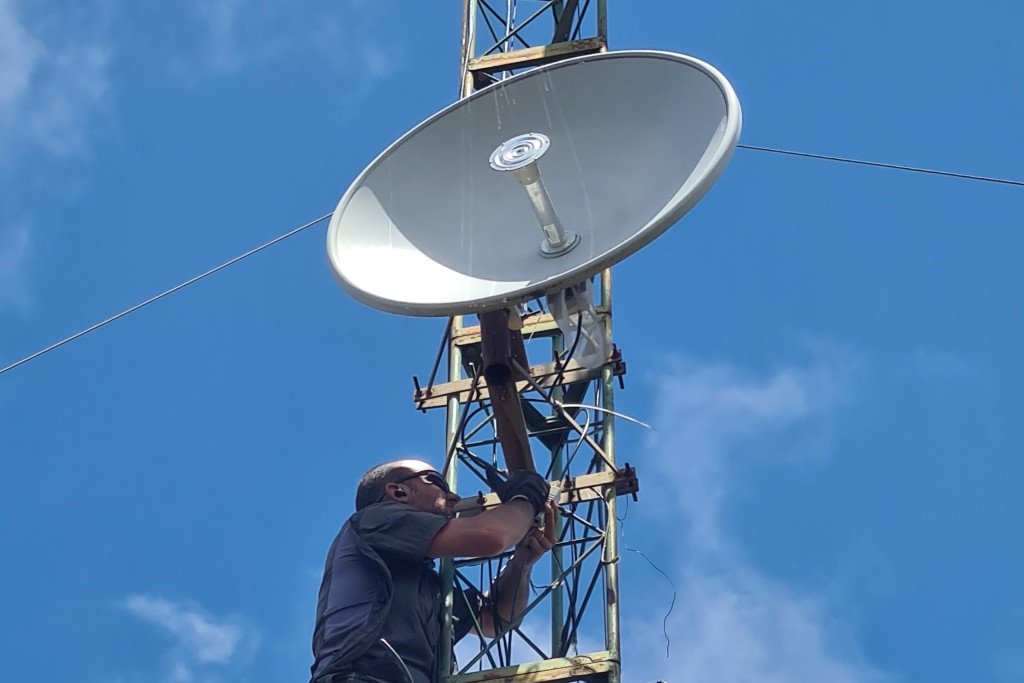
Cameras installed on top of communication towers capture high-resolution images and, based on them, an artificial intelligence algorithm automatically detects fire and notifies system operators.
FIRST PHASE OF THE PROJECT
In this initial stage, the equipment was installed in 11 existing towers, distributed in the south, north and central regions, starting with the territory of Serra do Amolar, under the governance of the IHP.
This is one of the most isolated areas in the Pantanal and had more than 90% of its protection network affected in the big fires of 2020.
According to the president of the IHP, Ângelo Rabelo, given the particularities of the region, with areas of mountains that reach more than 3,000 meters in height, combating and monitoring outbreaks has always been a challenge. The new tool will facilitate the action of the Alto Pantanal Brigade, which operates in Serra do Amolar.
“With this initiative, we will have more clarity in identifying the outbreaks, which will allow for a faster response from our brigade members. The work of the Alto Pantanal Brigade will be even more efficient and we will achieve our goal: to preserve the Pantanal fauna and flora”, he adds.
INVESTMENT OF R$26 MILLION
This phase 1 of the project, which lasts for three years, is sponsored by JBS, the largest food company in the world. The company’s contribution amounts to R$26 million, distributed over four years, of which R$8 million was used to finance the installation of the towers.
“Actions like this benefit the entire livestock value chain, since fires devastate the ecosystem, seriously damage rural properties and release polluting gases into the atmosphere that cause global warming”, highlights Liège Correia, director of sustainability at Friboi, one of the JBS brands.
The international initiative engenders the company’s Net Zero 2040 strategy, which made a commitment in 2021 to bring the net balance of its greenhouse gas emissions to zero by the end of the next decade. It was the first global company in the protein sector to commit to this goal.
Aligned with the company’s objective of contributing to the fight against climate change, Abrace Pantanal foresees a CO2 reduction of 15 million tons throughout the project.
In addition to funding the watchtowers, now essential during the dry season, JBS also operates during the flood season, offering training to rural producers and the community, through partnerships with regional entities, such as SOS Pantanal, Sesc Pantanal and PrevFogo.
A LIVING AND INTEGRATED NETWORK
The involvement of the local community, by the way, is a key element in this and other solutions aimed at the conservation of the biome.
From 2020 to 2021 there was a considerable reduction in fires and a large part of this is due to the engagement of the population and rural landowners, who have been working together with various institutions, forming a surveillance network and rapid reporting of occurrences.
Last year, Brigada Aliança, an Embrace Pantanal partner trained by the US Forest Service, registered and monitored 150 properties in the region, more than 330,000 hectares of farms. The result was evident: of the 104 fires fought in 2021 by the Brigade, 60% had the direct involvement of rural producers and the community in general.
“More than a highly specialized team in fire science, the great differential of the work in the last year was social technology”, says Caroline Nóbrega, researcher and general manager of Aliança da Terra, the entity responsible for organizing and maintaining the brigades.
Abrace Pantanal is part of an even larger initiative called Abrace a Floresta (Embrace the Forest) which, through the Pantera® platform, provides a comprehensive look at monitoring and managing firefighting in real time, along with the protection of biodiversity.
The idea is, in a second stage, to triple the scope of the project in the Pantanal, in addition to extending it to other national parks and reserves in the future, such as Chapada dos Veadeiros (Goiás), Chapada dos Guimarães (Mato Grosso) and areas of the Amazon.
With information from Exame
More: Brazil news in English, every day from The Rio Times.
This article was produced by The Rio Times’ automated newsroom system. How we use AI · Report an error
Read More from The Rio Times