How to spend in Argentina and why foreign tourists don’t want to use cash anymore
By Tomás Carrió
Visiting Argentina during Easter Week can be a very attractive experience.
In addition to the country’s diverse tourist, cultural and gastronomic offers, the exchange rate has been very favorable in recent years due to the persistent devaluation of the Argentine peso.
But to make the most of every dollar, it is necessary to understand the most convenient form of payment and know some particularities of the Argentine market.

Due to the currency exchange restrictions, there are no less than a dozen exchange rates for the US dollar in the country.
This makes it difficult for foreign tourists to understand how to pay in Argentina.
To prevent the dollars of foreign tourists arriving in the country from feeding the informal market, at the end of last year, the Argentine Government implemented a mechanism whereby the value of the MEP dollar was recognized instead of the official exchange rate when making payments with cards.
SPENDING WITH CARDS
Until that moment, paying with plastic was a lousy deal for tourists.
Given the exchange rate gap level, which last year averaged around 90%, they received almost twice as many pesos in the informal market as they were paid with credit cards.
But after implementing this new mechanism in mid-December – after VISA and Mastercard adapted to the measure – the situation was reversed.
Today, using cards for expenses in the country is more convenient than using cash.
The inflow of foreign currency to the official market by non-resident tourists shot up 282% between September 2022 and January this year.
“In January 2023, the income was US$164 million, 282% higher than the US$43 million of September 2022″, the Government acknowledged in the last hours, through a Management Report presented by the Chief of Cabinet, Agustín Rossi, in the National Congress.
“This is due, on the one hand, to the recovery that is taking place in international tourist arrivals to the country, which is already at 80% of pre-pandemic levels (values in line with the regional recovery).”
“On the other hand, the measure’s impact can be seen in an increase in spending by tourists visiting the country in relative terms: in September 2022, US$110 per tourist entered the country, while in January 2023, US$242″, detailed the work.
This sharp increase in spending by tourists with credit cards reflects that paying with cash is no longer the most convenient option for those who come to Argentina.
Today, the MEP dollar – the exchange rate tourists can access when paying for their purchases in the country with a credit card – is close to $390.
This is practically in line with the blue dollar rate, which tourists could access if they wanted to exchange their foreign currency in the informal market.
In addition, by paying with a card, tourists avoid going to an illegal market, with the risks that this entails and not having to carry so many bills.
The largest denomination bill in Argentina – the $1,000 – today is equivalent to about US$2.5, meaning that if US$100 is exchanged, no less than 38 bills will be received.
WHAT IS THE SMALL FACE DOLLAR AND HOW TO USE IT DURING EASTER WEEK
In other countries, it may be curious, but not all dollars are worth the same in Argentina, although that should be the case.
Older bills, printed up to 1996, are rarely accepted in transactions, and in the informal market, they can be taken for a price up to 1% lower than the original value.
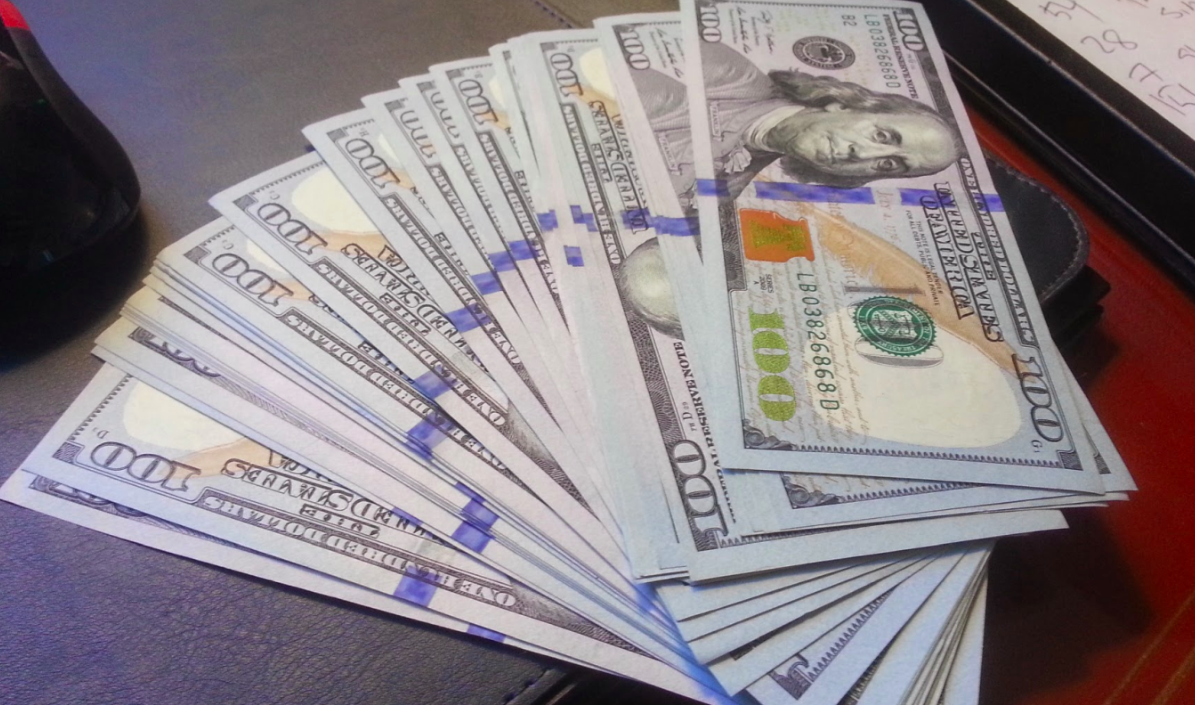
These are the banknotes that in Argentina are known as cara chica dollar due to the size of the faces of the national heroes printed on them.
The “small face dollars” pay less in the informal market and for denominations lower than US$100.
Identifying a “small face dollar” instead of the “big face dollar” is simple.
The faces of US heroes are considerably larger on bills printed by the Federal Reserve (Fed) from 1996 onward.
According to those who know how the informal dollar market works in Argentina, the “fall from grace” of the small-face dollars is linked to the fact that the new versions have additional security measures that make them more difficult to counterfeit.
However, some remember that a sort of myth was spreading behind this differentiation.
Around 2013 and 2014, they say in the sector, many of these dollars passed through the border to Bolivia and Paraguay, where they were stamped to verify their authenticity.
Unlike in Argentina, where a stamp is used, those stamp marks were impregnated in the banknote.
This preference for the new versions of the US currency, which have multiplied especially in recent years, and do not have these marks, would be another factor that would have forged the differentiation.
With information from Bloomberg
This article was produced by The Rio Times’ automated newsroom system. How we use AI · Report an error
Read More from The Rio Times