Peru’s Castillo slides closer to radical left with his first cabinet appointments
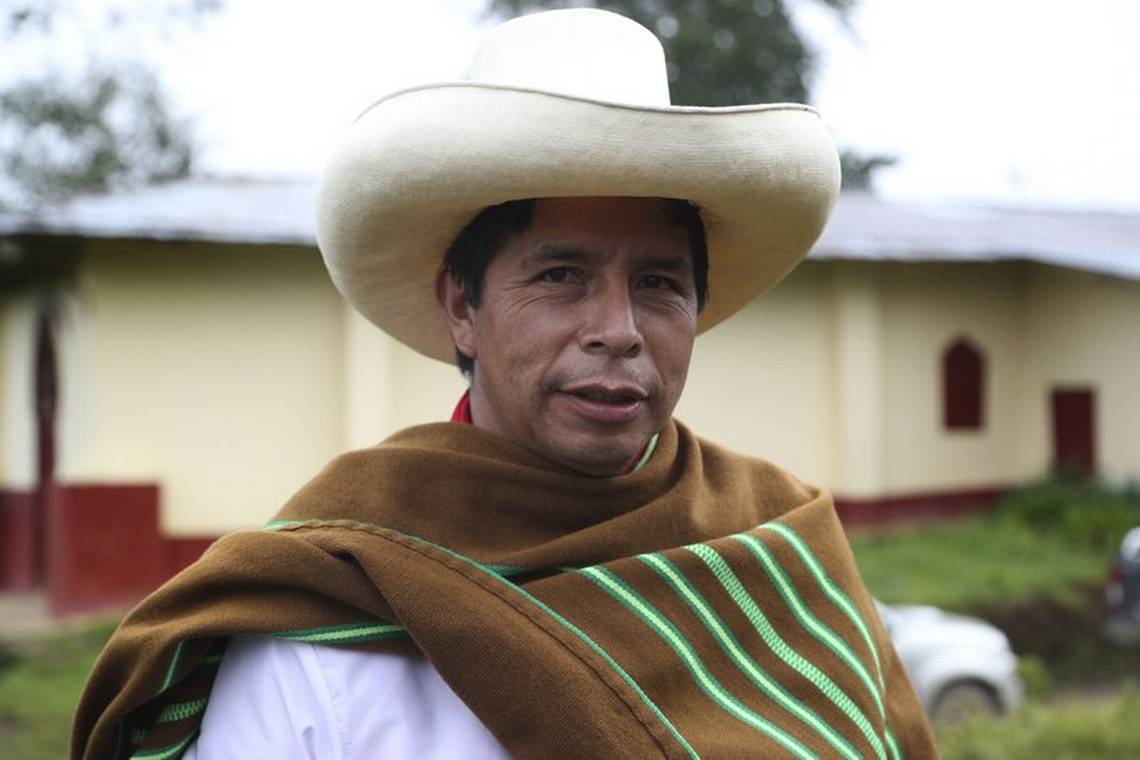
RIO DE JANEIRO, BRAZIL – The appointment of the first Cabinet of President Pedro Castillo in Peru has made it clear that the rural master relies a lot on the left, very little on women, and leaves considerable uncertainty on the economic side.
The appointments, controversial and harshly criticized, place Castillo closer to the radical left that defends the Peru Libre party than to the moderate position he exhibited in the electoral campaign, with a team more confrontational than conciliatory and more oriented to please the different sectors of the left than to unite a radically fragmented and polarized country.
Read also: Check out our coverage on Peru
These are some of the keys that explain the situation in Peru.
1) ECONOMY
Castillo has not yet appointed anyone to the Ministry of Economy, and it will be difficult for him to find a professional who will accept the responsibility.
His best option to reaffirm moderation and smooth management of the economy was Pedro Francke, his main advisor on the matter to date and speculated to be in charge of the portfolio to calm down the markets and a large part of the Economy.

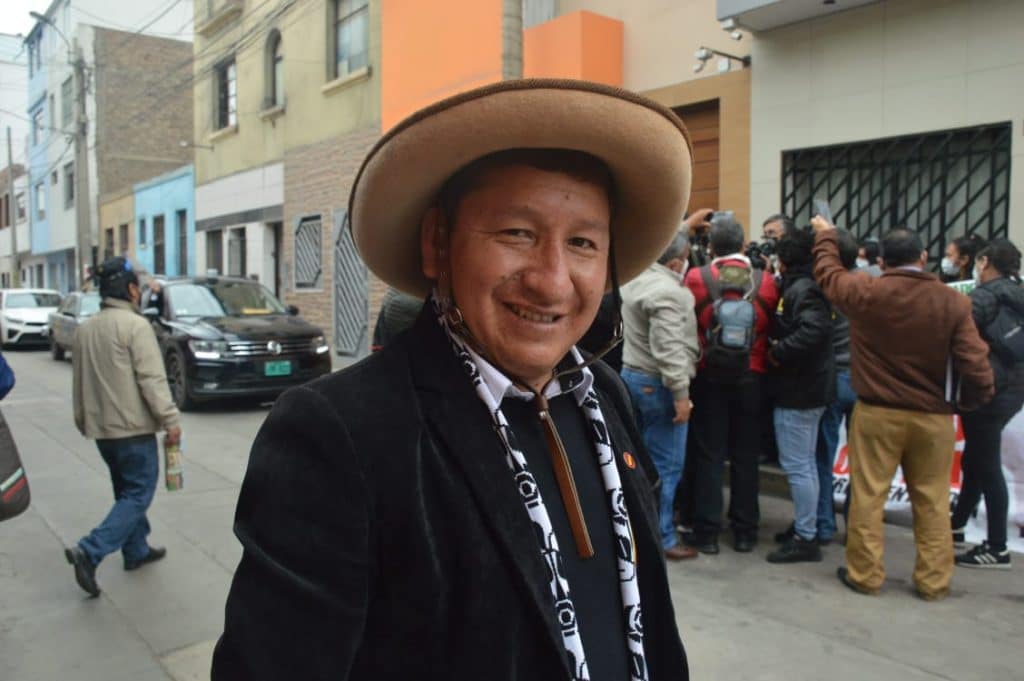
But the economist was not to the liking of Vladimir Cerrón, the leader of Peru Libre, nor of the brand new Prime Minister Guido Bellido, under whose leadership Francke seems to have refused to work.
“Francke had walked out the back door when he did a heroic job these last weeks to convey a center-left message that opened roads in all sectors. If he was let go to keep Bellido, it’s because Castillo believes it’s the right thing to do. It will be tough for him to find a good replacement”, said political analyst Sandro Venturo.
2) THE WEIGHT OF CERRÓN
All the decisions taken by Castillo point to the fact that Cerron, a controversial Marxist doctor, former regional governor convicted of corruption, and legally barred from holding public office, has more influence on the president’s decisions than he admitted.
Cerrón’s figure is toxic to many, including many who voted for Castillo and trusted him to distance himself from Cerrón.
Appointing Bellido, a homophobic politician who believes that Cuba is a democracy and has trouble calling out the atrocities of the Shining Path terrorist movement, is a step in the opposite direction.
Bellido’s only political virtue seems to be his proximity to the party leader. “Castillo’s alliance with Cerrón is clear. The choice of Bellido and keeping him in power over figures like Francke, what it does is make him transparent,” Venturo summarized.
3) OLD LEFT
The administration is eminently political and has representatives from various left sectors, including deputies, former deputies, former candidates, historical figures, and trade unionists.
It does not have center independents that would allow it to give a message of openness, “broad-based,” and a vocation for dialogue.
“It is a provincial left, which is used to confrontation and polarization to negotiate from that scenario of conflict. But they do not understand that the Peruvian scenario today is not adequate for that way of doing politics”, Venturo pointed out.
Beyond that, it is also a socially conservative, traditional, and “anachronistic” left-wing government, as shown by profiles such as Foreign Minister Héctor Béjar, an 85-year-old sociologist and former guerrilla fighter, or Ciro Gálvez, a 72-year-old Quechua-speaking and indigenist notary who will be Minister of Cultures.
“These are things of the past. That this government does not even come close to gender parity is something not seen in several decades. And I have the impression that it will wind up becoming a statist administration in which the State will be the beginning and the end of all social and political dynamics. That is what we are seeing”, said Venturo.
4) GENDER AND MINORITIES
On the one hand, the absence of women and Bellido’s homophobic comments clearly show something already known: Castillo, whose social origins are very conservative and religious, does not consider equity and discrimination issues a priority.
In this aspect, criticism has fallen on the role of the Nuevo Peru party, the progressive left led by former presidential candidate Veronika Mendoza, which has been the only prominent political group beyond Peru Libre to salute Castillo’s government.
Read also: Pedro Castillo, the conservative rural teacher calling for radical change
They have also contributed Anahí Durand, a feminist sociologist very close to Mendoza, who will be the Minister of Women, whose main task will be to defend, within an overwhelmingly male and masculinized cabinet, the tenuous advances in gender policies that the country has made.
However, the first voices of feminists and LGTBI activists have been openly critical and consider this Executive as a step back “fifteen years”.
5) THE CONGRESS AND THE SILVER BULLET
Criticism of the new cabinet is of such magnitude that many see it as a deliberate strategy by Congress, dominated by opposition from the far right to the liberal center, to withdraw confidence from it and thus trigger a crisis in government.
Congress can deny confidence to the full cabinet and force its replacement, but it can only do so twice in the five-year legislature.
If that happens, the Constitution empowers the president to dissolve the Chamber and call new elections, so burning this “silver bullet” just days into the legislature is risky. Congress does have the option, however, to censure ministers and force their departure one at a time if it so wishes.
For the time being, Castillo has the support of his 37 deputies in Congress, the 5 deputies of Juntos por el Perú (the coalition where Nuevo Perú is), and some deputies of the political center that for the time being prevent the possibility of a presidential impeachment process.
More: Peru news in English, every day from The Rio Times.
Editorial responsibility: Matthias Camenzind, Editor-in-Chief · Editorial standards · Report an error