Analysis: Argentina and the burden of dragging debts after 20 years of default
RIO DE JANEIRO, BRAZIL – The colossal default that Argentina declared 20 years ago will be remembered as one of the most resonant events in the country’s dramatic history as a “serial debtor”, a drastic measure, adopted amid an unprecedented crisis, and whose consequences have yet to be resolved.
“We are going to take the bull by the horns. First of all, I announce that the Argentine State will suspend the payment of the foreign debt”, said Peronist Adolfo Rodríguez Saá on December 23, 2001, when he assumed a provisional presidency of the country that lasted a week barely and whose primary government measure was to declare the “default” of debts of US$102 billion.
Read also: Check out our coverage on Argentina
The largest default in Argentine history was declared after the outbreak of the economic and social crisis that erupted after the creation of the bank “corralito” at the beginning of December 2001 and the political upheaval that ended three weeks later with the resignation of the radical Fernando de la Rúa as President of Argentina.
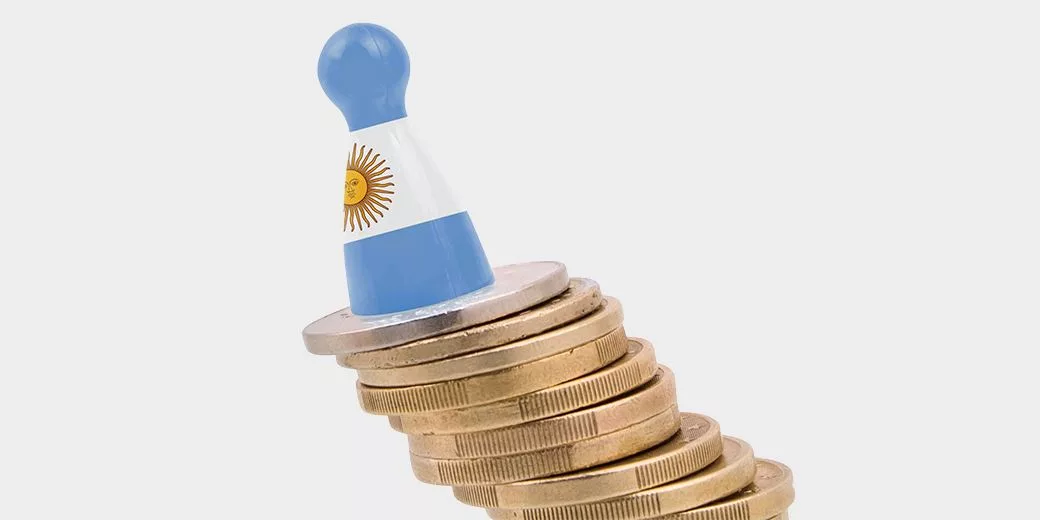
After the “default” came the end of the “one-to-one” convertibility between the U.S. dollar and the Argentine peso, a resounding economic collapse, and the virtual expulsion of Argentina from the international debt placement markets.
“We were never able to recover from the default because Argentina always looks like a country that could default again,” economist Pablo Tigani, director of the consulting firm Hacer, told Efe.
The country’s bad reputation as a debt issuer currently makes it impossible to finance itself in the international markets.
RESTRUCTURING AND “VULTURES”
In 2005, Argentina achieved a 76.15% adhesion for its offer to restructure bonds in default since 2001, implying a 65.4% nominal haircut.
The swap was reopened in 2010, and Argentina raised the adherence level to 92.4%.
But the creditors who did not adhere to the restructuring essentially went to international courts to demand Argentina to pay the debts.
The fiercest battles were fought by speculative investment funds – the “vulture funds” as they are called in Argentina – in New York courts, where the country suffered several legal setbacks.
In 2014, Thomas Griesa, a New York district judge, ruled in favor of the plaintiffs.
But in addition, as Argentina refused to abide by the ruling, Griesa blocked the country’s payments to creditors who had accepted the 2005 and 2010 swaps. Thus the country fell into selective cessation of payments.
MORE DEBT AND NEW RESTRUCTURING
The government of the conservative Mauricio Macri (2015-2019), who in 2016, as soon as he took office, reached an agreement with the litigating creditors to regularize the debt.
“In 2016, bonds were issued for US$16 billion, and the vulture funds were paid seeking to regain international confidence and return to the debt markets. Between 2016 and 2018, a lot of debt was issued,” Ignacio Marutian, a member of the Museum of Foreign Debt, a unique space at the University of Buenos Aires that traces Argentina’s two centuries of frequently unpayable borrowing, told Efe.
The raid of indebtedness included an unprecedented placement in 2017 of a 100-year bond and the signing in 2018 of a financial aid agreement with the IMF. The organization drew the unparalleled sum of US$44.2 billion to the country, a credit that failed to prevent the economic collapse.
With an accelerated capital flight, the economy in recession since 2018, and increasingly higher financing costs, Macri ended up unilaterally deferring the payment of the short-term debt in local currency and admitting the urgency of negotiating an extension of payment terms for the entire foreign debt.
It was his successor, the Peronist Alberto Fernández, who, after months of tough negotiations with investment funds, managed in September 2020 to restructure securities held by private creditors for US$105 billion.
But the country has yet to reach an agreement with the IMF to refinance its debts with that organization, a challenge against the clock since Argentina is not in a position to face the heavy maturities with the Fund over the next three years.
“Debt remains one of the country’s main problems, and we are still renegotiating, despite having had a successful restructuring amid the pandemic,” Marutian noted.
More: Argentina news in English, every day from The Rio Times.
Editorial responsibility: Matthias Camenzind, Editor-in-Chief · Editorial standards · Report an error