Chile: President tries to rekindle government while his popularity falls
RIO DE JANEIRO, BRAZIL – Chilean President Gabriel Boric is trying to relaunch a government that has lost popularity less than two months after making global headlines for becoming the country’s youngest president and a possible symbol of a revival of the left in South America.
Now that opinion polls show Boric has lost support since taking office, the 36-year-old president has declared the end of the transition period and called for ministers to act with a “sense of urgency” to address the demands of Chileans.
Read also: Check out our coverage on Chile
“There has been a sort of relaunch of his narrative,” said Eugenio Tironi, a Chilean sociologist. “There is a change of tone, a change of role, and you see a much more active government.”

Boric said last week that he was considering allowing the army to assist in policing activities in the south of the country, which has been plagued by violence. Dozens of truckers have blocked roads to demand that measures be taken to guarantee their safety in the La Araucanía and Biobío regions, some 600 kilometers (360 miles) from the capital Santiago.
Boric’s apparent willingness to appeal to the military for public security assistance, something he has resisted in the past, has come after acknowledging that his nearly two months in power have not gone exactly as he had hoped. after reaching the presidency with 56% support in the second electoral round in December.
“There have been difficulties and there have been mistakes,” Boric told local newspaper La Tercera in an interview published on May 1. “It is important to assume your own responsibilities.”
Opinion polls show that Boric’s brilliance is quickly dimming among Chileans.
His approval rating fell to almost 24% in the second half of April, a drop of nearly 23 points since he took office, according to a Pulso Ciudadano poll published on May 1. The poll was based on 1,043 online questionnaires and had a margin of error of 3 percentage points. Another pollster, Cadem, reported Boric’s approval rating at 36%, a 14-point drop since he was sworn in. That poll was based on 703 telephone interviews with a margin of error of 3.7 percentage points.
With his recent measures, Boric “what he is doing is taking note that the honeymoon was a little more abrupt than expected and it is no use appealing to youth and inexperience to justify political errors,” said Cristóbal Bellolio, professor of political science at the Adolfo Ibáñez University in Santiago.
Although shorter honeymoons for newly sworn-in leaders have become a global trend given heightened skepticism towards those in power, it appears that Boric has particularly tested the patience of Chileans by taking too long to detail his government plans, added Bellolio.
“At the beginning, this idea that we are going to take some time to diagnose the situation and then we are going to start acting was abused,” commented the academic, “but there is action despite not having a complete diagnosis.”
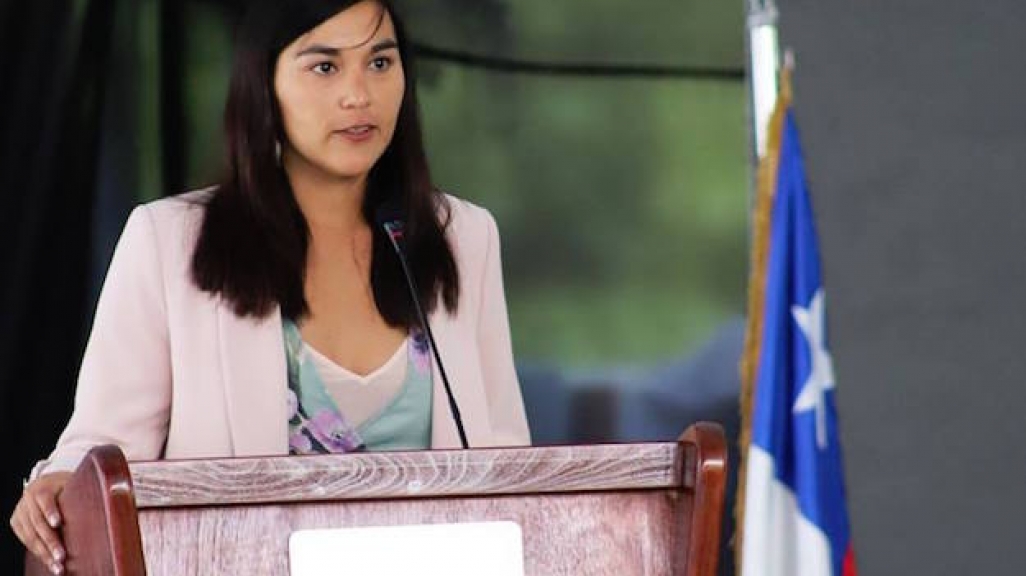
As a student leader, Boric frequently led protests against inequality rocking a country once seen as a model of political stability in the region. As a candidate, he vowed a sea change in the political landscape. Now some of the people who voted for him are frustrated that change seems slow.
“It could also be an effect that the expectations (created) were very high and also the expectations of how quickly things were going to happen,” said Cristián Cáceres, a 54-year-old telecommunications engineer. “People had expectations that were definitely unrealistic.”
For now at least, Boric’s talk of shaking up the status quo has yet to bear fruit.
“He hasn’t implemented anything new,” said Cristóbal Huneeus, director of data science at Unholster, a software company that tracks lawmakers’ work. “He spoke of transformative reforms, but we do not see the reforms.”
For Raúl Ulloa, a 69-year-old eye doctor from Santiago, Boric’s drop in approval is not much of a mystery. “He has no plan” and now he should “not be so extreme and turn more to the center” if he hopes to maintain support, says Ulloa.
Analysts largely agree that Boric’s government suffers from some self-inflicted wounds due to a cabinet full of new faces. Several of these missteps involve the Minister of the Interior, Izkia Siches. In March, she was forced to abruptly end a visit to the La Araucanía region, a center of conflict with indigenous groups demanding the restitution of their land, after hearing e gunshots near his caravan. In April, Siches apologized after wrongly informing lawmakers that a plane carrying Venezuelan immigrants expelled during the previous government had returned to Chile with all passengers on board.
“It is a team that does not have much political experience in the executive. They got there because they hadn’t been there before,” said Claudia Heiss, director of political science at the University of Chile. “They are learning how government is managed, that has led them to make some mistakes.”
That has weighed heavily on some Chileans. Among them is Patricio Soto, 40, who says that Boric’s government “perhaps had the best intentions, but the lack of experience for important positions” has caused problems in his government.
At the same time, however, Boric grapples with some issues that would have presented a challenge to anyone in his position.
“The economic situation is super relevant, and anyone who was in power would be in trouble now,” Heiss said. “We have an inflation that had not been seen in Chile at least since the return of democracy and we are still in the midst of economic crisis due to the pandemic.
Chile’s annual inflation rate reached 10.5% in April, breaking the double-digit mark for the first time in 28 years and surpassing the 7.2% increase recorded in 2021.
Amid ongoing economic difficulties, the Chilean government last week lowered its growth expectations for the year from 3.5% to 1.5%, and raised its inflation forecast for 2022 to 8.9%.
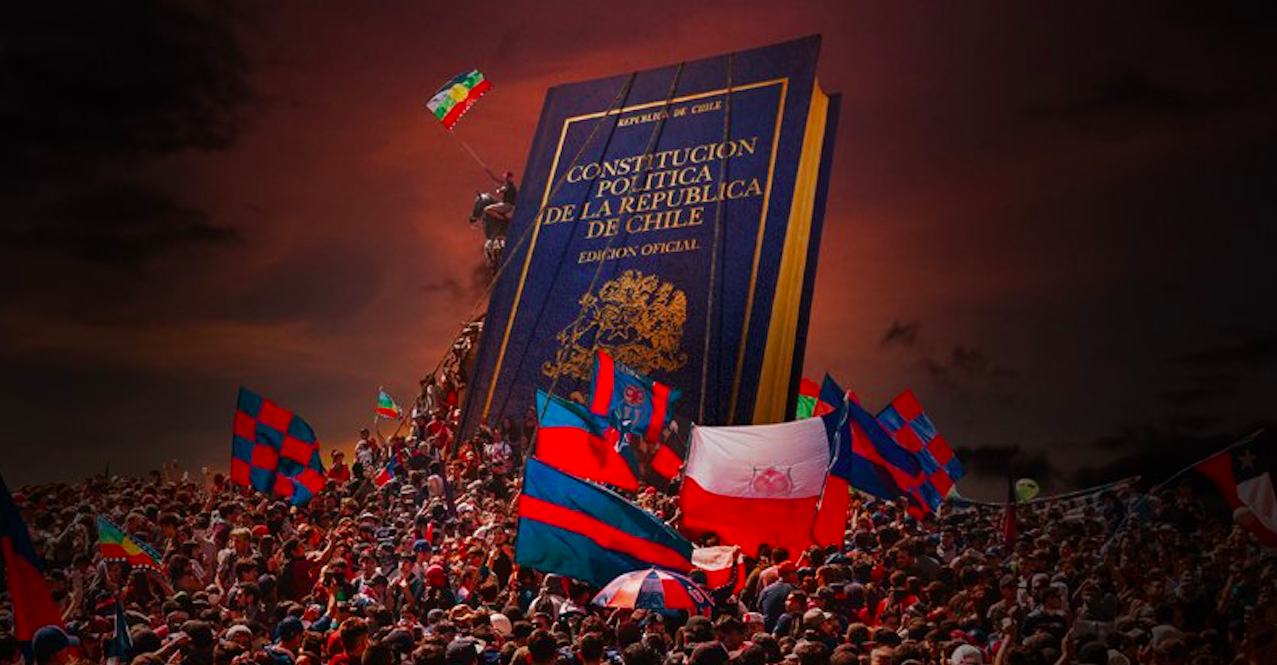
But the Chileans are not only upset with Boric. They are increasingly skeptical of the institution that is rewriting the country’s constitution.
In 2020, almost eight out of 10 Chileans voted in favor of reforming the Constitution, an overwhelming majority that demonstrated the desire for change in the country after the student protests. But now that the Constitutional Convention has been put to work, many are expressing doubts, with polls showing more and more people inclined to vote against the unfinished documents in a plebiscite scheduled for September.
Even some of the advocates of the reform express skepticism.
“I feel that as a society we need to change the Constitution,” said Daniela Arévalo, a 25-year-old architecture student. But “now I am distrustful of how the constituent process is being carried out.”
Boric has been a strong defender of reforming the Constitution and it is considered that the future of his government is inexorably linked to what happens in that vote, since both are part of a historical process in which Chileans have demanded change. .
“If the government wins, it can breathe easy,” Bellolio said. “If it loses it will be a political earthquake.”
More: Chile news in English, every day from The Rio Times.
This article was produced by The Rio Times’ automated newsroom system. How we use AI · Report an error
Read More from The Rio Times