Bolivia, an island of low inflation in Latin America
RIO DE JANEIRO, BRAZIL The South American country has weathered the onslaught of rising inflation in the region, marked by the effects of the COVID-19 pandemic and the international economic scenario. Factors such as the strengthening of the Bolivian peso and protected domestic consumption based on subsidies explain the economic phenomenon in Bolivia.
The economic policies implemented by the Government of Luis Arce to face the economic shocks caused by the COVID-19 pandemic and the increase in the price of food due to the lack of fertilizers on a global scale, as a result of the conflict in Ukraine and the sanctions against Russia, have freed Bolivia from inflationary pressures that have affected its neighboring countries without distinction.
Read also: Check out our coverage on Bolivia
In a region where, according to data from the World Bank, the annual rate of the Consumer Price Index (CPI) will be around 10%, Bolivia has been stable throughout 2021 and so far in 2022, with inflation of 0.77% in March of this year.

So far this year, it has even registered price drops of around 0.1%, while the main economies of the region register high year-on-year inflation, as is the case in Brazil, with 11.3%, and in Chile, with 9.4%, and much further away in the cases of Argentina, with 55%, and Venezuela, with 284.4%.
There are different reasons that explain the favorable performance of the Bolivian macroeconomy, in an unfavorable regional context.
FACTORS OF THE LOW BOLIVIAN INFLATION
One of the reasons that may explain Bolivia’s inflationary containment is the exchange rate, which has been regulated or fixed for more than 10 years, in a process initiated by former President Evo Morales (2006-2019) and continued by the Government of Luis Arce, since his inauguration in November 2020.
The Bolivian peso has been strengthened compared to the dollar. From a fixed exchange rate of 6.96 Bolivian pesos per dollar, the appreciation of the national currency and confidence in it have been strengthened.
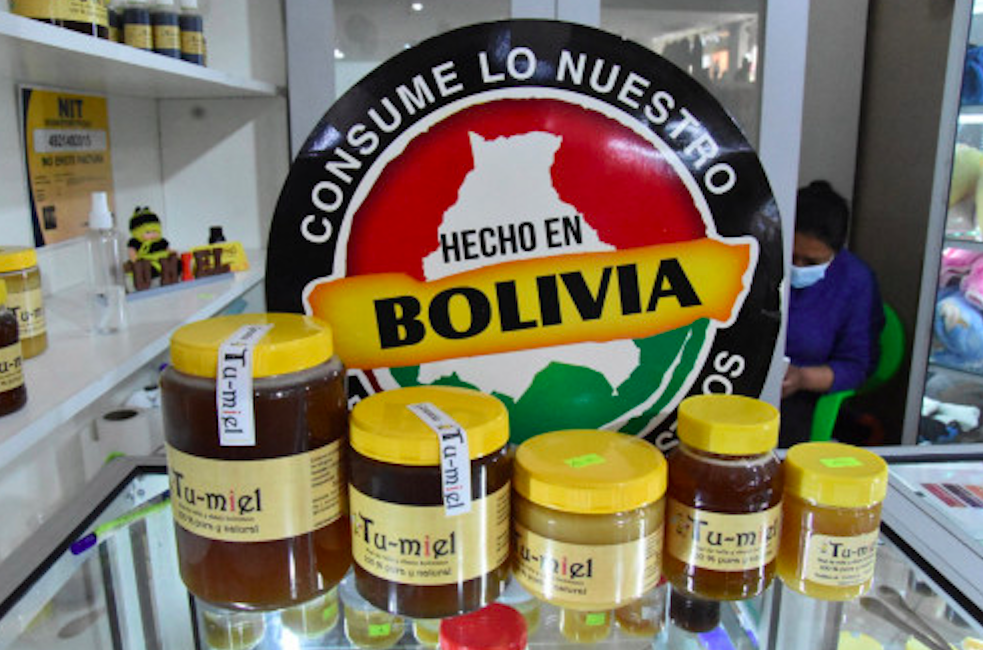
Another of the factors or variables that explain the economic present in Bolivia has been the policy of subsidies based on the prosperity and the resources obtained from the policies of nationalization of hydrocarbons and natural resources, which have allowed the State to inject reserves into the market.
This has made it possible to sustain inflation containment mechanisms, such as fuel subsidies that have kept the price of a liter of gasoline stable at US$0.50 over time.
The subsidies have allowed the increase in agricultural production, which together with an import substitution policy promoted by the Luis Arce government, have mitigated effects such as the shortage of fertilizers in the national market.
OTHER MECHANISMS
In addition to the above, Bolivia has inflationary containment mechanisms based on companies and public funds, such as the state Food Production Support Company (Emapa), which provides financial support to agricultural producers, and the Revolving Fund of Food Security, an institution that imports food at the expense of the State and seeks its distribution in the market to maintain prices for consumers.
An example of its operations was the importation of 10,000 tons of wheat flour for domestic trade and thus alleviate the escalation of prices in the local market.
Although his critics predict a stagnation in the price of raw materials —on which the Bolivian economy largely depends—, along with a gradual growth in public debt due to the subsidy policy, the former Minister of Autonomies Hugo Siles declared to local media that there are no reasons for concern because, “Bolivia sells gas, electricity and raw materials such as soybeans or minerals, whose price on the international market is also rising, which will bring in more foreign exchange.”
“The government is not going to eliminate subsidies or alter the exchange rate because that would mean transferring the burden to the vast majority of the population,” added Siles.
More: Bolivia news in English, every day from The Rio Times.
Editorial responsibility: Matthias Camenzind, Editor-in-Chief · Editorial standards · Report an error