Brazil now wants to sink the São Paulo aircraft carrier
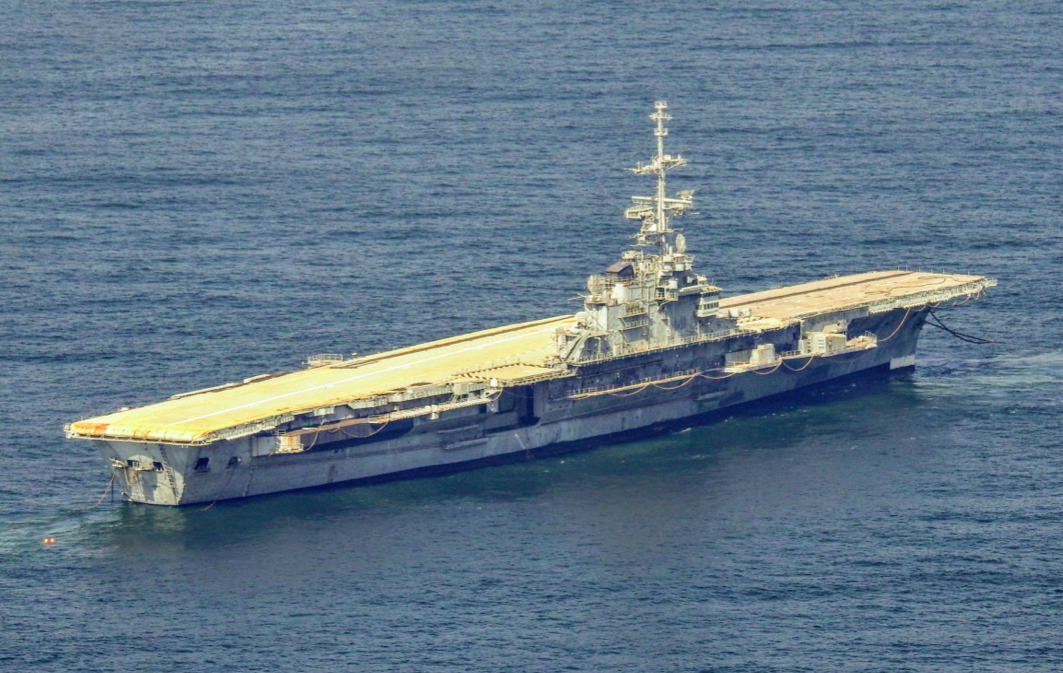
The Brazilian Navy has run out of patience with what was once its flagship and has decided to sink the former aircraft carrier São Paulo in a controlled manner by placing and detonating explosives to open cracks in the hull of the ship, which for months has been a ghost ship waiting, 20 miles off the Brazilian coast, for a decision on its final destination.
According to reports, the drastic decision was agreed upon between the Federal Government and the Navy, despite the protests of the Minister of the Environment, Marina Silva.
Depositing the aircraft carrier on the seabed as soon as possible was considered a viable alternative given the advanced degree of degradation of the 266-meter-long ship, a fact verified last January 13 during a technical inspection that detected a new tear in the vessel, a higher level of flooding and corrosion compared to the examination carried out four months earlier.

What is certain is that there are not many options to dispose of the aircraft carrier, abandoned – according to the Navy – by the Sök company, which acquired it for US$1.9 million in 2021 for dismantling in Turkey, which makes sinking the only alternative to putting an end to a controversy of international proportions that began last August, when the São Paulo had to return to Brazil after being denied entry to the Mediterranean Sea.
ENVIRONMENTAL RISK
The proposal has caused discussions about the aircraft carrier to reach the highest levels of the Brazilian government.
The main problem is the presence of asbestos, a product considered toxic.
The Minister of the Environment has even formally sought out the Minister of Defense, José Múcio Monteiro, to express this concern.
The Brazilian government is in a hurry to decide since, according to reports from military personnel involved in the operation, there is a change in the alignment of the hull with respect to the waterline of “one side to port”, which compromises its buoyancy and increases the risk of structural collapse within up to four weeks.
According to data collected by forensics and leaked to the Brazilian press, from August 2022 until now, 2,787 liters of water have entered the hull (the limit for safe navigation would be 3,500 liters).
By October 2022, ten compartments would have some degree of flooding.
In January, after the Navy took over the operation, 23 compartments were identified as compromised by seawater, making it impossible to return the hull to a safe state for navigation and access to land.
All indications are that the final destination of the aircraft carrier São Paulo, controlled or not, will be the bottom of the sea.
With information from Infodefensa
Read More from The Rio Times