BNDES Emergency Assistance to Companies in Pandemic Reaches R$105 Billion
RIO DE JANEIRO, BRAZIL – The National Bank for Economic and Social Development (BNDES) granted R$105 billion (US$21 billion) in emergency assistance since the onset of the novel coronavirus pandemic in March this year.
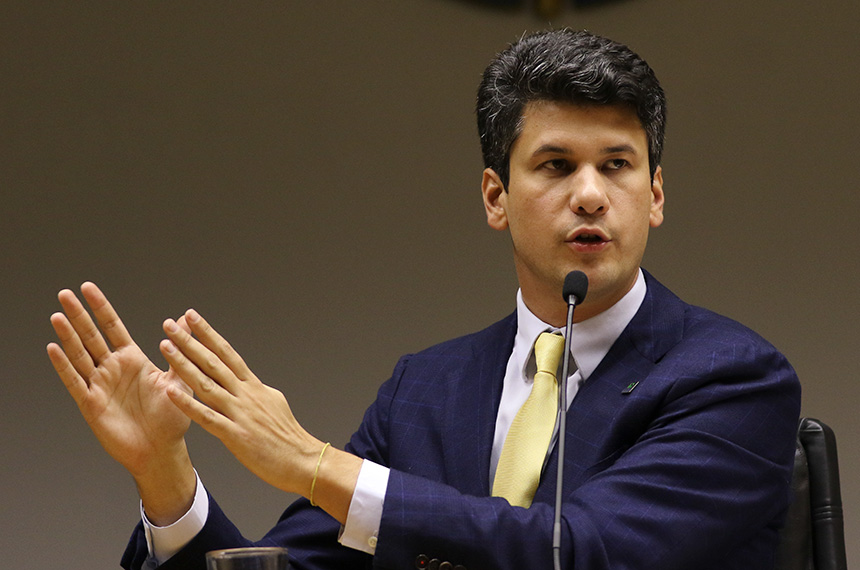
The funds were allocated to 258,000 Brazilian companies that are responsible for generating 8.5 million jobs. In an interview with Voz do Brasil, the president of BNDES, Gustavo Montezano, said that the priority was micro, small, and medium-sized companies (MSMEs), which represent 96 percent of all companies assisted.
“These are very substantial figures. We are very pleased with the result of this effort, through an innovation of the bank at a difficult time for us, Brazilians. But the good news is that this resource, which began as a resource to overcome the crisis, has now become a resource for the rebound, considering the data for the coming months”.

According to Montezano, the money that was directed to pay overdue wages and suppliers’ bills, “is now turning into working capital to reach this coming Christmas”.
FGTS
Also with the aim of reducing the impact of the novel coronavirus, another R$20 billion were transferred from the PIS-PASEP (Social Integration Program-Public Servant Asset Development Program) Fund, managed by the BNDES, to the Severance Premium Reserve Fund (FGTS), so that workers could make emergency withdrawals, directing part of these funds to consumption, which has driven the economy and small businesses in particular. As a result, the BNDES’ emergency measures in the pandemic amount to R$125 billion.
Gustavo Montezano explained that the BNDES had a R$20 billion debt to the FGTS Guarantee Fund. “And we realized that now was the right time. Brazil needed it, workers needed it. So we transferred this resource to the FGTS to be able to pay the workers at a time when they needed it most. It was direct support from the BNDES to Brazilian workers,” he said.
The emergency measures aimed at the public sector totaled R$3.9 billion in payment suspensions from states and municipalities. The BNDES president said that the payments that should have been made this year were deferred. This means that the loans granted will begin to be paid only as of January 2021.
“This way, mayors and governors can afford to pay employees’ salaries, spend on healthcare during the crisis, and pay municipal and state suppliers. It was a very important contribution by the bank during this moment we have been experiencing”.
On the other hand, the BNDES has expedited the release of financing contracted by states in the amount of R$225 million. For the private sector, the suspension of loan payments totaled R$12.6 billion. Approximately 28,600 small companies and 499 large companies were benefited.
Impacts
Gustavo Montezano said that he and his team are dedicated to analyzing how the BNDES can improve the lives of Brazilians, promoting investments that have a social and environmental impact.
“How do we do this? By preparing projects, modeling the infrastructure. We act as a project planner for large building projects, public lighting, electric power, sanitation, highways, all this infrastructure framework that Brazil so badly needs.”
He emphasized that BNDES acts both in the preparation and support to the states and the federal government in modeling, as well as in financing. He concluded that, in addition to improving the lives of citizens, with improved quality of life, the bank generates jobs in the implementation of these works.
To finance the electricity sector, with the aim of preventing a higher increase in tariffs, the consortium formed by BNDES and 15 other financial institutions raised R$15.3 billion in the Conta Covid (operation to boost utility companies’ liquidity). The bank contributes R$2.7 billion of this total.
Sanitation
In the sanitation area, in particular, Montezano disclosed that the estimate is that the universalization of sanitation in the country will demand funding between R$600 billion and R$700 billion. The bank’s project portfolio currently totals between R$50 billion and R$60 billion.
“We are talking about ten percent of the volume required to universalize sanitation in Brazil. This is a priority agenda for the bank,” he assured. According to the president of BNDES, the universalization of basic sanitation will improve education, health, and boost the development of the region served. “It is a priority measure for Brazil that will change, once and for all, social inequality in the country.”
On the other hand, Montezano explained that the development of a sound sanitation project requires environmental engineering analysis and modeling of a concession contract, which is a very technical and cumbersome job.
However, he warned that if this work is properly conducted, “it adds great value to society. The bank operates by modeling these projects together with states and municipalities, and also in financing, once the works begin”. He reiterated that this is a key priority for the bank and for Brazil. “And it has all it takes to change our social inequality issue in all regions of the country.”
Measures
Among the emergency measures implemented by the bank, the highlight is the Emergency Program for Access to Credit (PEAC) which has transferred R$71.1 billion in guaranteed credits, since it was launched in June, to 89,000 companies. From this total, R$66 billion were directed to small and medium-sized companies.
A total of 46 financial institution agents are accredited to contract loans with the National Treasury’s collateral through the Investment Guarantee Fund, which is the PEAC model. These financial institutions decide when to use the program’s collateral and assess the credit request when each of the operations is structured.
In the PEAC Maquininhas (payment terminals) line, loans offered by financial institutions based on the flow of card terminals totaled R$105 million, approved for 3,300 clients. In the Small Business Credit line, which offers credit for working capital, R$8 billion were approved, resulting in 24,600 companies being assisted. The Emergency Program for Employment Support (PESE) also approved R$7.3 billion in credit in two stages.
Health
In addition, the Emergency Support Program for the Fight against the Coronavirus Pandemic approved R$293 million for the healthcare area. The funds allow opening up to 2,900 ICU and ward beds, the purchase of 1,700 medical equipment units, such as monitors and lung ventilators, and four million diagnostic kits for Covid-19.
Another initiative, involving the collective financing action Matchfunding Saving Lives, for the purchase of materials, supplies, and equipment for charity and philanthropic hospitals in the country, raised R$74 million, half of which was contributed by BNDES.
Source: Agência Brasil
More: Brazil news in English, every day from The Rio Times.
This article was produced by The Rio Times’ automated newsroom system. How we use AI · Report an error · Editorial responsibility: Matthias Camenzind, Editor-in-Chief